

Audio By Carbonatix
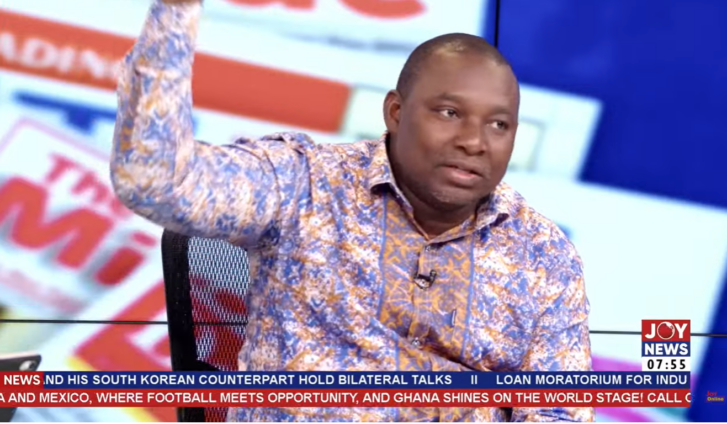
Director of Communications for the United Party, Solomon Owusu, has criticised Iran over its approach to the escalating conflict with the United States and Israel, describing the strategy as misguided and likely to create more enemies in the region.
Speaking on the AM Show on Thursday, 12 March, Mr Owusu argued that Iran’s current approach could further destabilise the region rather than resolve the crisis.
According to him, responding directly to military strikes from Israel and the United States with further retaliation risks escalating the conflict.
“I believe the strategy that has been adopted by Iran is very wrong. If Israel and the U.S. are striking you and you strike them back, it only escalates the conflict,” he said.
Mr Owusu noted that in the Gulf region, countries such as Qatar and Oman traditionally play mediating roles when tensions rise.
However, he believes Iran’s actions are instead creating greater hostility among neighbouring countries.
“You are creating more enemies around you, and you are surrounded by these countries,” he stated.
He further suggested that recent strikes may have disrupted Iran’s military leadership, particularly within the Islamic Revolutionary Guard Corps (IRGC), potentially leading to a breakdown in command structures.
According to him, such disruptions could result in uncoordinated actions by individuals within the system.
“Probably the command structure has broken, and people are doing anything. That is what we are seeing,” he said.
Mr Owusu also claimed that the United States has gained significant intelligence advantages, allowing it to strike strategic targets within Iran with precision.
He argued that the destruction of key leadership, naval assets and communication systems has significantly weakened Iran’s military capability.
“When your leadership is destroyed, your navy damaged and communication cut out, it becomes very difficult to organise a structured response,” he explained.
Despite the intensity of the conflict, Mr Owusu expressed confidence that the situation would not escalate into a prolonged global war.
“I believe this war will not travel that far. There has to be peace quickly,” he added.
Latest Stories
-
Pay teachers realistic income – Duncan Amoah to gov’t
16 minutes -
Bechem to become chicken capital of Ghana – Mahama projects
18 minutes -
Gov’t targets recruitment of 16,500 health professionals in 2026
39 minutes -
Two-week strike will not derail academic calendar – GNAT President
53 minutes -
Headmaster detained after BBC investigation into alleged sexual abuse of students
1 hour -
GNAT pushes for clear implementation procedures of teachers’ conditions of service
1 hour -
Recurrent strikes threaten quality of education and academic calendars – Prof Bokpin
1 hour -
‘Cockroach’ group leaders among hundreds detained in Delhi protest
1 hour -
Don’t let speed of information become your judgement – CJ tells new lawyers
2 hours -
World Cup visa scandal: People have leveraged public office to facilitate fraud – Senyo Hosi
2 hours -
Glut! Farmers count losses as prices crash, customers happy
3 hours -
GSA postpones auction of unserviceable vehicles
3 hours -
Man charged with attempted murder after stabbing
3 hours -
World Cup visa scandal: Senyo Hosi says issue goes beyond calls for Sports Minister’s resignation
3 hours -
Yaw Ampofo Ankrah hasn’t taken or received any money to facilitate visas – Lawyer insists
3 hours