

Audio By Carbonatix
Gaming addiction is rapidly emerging as a hidden epidemic in Ghana, with experts warning that its far-reaching impact could jeopardise both individual lives and national progress.
Globally, the World Health Organization (WHO) reports that 3 per cent of the population suffers from gaming disorder, with the highest rates recorded in South Korea, Japan, and the United States.
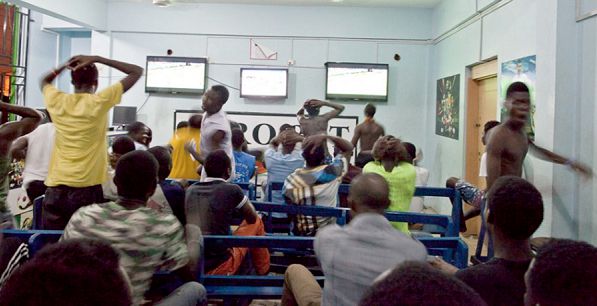
In Ghana, this growing issue is taking a toll on the nation's youth, who are facing significant consequences, including declining academic performance, deteriorating mental health, and strained social relationships.
The Chief Executive Officer of the Mental Health Authority, Professor Adwoa Pinaman Appau, has raised alarms over the escalating threat of gaming addiction, cautioning that it could pose a serious barrier to the country's development.
“Gaming has evolved into a global phenomenon, providing entertainment, social connection, and even skill development. However, the power of these virtual worlds can be so overwhelming that it leads to addiction, with devastating consequences not just for individuals but for families and society at large. This is no longer a personal issue; it has become a public health crisis that demands immediate action,” Prof. Appau said.
The consequences of gaming addiction in Ghana are most acute among the youth, a vulnerable demographic.
Excessive gaming is linked to severe outcomes such as depression, anxiety, and social isolation, undermining the mental well-being of teenagers and young adults across the nation.
Prof Vincent Agyapong, representing Dalhousie University and the Global Psychological eHealth Foundation, makes the urgent call for swift action to address the mental health crisis.
“The need for well-trained, compassionate psychiatric professionals is more critical than ever. Gaming addiction, along with other mental health disorders, is too often overlooked.
"We must harness every platform available to raise awareness, foster understanding, and build pathways for meaningful change,” Prof Agyapong said.
Gaming addiction is not a problem isolated to the individual; it is a national issue that demands a unified response.
Authorities and mental health professionals are advocating for more in-depth research, increased public awareness, and the implementation of stronger policies to prevent the issue from worsening.
This growing crisis is not just a threat to individuals but to the nation’s future as a whole.
To protect Ghana’s progress, immediate, concerted action is needed to combat gaming addiction and its destructive impact on the nation's youth.
Latest Stories
-
AG joins plaintiff to scrap OSP ?: We should be mindful of the mischief in this – Bobby Banson
5 minutes -
Samson Lardy Anyenini questions willingness of Attorneys-General to prosecute political colleagues
8 minutes -
It is only fair the OSP is heard in Supreme Court case – Bobby Banson
13 minutes -
Asiedu Nketia resumes Ashanti tour, second leg kicks off on Sunday
22 minutes -
NLA denies salary cut claims, threatens legal action over reports
26 minutes -
BoG Governor honoured for stabilising cedi, improve inflation
28 minutes -
Trade Minister applauds GUTA as a pillar of economic growth; Prez Mahama honoured
1 hour -
President’s brother’s takeover of Damang Mines is ‘untidy’ – Alhassan Tampuli
2 hours -
It’s not true that gov’t decided not to renew the lease for Gold Fields – Bobby Banson
2 hours -
Ghana to boost tomato production with 60-hectare irrigated farms and processing initiatives
2 hours -
E&P’s takeover process of Damang Mines was very clean – Inusah Fuseini
2 hours -
Damang takeover: There is not going to be any job loss; it is a lease change – Bobby Banson
2 hours -
Gold Fields didn’t stop mining at Damang mines; such claims are untrue – Bobby Banson
3 hours -
Engineers and Planners currently operate only in Ghana – Bright Simons
3 hours -
Lands Minister has no legal basis to restrict lease to Ghanaian firms – Bright Simons
3 hours