

Audio By Carbonatix
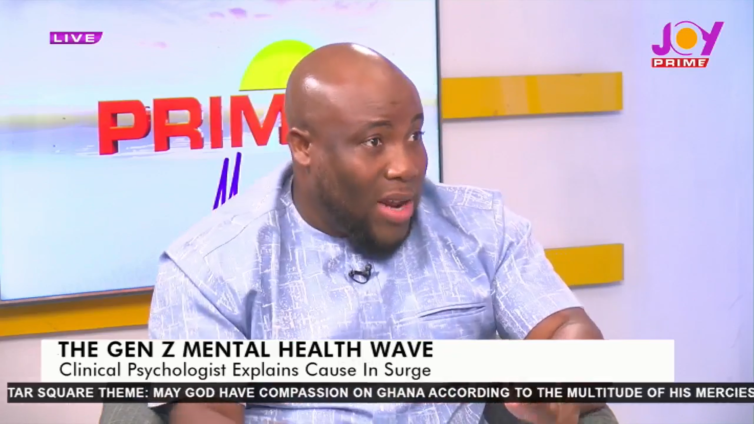
A clinical psychologist says a lot of people confuse mental health with mental illness but there is a vast difference between the two.
Seth Asafo said mental illness is an extreme depletion of the mind where an individual exhausts all their resources to keep surviving.
“Mental health is not a mental illness and perhaps that’s the reason the field is so stigmatised because when people hear mental health, all they hear is mental illness.
“Mental illness will normally look at falling below 0, so if I had a speedometer, it starts at 0 and that’s neutral because you’re starting off and you’re progressing but if you fall below 0 that’s where an illness comes in.
“Typically you can wake up on a day and you don’t feel 100% but you’re not sick, you’re just not yourself, that’s where the mental health component comes in and the sickness comes in when you have depleted your resources for coping and you’re struggling, so let’s not confuse the two,” he said.
Speaking on Joy Prime’s Prime Morning on Tuesday, April 11, Mr Asafo said most of the activities that enhance both physical and mental health are free, however, people mostly resort to taking pills because they assume taking medication is the only solution.
“Staying active or exercising is free, it’s within everyone’s capability, sleep is free, staying connected is free and those are exactly the things that we aren’t doing," he stressed.
The psychologist emphasised the need for constant communication and physical interaction with people to help stabilise the mind.
He explained that this exposes the individual to a lot of problems which will require solutions and while working towards solving the problem, resilience is built which goes a long way in improving their mental health.
“Mental health thrives on a principle we call resilience and resilience is your ability to bounce back even when you’re facing adversity or when you take a hit, your ability to get back and do what you have to do,” he stated.
Mr Asafo who is also a lecturer at the University of Ghana Medical School advised the reduction of screen time and more physical engagement, building more social interactions and being exposed to life problems that will get their brains more functional in finding solutions to them.
He also advised parents to think long-term and not be overly protective of their children and said that parents should allow their kids to face certain challenges and guide them through them rather than solve the problems for them.
Latest Stories
-
We can tackle multiple priorities – Sam George defends Anti-LGBTQ Bill push
19 minutes -
Statement: Ghana Chamber of Mines’ Response to Claims in Joe Jackson’s “Ananse Stories about the Economy of Ghana”
21 minutes -
GES opens 2026 teacher recruitment for licensed B.Ed graduates
23 minutes -
Ghana must value skilled trades, build resilient learners — Ibn Chambas
31 minutes -
Ghana must rethink education around relevance, resilience and responsibility — Ibn Chambas
34 minutes -
Prince Harry faces defamation lawsuit from charity he co-founded
36 minutes -
South Korea deploys thermal cameras to track escaped zoo wolf
37 minutes -
Calls for royal meeting with Epstein survivors grow ahead of US visit
41 minutes -
Ibn Chambas advocates blend of technology and human values in education
42 minutes -
UMA improves healthcare access in Asutifi North with GH₵700k ‘Kim Taylor Legacy’ Walkway
47 minutes -
Scholarships Authority and Fanaka University offer sponsorship for procurement and supply chain studies
50 minutes -
Bisa Kdei drops new single ‘Go N Look’ featuring Medikal
57 minutes -
Benin facing rising terrorism in north as French military presence faces growing criticism
58 minutes -
UEW Public Lecture Series 2026: Education debate ‘about the soul of Ghana’s future’ — Dr Ibn Chambas
59 minutes -
EU fingerprint and photo travel rules come into force from today
1 hour