

Audio By Carbonatix
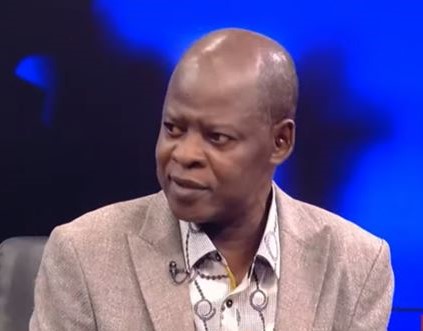
The Co-Chair of the Ghana Extractive Industry Transparency Initiative (GHEITI), Dr Steve Manteaw has stated that Ghana's Minerals Commission is not adequately equipped to regulate mining due to staff constraints.
According to him, there is a Minerals Commission office stationed in Wa that is responsible for Bole in the Savannah Region and nearby areas.
He emphasised that this level of staffing is insufficient to properly control and regulate mining activities in those areas.
Dr Manteaw stressed that active mining in Bole requires a dedicated Minerals Commission office there, as well as additional offices in regions like the Upper West and Upper East, to reduce the distances and improve oversight.
Speaking on JoyNews AM Show, Dr Manteaw said, "Look, travelling from here to even Dollar Power—we are in Bole, and Dollar Power is in the Bole District—but travelling from here to Dollar Power would take you not less than two hours. So, the distances are quite large, and we need more staff, more personnel on the ground to better regulate."
Dr Manteaw also expressed concern about the limited involvement of locals in the mining sector, which has permitted foreign control.
He noted that the heightened involvement of foreigners in the sector is largely due to the lack of credit facilities available to local miners to finance their operations.
This concern comes in light of a report from the Business and Financial Times, which reveals that Chinese investors are interested in acquiring stakes in several major mining operations, including the Akyem Mines. Although there has been no official communication regarding this interest, it has sparked debate about the future of Ghana's strategic resources.
He pointed out that it is not only Chinese nationals who are involved in mining in Bole, but also people from Burkina Faso, Mali, Niger, and other countries who are also financing illegal mining activities.
“They bring the money and have a certain informal arrangement with you: whatever gold you produce, you sell to them. When they get the gold, they do not actually export it through approved channels, such as Kotoka International Airport. Instead, they are so close to the border with Ivory Coast and Burkina Faso that they cross the border with it, causing us to lose all the revenue opportunities associated with their activities.”
Latest Stories
-
MP calls for reforms in healthcare delivery as Kyebi Gov’t Hospital marks 100 years
2 minutes -
IOC policy to ban transgender athletes from women’s events reshapes 2028 Olympic Games
18 minutes -
New Town building collapse: MCE warns churches to stop operating in school premises
20 minutes -
Coalition of traders and agents demand urgent review of AI-driven valuation system
20 minutes -
NAIMOS must be given adequate resources to tackle galamsey – Ken Ashigbey
21 minutes -
EOCO declares Sesi-Edem Company boss Gabriel Kwamigah-Atokple wanted in alleged GH¢57.7m gold fraud probe
22 minutes -
Diplomatic tensions mount as US defends vote against Ghana-led UN slavery resolution
24 minutes -
Didi Dramani ‘worried’ Hearts of Oak not winning games as league slump continues
24 minutes -
From visibility to responsibility: How social journalism can turn neglected communities into corporate priorities
26 minutes -
Health Ministry strengthens governance and specialist training in health institutions
32 minutes -
Trump weighs renaming Strait of Hormuz after himself as US and Israel intensify strikes on Iran
34 minutes -
Afenyo-Markin praises A Plus for Gomoa Easter Carnival initiative
37 minutes -
Ghana to introduce new Loans Act to curb wasteful borrowing – Ato Forson
43 minutes -
Diplomatic rift widens as France denies US pressure to exclude South Africa from G7 summit
47 minutes -
Accra International Airport misses out again in 2026 Skytrax top 10 African Airports
51 minutes