

Audio By Carbonatix
The Health Ministry wants a strong collaboration with academia to prepare graduates for meaningful contributions to the health sector.
Director of Human resources, Dr. Kwesi Asabir observed the gap between academia and Ministry has produced graduates with misplaced roles.
“At times, there’s that barrier between academia and practice. Academia will come out with appropriate ideas but the implementer, ministry is cut off. So people go through an excellent programme, they come to the ministry and we tell them, we don’t have a place for you,” he revealed.
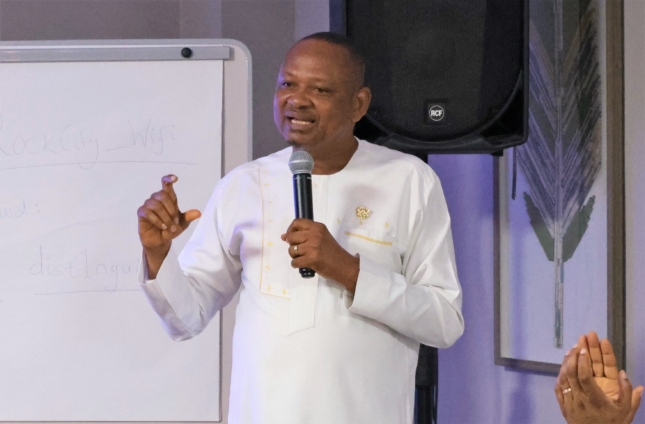
Dr. Asabir made this comment at a retreat organized by Mastercard Foundation Africa Higher Education Health Collaborative in Kwawu.
The primary objective of the Mastercard Foundation Africa Higher Education Health Collaborative is to build and strengthen the capacity of healthcare students and professionals to meet the growing demand for Primary Health Care (PHC) in Ghana.
KNUST is one of the eight partners of the Higher Education Collaborative in Health with the aim to contribute to all three pillars of the health strategy: Health Employment, Health Entrepreneurship, and Health Ecosystems.
The Health Entrepreneurship pillar aims to develop an entrepreneurial mindset and culture that supports entrepreneurs to create meaningful innovations and employment opportunities in the health sector.
The Health Ecosystem pillar also aims to train and prepare a new generation of talented professionals with the broad sets of skills required to drive equitable and inclusive growth.
The Health Employment pillar also aims to expand and improve current capacities to train primary healthcare workers. This workshop is under the auspices of the health employment pillar.
Dr. Asabir stressed the need to approach health as business for sustainable economic development.
“We always think of it as a social sector. We should look at healthcare as a business venture. If the population is not healthy, we can develop a nation,” he said.
The 3-day retreat provided the platform to forge effective strategies to fulfil the Collaborative’s ideals in the coming years.
The Principal Investigator of the Africa Higher Education Health Collaborative, Prof. Ellis Owusu-Dabo emphasized the importance of equity and diversity in the operations of the Collaborative.
“For the Collaborative, issues of gender and persons with disabilities are very critical to us. It’s important we put some of these things into action as a country,” he said.
Latest Stories
-
Knights and Ladies of Marshall group backs Catholic Bishops’ stance on anti-LGBTQ+
26 minutes -
Bright Simons writes: All the Filla in the Ibrahim Mahama/E&P – Gold Fields Saga
50 minutes -
Monetise Idiocy In Ghana
57 minutes -
The Ghanaian prophet and the mysterious death of his scottish wife Charmain Speirs
2 hours -
Nearly 400 sentenced in Nigeria for links to militant Islamists
2 hours -
Ghana’s recovery supported by gold strength despite global oil price pressures – Standard Bank Research
2 hours -
Methodist Church hails Mfantsipim@150; calls for “fresh consecration” to excellence
3 hours -
‘Excellence is our inheritance’ – Nana Sam Brew-Butler hails Mfantsipim’s 150-year reign in leadership
3 hours -
Kwaku Azar writes: A-G vs OSP
3 hours -
Mfantsipim–Adisadel rivalry built excellence, not division – Sam Jonah
3 hours -
Vice President launches Mfantsipim’s 150 years of shaping Ghana’s greatest mind
3 hours -
I assure Otumfuo, Mahama will join him to commission KNUST Teaching Hospital by end of this year – Haruna Iddrisu
4 hours -
Barcelona dominate derby to extend La Liga lead
4 hours -
Gov’t to roll out free special education for persons with disabilities from July 1 – Education Minister
4 hours -
Importers and Exporters Association declares full support for Publican AI port system
5 hours