

Audio By Carbonatix
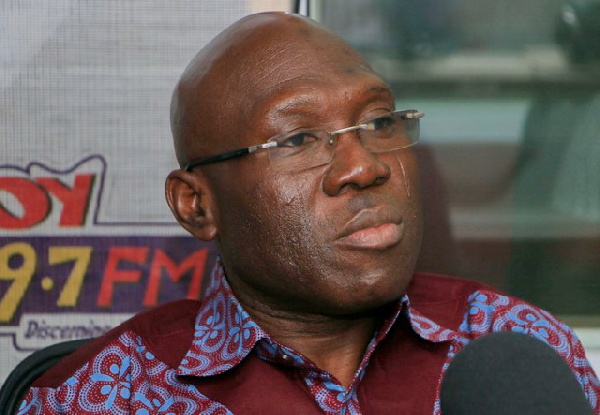
Former Member of Parliament for Tamale Central, Inusah Fuseini, has criticised the Minority in Parliament’s attempt to halt the vetting of Chief Justice nominee Justice Paul Baffoe-Bonnie, describing it as legally and constitutionally misplaced.
His comments follow a motion filed by the Minority on Wednesday, October 29, 2025, seeking to suspend all parliamentary processes leading to Justice Baffoe-Bonnie’s appointment as Chief Justice until all pending legal actions filed by the removed Chief Justice, Gertrude Torkornoo, are resolved.
The motion, signed by some Minority MPs, was defended by MP for Gushegu, Hassan Tampuli, who argued that Parliament must adopt the motion as a matter of principle, noting that the caucus’ position was not against the person of the nominee but rather in defence of due process.
However, speaking on JoyFM’s Top Story, Mr. Fuseini, who is also a private legal practitioner, said the Minority’s move is a misapplication of parliamentary procedure and contradicts constitutional provisions guiding the appointment of a Chief Justice.
“It appears to me that he [Tampuli] is arguing the legal case for Torkornoo, and Parliament is not a court. That is not the place to argue the legal case of Torkornoo,” he said.
He explained that Parliament’s role in the appointment process is clearly defined and cannot be suspended simply because a legal case is before the courts.
“There is a method of appointing a Chief Justice. The nomination must come from the President, and the approval must come from Parliament. When the two coincide, then the act is consolidated. The Chief Justice is approved and sworn into office,” he stated.
Mr. Fuseini added that unless the President’s nomination is itself stopped, Parliament cannot be prevented from performing its constitutional duty under Article 144(1) of the 1992 Constitution.
He further argued that the framers of the Constitution did not intend for decisions regarding the removal of a Chief Justice to be subject to appeal, noting that Article 146 provides finality to such proceedings.
“If the framers of the Constitution had intended an appeal, they would have provided for it,” he added.
Latest Stories
-
‘Give to gain’ to empower yourself, others and the community – Telecel Ghana CEO
2 minutes -
Kenyans will no longer fight for Russia in Ukraine, Mudavadi says in Moscow
2 minutes -
Divaloper renews partnership with KGL Foundation to expand STEM training for girls
2 minutes -
Iran holds the key to reopening global energy markets
2 minutes -
Your daily walk matters in more ways than you think
3 minutes -
Tamed Tiger or Sleeping Giant? Inflation’s dramatic fall and its role in Ghana’s economic resurgence
4 minutes -
Chelsea fined £10.75m for breaching Premier League rules
8 minutes -
Wontumi ordered to open defence in illegal mining trial
10 minutes -
Prudential Bank donates to support Ghana Prisons Service’s Think Prisons 360 Initiative
19 minutes -
The Deaf and Dynamic Forum: The untamed voices paves way for accessible AI tech for the hearing impaired
29 minutes -
The name ‘highlife’ was first written on paper in September 1925 – Prof John Collins
37 minutes -
Democracy Cup: Ghana Parliament delegation visits Sunderland to strengthen partnership
38 minutes -
No conclusion for fare increment yet—GPRTU
38 minutes -
World Bank MD praises Ghana’s economic turnaround
52 minutes -
Dust, potholes and danger: Awoshie Last Stop–Gbawe road worsens
58 minutes