

Audio By Carbonatix
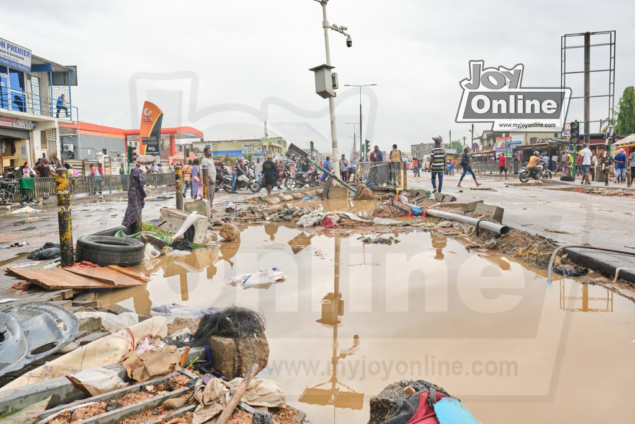
Accra, Ghana’s bustling capital, faces a persistent and growing threat from floods, exacerbated by increasingly erratic rainfall patterns, increased urbanization, poor sanitation and drainage infrastructure, and weak regulatory enforcement in respect of sanitation, drainage, and waste management.
These sudden downpours wreak havoc on infrastructure, disrupt daily life, and pose serious risks to both people and property. In response to this pressing issue, the Greater Accra Resilient Integrated Development Programme (GARID) has been launched as a comprehensive initiative to bolster the city’s resilience against flooding through coordinated and sustainable development efforts. The main objective of the project is to improve flood risk and solid waste management in the Odaw River Basin of the Greater Accra Region and improve access to basic infrastructure and services in the targeted communities within the Odaw River Basin.
Components of GARID
Climate Resilient Drainage and Flood Mitigation Measures
The objective of this component, led by the Ministry of Works and Housing, is to develop sustainable capacity for flood risk management and mitigation for a once-in-10-year flood. This will be achieved by implementing a flood mitigation strategy that combines structural and non-structural measures, including nature-based solutions. One of the cornerstone strategies of GARID is the significant enhancement of Accra’s drainage systems. Existing drains, often overwhelmed by heavy rains, are being upgraded and expanded to manage increased water flow more effectively. Additionally, the construction of flood retention basins, which serve as temporary storage areas for excess rainwater, is underway. These measures include performance-based dredging (the first of its kind in Africa), repair and reconstruction of drains and bridges, detention basin construction, and the development of flood early warning and response systems, all contributing to effective flood risk management and mitigation.
Urban Planning and Land Use Management
Effective flood mitigation in Accra requires stringent urban planning and land use management. GARID emphasizes the enforcement of zoning regulations to prevent construction in vulnerable flood-prone areas. This is complemented by efforts to reclaim and rehabilitate wetlands and natural floodplains, which play a crucial role in absorbing floodwaters and reducing the risk of inundation in urban areas.
Community Engagement and Capacity Building
GARID recognizes that community involvement is vital for the success of flood mitigation efforts. Public awareness campaigns are being conducted to educate residents about flood risks and the importance of maintaining drainage systems. Moreover, the development of community-based early warning systems is a key focus. These systems ensure timely alerts and facilitate evacuations, helping to save lives and reduce property damage during flood events.
Technological Innovations
Technological advancements are central to GARID’s approach to flood mitigation. The use of modern technologies for accurate flood forecasting and real-time monitoring of rainfall and water levels is being prioritized. By leveraging data analytics and modelling, GARID aims to predict flood patterns and inform infrastructure development, ensuring that interventions are both effective and sustainable.
Institutional Coordination and Governance
Successful flood mitigation requires coordinated efforts among various stakeholders. GARID fosters collaboration between government agencies, local authorities, international partners, and communities. This multi-stakeholder approach ensures that initiatives are well-coordinated and resources are optimally utilized. Additionally, the establishment of a robust policy and regulatory framework supports flood mitigation efforts and ensures compliance with urban planning guidelines.
Case Studies and Success Stories
The effectiveness of GARID’s strategies can be illustrated through examples of successful flood mitigation projects in Accra and other cities facing similar challenges. Preliminary outcomes of GARID initiatives have already shown improvements in flood resilience, with notable reductions in flood-related damages. These success stories underscore the potential of GARID to transform Accra into a model of urban resilience.
Challenges and Opportunities
While GARID presents a comprehensive solution to Accra’s flood problems, it is not without challenges. Funding constraints, bureaucratic hurdles, and community resistance can pose significant obstacles. However, these challenges also present opportunities for innovation, public-private partnerships, and international support. By embracing these opportunities, GARID can enhance its effectiveness and ensure the long-term sustainability of its interventions.
Conclusion
The future of Accra’s flood resilience hinges on the successful implementation of GARID. With its multifaceted approach, GARID holds the promise of transforming Accra into a resilient and sustainable city, capable of withstanding the increasing unpredictability of rainfall. Continued investment and engagement from all stakeholders are essential to ensure the safety and well-being of Accra’s residents. By working together, we can make significant strides towards a flood-resilient future for Accra.
*****
The author is the Deputy Minister for Works and Housing and Kwesimintsim MP. He previously served as the Director-General of the National Council for Curriculum and Assessment (NaCCA) and worked on several projects funded by prominent international organisations such as the World Bank, UKAID, USAID, and the UN Education Commission in Ghana.
Latest Stories
-
Black Stars: Seven years of decline while hashtagging love
10 minutes -
Today’s front pages: Thursday, October 1, 2026
10 minutes -
Gov’t to suspend GH¢1 D-Levy on diesel for October and November
43 minutes -
Fire destroys belongings in Akweteyman apartment
1 hour -
Baffour Awuah to turn himself in to EOCO today – JoyNews sources
1 hour -
Government identifies payment discrepancy holding up teachers’ strike resolution
2 hours -
BoG signals no FX intermediation for October as GoldBod plans $1bn support for banks
2 hours -
When share ownership becomes personal: The African mindset of the Dangote IPO
2 hours -
Why MFWA Legal Fund matters to Ghana’s democracy
2 hours -
Fuel prices to rise from October 1; diesel could hit GH¢19.60 – COMAC
2 hours -
Parliament must investigate how 3.9 tonnes of cocaine left Ghana undetected – Samuel Jinapor
2 hours -
Government pledges to pay striking teachers as payment dispute is resolved
2 hours -
Government cannot investigate drug exports under its own watch – Abu Jinapor
2 hours -
Government extends GH¢2 diesel subsidy for two more months
2 hours -
GTEC flags over 100 tertiary institutions as unrecognised
2 hours