

Audio By Carbonatix
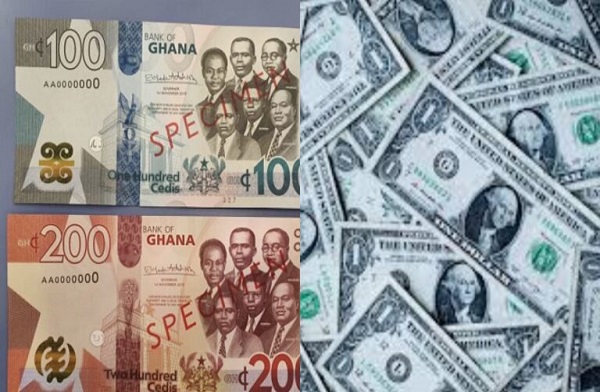
The worst may not be over for Ghana’s cedi, Africa’s third-worst-performing currency this year.
Analysts said the unit, which has already lost more than 7% against the dollar, could continue to weaken despite the International Monetary Fund’s $3 billion bailout following the country’s 2022 default.
Ghana has secured workouts with its domestic and official creditors but is still trying to hammer out a deal with Eurobond investors. And while the country’s international reserves have improved to a 10-month high of $5.9 billion in December 2023, they remain too thin to effectively defend the currency.
“Those are weak reserve levels that no one expects to support currency stability,” said Courage Boti, an economist at GCB Capital Ltd. in Accra, who said the cedi would have fallen further already if Ghana had not suspended foreign debt payments.
“Moreover, elections this year is a big risk in terms of foreign exchange demand pressure,” he said. The vote for a new president is due to be held in December.
Ghana announced a moratorium on its foreign obligations in December 2022, as it grappled with the aftermath of the Covid-19 pandemic and the shock to prices caused by Russia’s invasion of Ukraine. It has completed a domestic bond revamp and reached an agreement in principle with bilateral lenders in January to rework $5.4 billion of loans. It is still negotiating with Eurobond holders who are owed $13 billion.
Foreign investors might look more kindly on Ghana investments once the debt restructuring is completed, but political risk ahead of the election will be a reason for continued caution, Mr. Boti said.
The economy of the world’s second-biggest cocoa producer depends on imports of everything from tooth-picks to heavy machinery, and they are expected to increase ahead of the vote. The government projects GDP growth to quicken to 2.8% this year from 2.3% last year.
“One of the policy priorities of the central bank under the IMF programme is to rebuild foreign reserves,” said Kweku Arkoh-Koomson, an economist at Databank Group. “This means the Bank of Ghana will not necessarily intervene on the market the way it should but just to smoothen volatilities,” he said, forecasting the cedi to weaken to 13.7% to dollar by the end of the year.
The cedi traded almost unchanged at GH¢12.9267 per dollar at 10:41 a.m. in Accra, the capital, according to data compiled by Bloomberg.
Latest Stories
-
At least 30 feared dead in crush at Haitian tourist site
60 minutes -
Four arrested over murder of Scottish businessman in Kenya
1 hour -
New Mainoo deal closer, says Man Utd boss Carrick
1 hour -
Sinner beats Alcaraz to return to world top spot
2 hours -
An inappropriate joke nearly ended his career. Now he’s back with more humour
2 hours -
GPL 2025/26: Dreams FC stage stunning comeback to hammer Eleven Wonders
3 hours -
Livestream: The Probe examines Kumasi’s looming water crisis
3 hours -
MTN Ghana gears up to lead Africa’s AI revolution
3 hours -
Philanthropist Alhaji FuZak donates Da’wah bus to Ambariya Sunni community
3 hours -
GUTA calls for suspension of Publican AI system over trade disruptions
3 hours -
TTAG raises alarm over proposed recruitment of 7,000 teachers, demands national posting roadmap
4 hours -
Civilians feared killed after reports of air strike on Nigerian market
4 hours -
Bishop Simon Kofi Appiah installed as new Jasikan Diocese Bishop
4 hours -
Trump’s Strait of Hormuz blockade threat raises risks and leaves predicaments unchanged
4 hours -
US Court backs extradition of former MASLOC CEO Sedina Tamakloe-Attionu to Ghana
4 hours