

Audio By Carbonatix
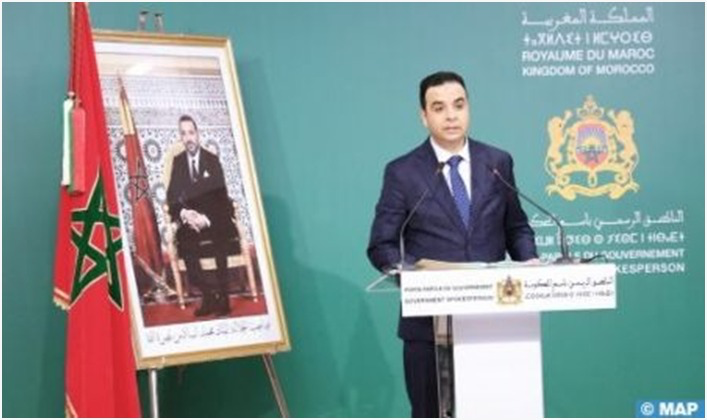
Moroccan government Spokesperson Mustapha Baitas announced on Thursday the formation of a drafting commission tasked with revising the Family Code.
The commission comprises key government ministries and the General Secretariat of the Government (SGG).
Speaking at a press briefing following the weekly Government Council meeting, Baitas stated that the Council established the commission due to the unique nature of the Family Code, ensuring that departments directly involved in its revision are represented.
The commission includes the Ministry of Justice, the Ministry of Endowments and Islamic Affairs, the Ministry of Solidarity, Social Inclusion, and Family, as well as the SGG, which was enlisted for its expertise and its role in harmonising the Family Code with other existing laws and draft legislation currently under parliamentary review.
The commission will be supported by legal and judicial experts, along with ulema (Islamic scholars), and may involve additional specialists from other fields if deemed necessary.
Baitas highlighted the government’s commitment to following the ongoing public debates surrounding the Family Code revision and emphasised its priority status since the government’s communication meeting on December 26.
This meeting, held in line with High Royal Instructions, outlined the key proposed amendments to the public.
“The presentations made during the communication meeting provided the broad outlines of the proposed revisions and the conclusions of the legal opinion on them,” Baitas stated.
“We are now in the process of legal drafting to determine the implementation modalities and necessary procedures.”
He cautioned that it is premature to speculate on the proposed revisions, their potential impacts, or challenges in implementation, as these depend on the finalised legal text.
The government will continue to provide updates while ensuring transparency throughout the drafting process, in accordance with the High Royal Instructions.
In response to public discussions on the revision, Baitas affirmed the government’s alignment with the constructive contributions of political parties, labour unions, and civil society organizations.
He also condemned any attempts to undermine the Supreme Ulema Council, emphasizing the respect due to its members and their authority as the sole institution permitted to issue officially recognized fatwas, as outlined in Article 41 of the Constitution.
Furthermore, Baitas reiterated the government’s openness to feedback from scholars, researchers, and all political and civil society stakeholders, noting that such contributions are rooted in Morocco’s religious principles and evolving social and legal contexts.
The ultimate goal, he stressed, is to ensure family stability and safeguard the rights of all its members.
Latest Stories
-
Prudential Life settles GH¢100,000 medical bills under its PRUCares Valentine Experience Initiative
2 hours -
Wa West Picnic: Peter Lanchene Toobu champions peace, health and unity in landmark celebration
2 hours -
Dr Mensah Market flooded after downpour in Kumasi
2 hours -
Armed men reportedly storm Adjen Kotoku Onion Market amid tensions
3 hours -
Tecco Mensah writes: Why football fans must look beyond statistics
4 hours -
Police recover stolen Honda CR-V in Kumasi within 48 hours
5 hours -
Apetorku Gbodzi 2026 Festival opens in Dagbamete with development focus
5 hours -
President Mahama arrives in Lyon to co-chair One Health Summit
5 hours -
Beverly View Plus Hotel draws crowds amid coastal Easter rush in Volta
5 hours -
Maiden Zongo Festival held in Wa amid calls to tackle drug abuse among the youth
5 hours -
FDA warns of fake HIV test kits on Ghanaian market
6 hours -
Africa urged to build resilient health systems as donor support tightens
6 hours -
Easter gesture: Ablakwa settles medical bills for 85 North Tongu constituents
8 hours -
Africa must harness its population strength—Titus-Glover
8 hours -
Visa-free access doesn’t mean unlimited stay – Lom Ahlijah
8 hours