

Audio By Carbonatix
The Monetary Policy Committee of the Bank of Ghana will from today, January 23, 2024, begin its 116th meeting to review developments in the Ghanaian economy.
The meeting is coming at a time when there is pressure on the Committee to cut the policy rate by some significant margin due to the consistent decline in inflation.
The policy rate was kept unchanged at 30.0% in November 2023, but inflation eased to 23.2% in December 2023.
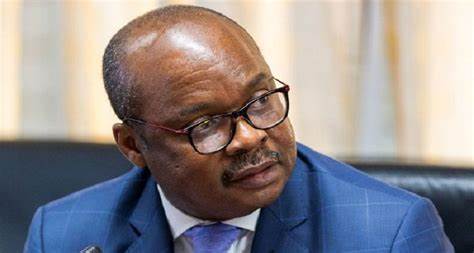
Governor of the Bank of Ghana, Dr. Ernest Addison, however, said though his outfit is committed to a tight Monetary Policy stance, the Committee will cut the policy rate when necessary.
The MPC is expected to prioritise the recent International Monetary Fund Board approval of the first review of Ghana’s programme and the $600 million bailout package from the Fund and its impact on the economy.
Already, Fitch Solutions, has stated that it expects the policy rate to go down by 8.0 percentage points in 2024.
“With inflation moderating substantially through 2024, we anticipate that the BoG will embark upon a sizeable monetary easing cycle, cutting the policy rate by a cumulative 800bps to 22.00% by year-end.”
Fitch Solutions added it usually takes about 12 months for interest rate adjustments to affect the real economy due to the lag in monetary transmission mechanisms.
As such, it believes that the Bank of Ghana’s dovish monetary policy stance is unlikely to result in a sharp increase in real loan growth – which has remained in contractionary territory over January to August 2023.
MPC to assess business environment
The MPC will assess the business environment, particularly the business and consumer risk factors.
In the third quarter of 2023, the Bank of Ghana said its high-frequency real sector indicators pointed to continued pick-up in economic activity, although at a moderate pace. The updated Composite Index of Economic Activity (CIEA) contracted at a lower rate of 0.4 percent in September 2023, compared with a sharper contraction of 1.2 percent in the same period of last year.
The main indicators that contributed to the relative improvement in the CIEA were industrial consumption of electricity, private sector contributions to Social Security, and tourist arrivals. The momentum in credit to the private sector, cement sales, and port activity, however, slowed down over the period
Latest Stories
-
Standard Chartered Bank delivers strong returns and sustainable shareholder value
3 minutes -
Akufo-Addo’s role in the artificial cedi stability is indisputable — Facts do not bend to political convenience
6 minutes -
Breaking Bad actor RJ Mitte dies aged 34
13 minutes -
Wontumi pleads not guilty in GH¢30m Exim Bank loan case
18 minutes -
Beyond the Flyer: Awareness without screening is not enough
24 minutes -
Bekwai MP donates GH¢100,000 to hospital for specialist equipment
32 minutes -
Van Vicker sues Lil Win for defamation, demands GH¢10m
37 minutes -
FIFA/ FIBA agency Pep Sports moves to admit Ghana’s 7-Foot Basketball talent to its Ultra-Modern Sports campus after MyJoyOnline report
39 minutes -
GAUA strike disrupts academic plans at University of Ghana as students, parents express frustration
44 minutes -
Dad’s Army/African Polistas crowned champions of 2026 Accra Polo Club Trustees’ Cup
51 minutes -
Mahama approves Integrated Basic Education Model, with funding expected in 2027 under GETFund formula
54 minutes -
Money-driven elections fuelling corruption – Haruna Iddrisu
58 minutes -
Excessive borrowing ‘cracked’ Ghana’s economy under Akufo-Addo – Haruna Iddrisu
1 hour -
NPP’s silence on economic indicators suggests Mahama is doing better – Haruna Iddrisu
1 hour -
GoldBod must be more accountable to Ghanaians – Haruna Iddrisu
2 hours