

Audio By Carbonatix
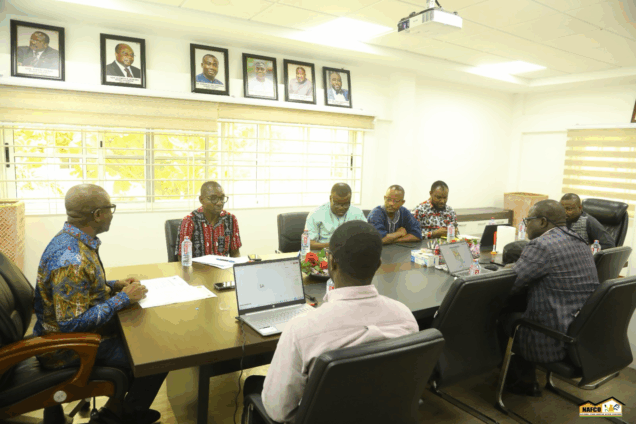
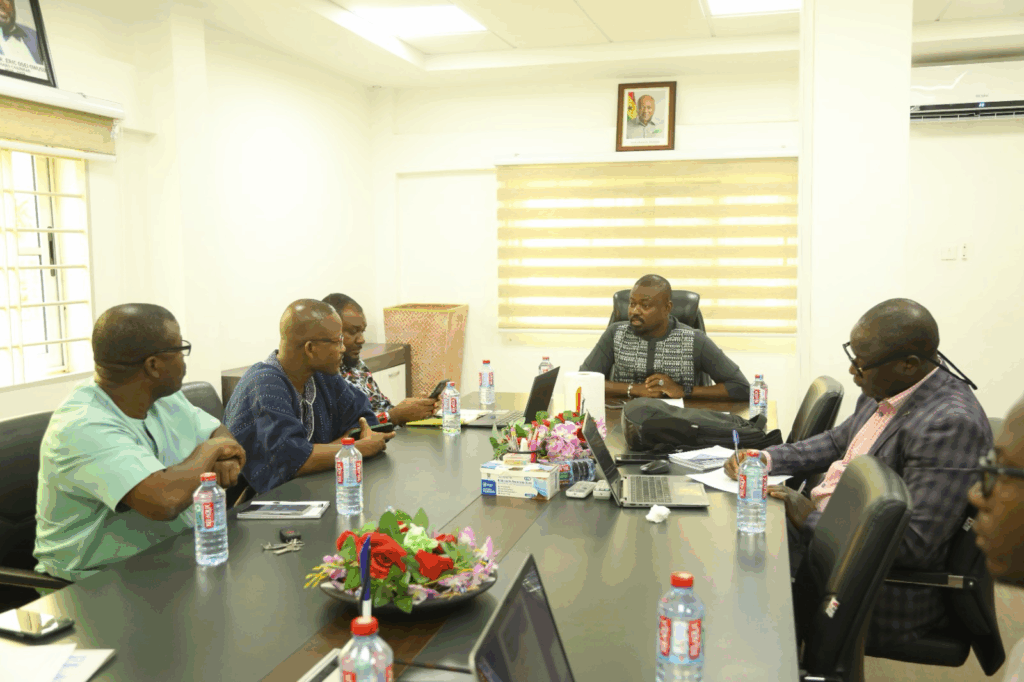
The CEO of the National Food Buffer Stock Company (NAFCO), George Abradu-Otoo, has inaugurated a 10-member Producer Price Committee (PPC) in Accra.
This comes before the commencement of purchases to revive the National Food Security Reserve (NFSR).
The committee is tasked to determine price thresholds that will guide the purchase of selected food commodities from markets and farm gates as part of government’s response to food gluts in some parts of the country.

NAFCO’s mandate includes managing a national food reserve to address emergency needs, stabilise prices during lean seasons, and reduce post-harvest challenges that have long undermined agricultural productivity.
Earlier this year, President John Mahama announced government’s intention to provide GH¢100 million to NAFCO to revitalise the reserve, which has remained empty for years.
The buffer stock company is expected to mop up excess maize, rice, and gari for safekeeping against future eventualities such as shortages, disasters, or emergencies.
The PPC will also serve as a platform for dialogue and decision-making in setting fair producer prices for staple grains.
Smallholder farmers, who produce most of the country’s food, often face unstable markets, post-harvest losses, and weak bargaining power.
Through this committee, farmers are assured of fair returns, while buyers and aggregators benefit from stable pricing structures that support long-term planning and investment.
The committee is made up of representatives from the Ministry of Food and Agriculture (MoFA), NAFCO, World Food Programme (WFP), Peasant Farmers Association, Poultry Farmers Association, Feed Ghana Secretariat, and the Network of Commercial Agricultural Production (NETCAP).
Speaking at the inaugural ceremony, Mr. Abradu-Otoo emphasised that post-harvest losses continue to undermine growth in the sector and described the aggregation of excess produce as an urgent call to action.
“By guaranteeing fair producer prices, government ensures that farmers and aggregators can reinvest in production, thereby contributing to rural development and poverty reduction,” he said.
He added that the initiative aligns with government’s broader efforts to stabilise food prices, reduce import dependency, and strengthen local production.
He urged the committee to ensure pricing policies balance national food security priorities with the economic welfare of smallholder farmers.
Committee Chairman Osmond Amuah expressed hope that their work will reflect the aspirations of all stakeholders in the agricultural value chain.
Latest Stories
-
Police intercept 26 sacks of suspected narcotics in Ho
6 minutes -
First Sky Group creates over 6,000 jobs to tackle unemployment – CEO
23 minutes -
First Sky Group builds 101 churches, expands facilities in Greater Accra – CEO
39 minutes -
GPL 2025/26: Hohoe United’s relegation fears deepen after draw with Vision FC
50 minutes -
First Sky Energies to add 50mw to the national grid from Yendi plant
53 minutes -
Berekum Chelsea beat Bibiani GoldStars to boost relegation fight
1 hour -
GPL 2025/26: Albert Amoah scores on Kotoko return as they beat Holy Stars
1 hour -
First Sky Group commits over GH¢51m to dialysis care at Korle Bu – CEO
1 hour -
Local businesses want policy reforms against proliferation of foreign retail malls
2 hours -
FirstBank Ghana shifts focus to branchless, digital banking as it marks 30 years
3 hours -
Countdown to Joy FM Big Workout begins with 14.7km walk by MGL’s Winston Amoah, Max Fugar
3 hours -
Kwadaso MCE warns against indiscriminately waste dumping
3 hours -
Gov’t anti-scam efforts bearing fruit, says Cybersecurity expert
3 hours -
Africa’s moment, if we get reading right
4 hours -
Free Cataract surgery brings new hope to over 500 residents in Ejura
4 hours