

Audio By Carbonatix
Government's National Cocoa Rehabilitation Programme risks total collapse following an admission by some supervisors and cocoa farmers that the Programme is crumpling and needs to be rescued immediately.
The youth providing labour and technical support said heavy workload, delay in payment and lack of quality tools will put the Cocoa Rehabilitation Programme in limbo, as more youth are seriously reconsidering their participation in the programme.
“This poor approach is discouraging us from the Cocoa Rehabilitation Programme; managers of the programme do not have us at heart, they tell us what they don’t believe in their hearts,” the youth said.
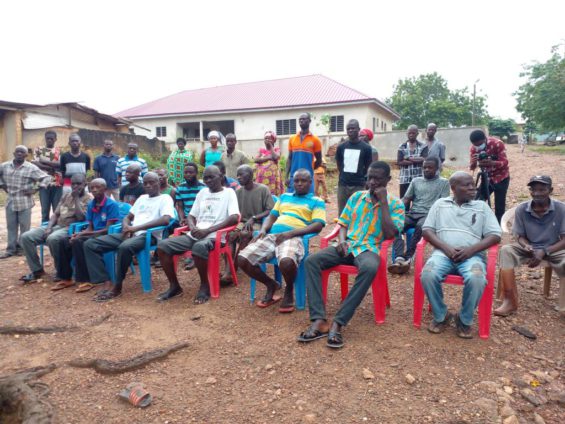
This was disclosed during an interaction with members of the Ghana Agricultural and Rural Development Journalist Association (GARDJA) when they visited some communities in the Western North to ascertain challenges confronting cocoa production in the region.
Some of the communities visited include Ahwiaa, Suroano, Daboase, Manso Nkwanta, Adjakaa Manso, Ntrentreso and severely others.
Farmers said the discussion had been that the youth could find employment in Agriculture but often times the sector is being mismanaged, the very sector that could employ the majority of the youth of Ghana.
“Most of the youth in the region thought the Cocoa Rehabilitation Programme introduced by government would create employment opportunities for them instead people are brought from elsewhere to do work, how do we close the unemployment gap in our communities?” the farmers quizzed.
Secretary of the Sefwi Bekwai Cocoa Farmer’s Cooperative Union, Nicholas Kwabena Gbadago, explained that managers of the National Cocoa Rehabilitation Programme are killing the vision and mission behind the programme.
“The government has allocated over $200 million of the $600 million syndicated loan facility it secured from the African Development Bank (AfDB) to the national rehabilitation programme but it may not yield the needed results if not rescued immediately.
COCOBOD promised to give an amount of ¢1000 per hector to each farmer who has been affected by the disease but rather most of us received ¢500 per hector instead of ¢1000 per hector” he pointed out.
Chief Farmer with the Sefwi Ahwiaa cocoa farmers’ cooperative Peter Nkrumah said contractors assigned to provide labour and technical support are not serious minded persons.
“We are losing our cocoa farms, this poor approach and strategy are discouraging us from joining the programme; which will lead to the further and rampant spread of the disease.
"We want to own the Cocoa Rehabilitation Programme introduced, just provide us the technical support, we will take care of our own farms,” he said.
Latest Stories
-
President Mahama is not sincere with Ghanaians on LGBTQ bill matter – Hassan Tampuli
17 minutes -
Gov’t to establish Prison Industrial Hub to equip inmates with income-generating skills – Prison Service boss
36 minutes -
Alhassan Tampuli donates cement, roofing sheets to support storm victims in Gushegu
36 minutes -
Alhassan Tampuli appeals for urgent support for storm victims in Gushegu
39 minutes -
The hypocrisy must stop; pass Anti-LGBTQ+ Bill now – Alhassan Tampuli to Mahama
43 minutes -
Imprisonment should be rehabilitative, not punitive – Ghana Prisons boss at UNGA
1 hour -
Ga Adangbe traditional priests petition Mahama over McDan aviation licence revocation
1 hour -
Anti-LGBTQ Bill: NDC’s arrogance is worrying – Hassan Tampuli
1 hour -
Let’s give OSP time to mature, not to scrap it – Hassan Tampuli
2 hours -
Nigeria convicts 386 Islamist militants in mass trials
2 hours -
Djibouti president wins election with 97.8% of vote, state media says
2 hours -
We don’t have mandate to deduct tax from rent allowance of security services personnel – Interior Ministry clarifies
2 hours -
Ablakwa receives Presidential Special Envoy on Reparations to advance global agenda
2 hours -
Christina Koch becomes first woman to travel around the moon on Artemis II
2 hours -
Epstein survivors’ calls to meet King Charles and Queen harder to ignore as US visit approaches
2 hours