


Audio By Carbonatix
On a warm Thursday afternoon in the 90s, a young man stands outside a compound house in Bubuashie, smoothing the creases of his shirt. He has rehearsed his words all night long. He is not just visiting a woman; he is presenting himself to her family.
Aunties sit nearby, whispering. An uncle clears his throat as he props himself up on a lazy wooden chair. Conversations are measured. Every word carries weight. Love, in that moment, is deliberate, watched, accountable, and intentional. If this love is to grow, it will do so under many eyes.
Fast forward to today, and a very different kind of courage is required.
A message pops up on a phone in a hostel room at Legon: “Hey, I’ve been meaning to talk to you.” No elders. No courtyard. Just a screen glowing in the dark and a conversation that could stretch across time zones before sunrise.
Romance in Ghana has not disappeared. It has accelerated.
There was a time when love unfolded slowly. Courtship meant Sunday visits after church, carefully ironed shirts, and long conversations under supervision. Letters were handwritten and reread until the paper softened at the folds. If you were in a relationship, your family likely knew, and so did the neighbours.
Today, relationships can begin in traffic at Kejetia, sparked by a reply to an Instagram story. Couples meet through dating apps, Twitter threads, professional networking events in East Legon cafés. Some fall in love across continents, sustained by FaceTime calls and mobile money transfers for surprise deliveries on Valentine’s Day.
This shift is not just technological. It is deeply cultural.
Young Ghanaians now exercise a level of romantic autonomy their parents rarely had. Tribal boundaries blur. Long-distance relationships thrive. Women speak more openly about emotional compatibility, ambition, and partnership, not just marriage. Love is increasingly framed as mutual growth rather than social duty.
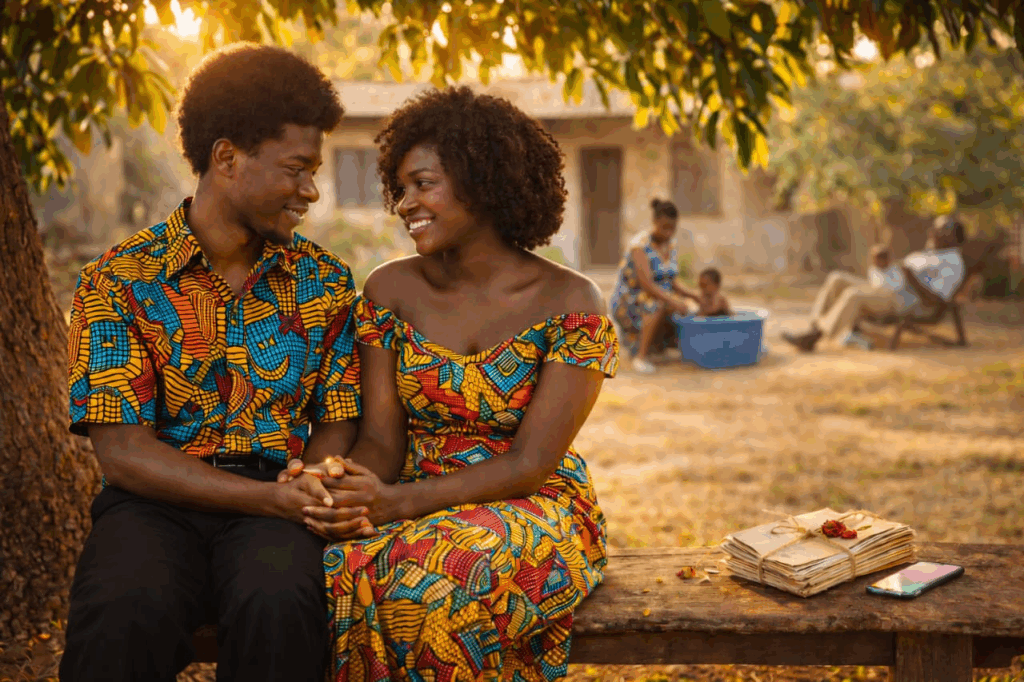
That progress matters. But so does what we may be losing.
In a digital age, romance competes with performance. Proposals are choreographed for reels. Anniversary messages are drafted for maximum engagement. Matching outfits on February 14 flood timelines. The private has become public, and affection sometimes feels curated.
Choice, once limited, is now overwhelming. Endless options can make commitment fragile. Ghosting has replaced difficult conversations. Silence, the unanswered message, and the unread DM carry a sting older generations would not recognise in the same way.
Yet older love was not flawless either. Community involvement sometimes meant pressure. Compatibility was assumed rather than explored. Many couples entered marriage with little emotional vocabulary for their struggles.
Perhaps the truth is this: every generation romanticises its own version of romance.
What has changed is not the desire for love, but the environment in which it survives. The compound house has given way to the smartphone. The family mediator has been replaced by mutual followers. The handwritten letter has evolved into a voice note sent at 1:17 am.
But the feeling? That nervous anticipation before a reply. The excitement of being chosen. The ache of disappointment. Those remain stubbornly human.
From courtship to clicks, Ghanaian romance continues to adapt: negotiating tradition and technology, intimacy and image, and patience and speed. The tools have changed. The tempo has quickened.
But the longing to be seen, valued, and loved remains timeless. And whether love begins under a mango tree or in a message that simply says “Hi”, the heart still beats the same.
Latest Stories
-
Tarkwa court jails labourer for three years over GH¢123,000 theft
34 minutes -
GAEC must retain nuclear scientists for Ghana’s nuclear ambitions – Minister
1 hour -
Man reportedly mistaken for game and shot by hunter dead in forest
1 hour -
19-year-old mason jailed 15 years for defiling seven-year-old pupil
1 hour -
Ghana’s banking sector assets rise 20.47% to GH¢500.2bn – BoG Governor
1 hour -
22 injured as Sprinter bus overturns at Sege after tyre burst
1 hour -
UN housing expert urges Ghana to strengthen Rent Control Department amid housing affordability concerns
1 hour -
Delta-BCI partnership reaches 166,000 people with breast cancer education
2 hours -
Power restoration fault suspected in Kumasi Central Market fire
7 hours -
The 7-foot giant of Ngleshie Amanfro: Seven-foot Ghanaian Ephraim Saawa dreams of joining the national basketball team
7 hours -
Government promises support for Kumasi Central Market fire victims
8 hours -
Vibes The Movie: Big Ghun’s Ghanaian film earns five nominations at 2026 REFFA
8 hours -
‘I’m a fulfilled man’—Justice Korbieh on missing out on Supreme Court despite two nominations
8 hours -
MamaCare CEO warns unresolved conflicts among health workers could undermine maternal and neonatal care
8 hours -
Health professionals urged to translate medical knowledge into practice to save mothers
9 hours