

Audio By Carbonatix
Government's National Cocoa Rehabilitation Programme risks total collapse following an admission by some supervisors and cocoa farmers that the Programme is crumpling and needs to be rescued immediately.
The youth providing labour and technical support said heavy workload, delay in payment and lack of quality tools will put the Cocoa Rehabilitation Programme in limbo, as more youth are seriously reconsidering their participation in the programme.
“This poor approach is discouraging us from the Cocoa Rehabilitation Programme; managers of the programme do not have us at heart, they tell us what they don’t believe in their hearts,” the youth said.
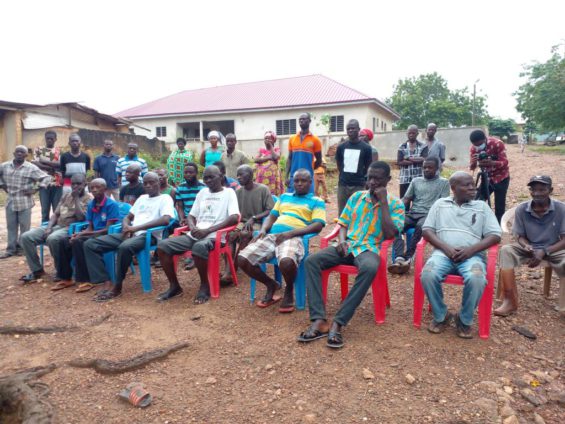
This was disclosed during an interaction with members of the Ghana Agricultural and Rural Development Journalist Association (GARDJA) when they visited some communities in the Western North to ascertain challenges confronting cocoa production in the region.
Some of the communities visited include Ahwiaa, Suroano, Daboase, Manso Nkwanta, Adjakaa Manso, Ntrentreso and severely others.
Farmers said the discussion had been that the youth could find employment in Agriculture but often times the sector is being mismanaged, the very sector that could employ the majority of the youth of Ghana.
“Most of the youth in the region thought the Cocoa Rehabilitation Programme introduced by government would create employment opportunities for them instead people are brought from elsewhere to do work, how do we close the unemployment gap in our communities?” the farmers quizzed.
Secretary of the Sefwi Bekwai Cocoa Farmer’s Cooperative Union, Nicholas Kwabena Gbadago, explained that managers of the National Cocoa Rehabilitation Programme are killing the vision and mission behind the programme.
“The government has allocated over $200 million of the $600 million syndicated loan facility it secured from the African Development Bank (AfDB) to the national rehabilitation programme but it may not yield the needed results if not rescued immediately.
COCOBOD promised to give an amount of ¢1000 per hector to each farmer who has been affected by the disease but rather most of us received ¢500 per hector instead of ¢1000 per hector” he pointed out.
Chief Farmer with the Sefwi Ahwiaa cocoa farmers’ cooperative Peter Nkrumah said contractors assigned to provide labour and technical support are not serious minded persons.
“We are losing our cocoa farms, this poor approach and strategy are discouraging us from joining the programme; which will lead to the further and rampant spread of the disease.
"We want to own the Cocoa Rehabilitation Programme introduced, just provide us the technical support, we will take care of our own farms,” he said.
Latest Stories
-
‘It’s not a matter of evidence; it was a metaphor’ – Afenyo-Markin defends ‘drug lab’ comment
4 minutes -
Borrowing costs cut by more than half – Finance Minister
7 minutes -
KNUST students urged to look beyond Ghana for AI and robotics opportunities
10 minutes -
Odeibea Foundation extends energy equity initiative with solar streetlights in Akpato and Worwonyo
11 minutes -
Customs increases surveillance at ports, warns importers against concealing restricted items
13 minutes -
WERise urges women entrepreneurs to scale businesses, increase revenue and create jobs
15 minutes -
POWA calls for end to gendered attacks on Lordina Mahama, Samira Bawumia
19 minutes -
Zigx Foundation supports 50 vulnerable mothers in Akwapim North
20 minutes -
Nhyiramma Foundation calls for greater support for widows and single mothers
22 minutes -
Ghana must stop turning rivers into gutters through encroachment – Kwadwo Poku
24 minutes -
‘We’ll never compromise on quality’ – Agbodza tells Accra-Kumasi bypass supervisors
29 minutes -
Roads Minister urges motorists to drive cautiously on Accra-Kumasi Highway
30 minutes -
Hohoe MCE appeals for more relief supplies as flooding displaces residents
30 minutes -
‘Free Salomey now!’ – Women march to EOCO over Salomey Awitey Baffoe’s continued detention
32 minutes -
GES appeals to teachers to rescind strike and return to class as efforts to resolve concerns intensify
33 minutes