

Audio By Carbonatix
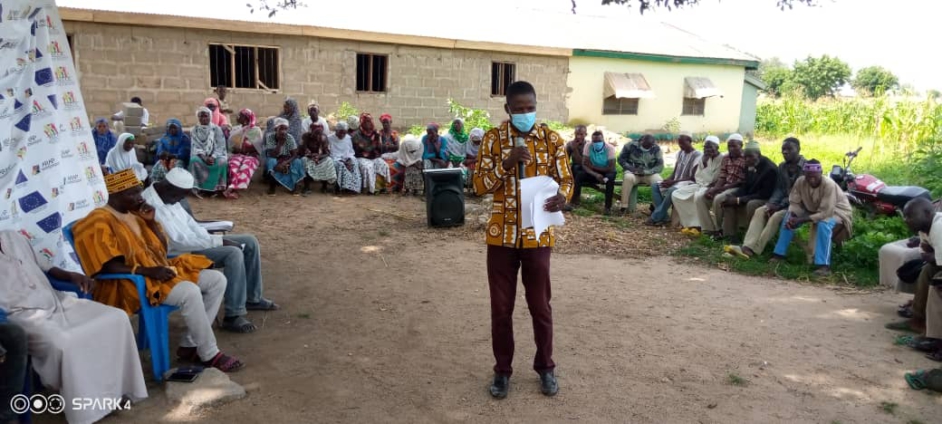
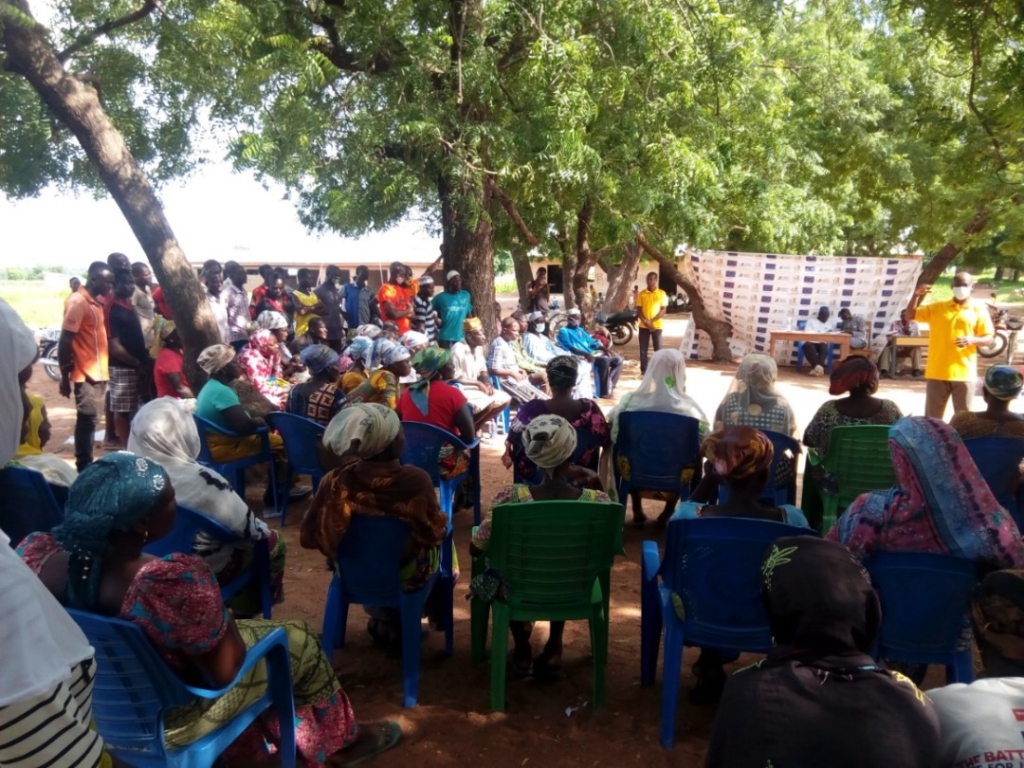
The Binduri District Office of the National Commission for Civic Education (NCCE), Upper East Region, has schooled residents of the Badabogo Community on social auditing as part of contributions towards deepening local governance.
The engagement which was to further help the community collectively identify their most pressing development needs was part of the Commission’s flagship programme, Accountability, Rule of Law and Anti-Corruption Programme (ARAP), sponsored by the European Union (EU).
It attracted various stakeholders including representative from the District Assembly, traditional authorities, opinion leaders, youth and women groups, persons with disabilities, heads of departments and students among others.
Speaking to the participants, Emmanuel Abass Larri, the Binduri District Director of the NCCE, stated that the main objective of the project was to empower the citizens with the tenets of local governance to enable them demand accountability from duty bearers over the implementation of development projects and programmes.
The social auditing is intended to promote citizens’ participation in local governance systems so as to enable them support the execution of capital projects as well as monitor projects to ensure value for money.
This, he said, would promote community ownership of development projects and policies, increase awareness of the operations of the Local Government and empower the citizenry to demand Accountability from duty bearers so as to reduce corrupt practices.
It was held on the theme, “Enhancing citizen’s participation through social Auditing for good governance”.
The District Director, who took the participants through the social auditing operation as the mandate to assess the performance of public policies, programmes and projects, encouraged the residents to take the initiative and work together to solve their challenges.
The community members identified lack of electricity as their topmost development need and expressed gratitude to NCCE and its partners for enlightening them on their right to demand accountability from public officials.
The residents said their community had not benefitted from the rural electrification project and expressed readiness to support any move by any organization or institution to connect the community to the national grid.
They said it would help boost economic activities in the area, create employment for the youth, reduce crime such as robbery as well as enable school children learn at night and improve upon their academic performance.
With the support of the NCCE, a five-member Social Auditing Committee was formed to ensure they worked closely with relevant stakeholders and institutions to ensure that the community was connected to the national grid as well as construct a basic school, public toilet facility and source of potable water.
Latest Stories
-
Ghana’s BRICS move requires clear strategy to manage risks – Godfred Bokpin
1 hour -
Pay teachers realistic income – Duncan Amoah to gov’t
2 hours -
Bechem to become chicken capital of Ghana – Mahama projects
2 hours -
Gov’t targets recruitment of 16,500 health professionals in 2026
2 hours -
Two-week strike will not derail academic calendar – GNAT President
2 hours -
Headmaster detained after BBC investigation into alleged sexual abuse of students
2 hours -
GNAT pushes for clear implementation procedures of teachers’ conditions of service
3 hours -
Recurrent strikes threaten quality of education and academic calendars – Prof Bokpin
3 hours -
‘Cockroach’ group leaders among hundreds detained in Delhi protest
3 hours -
Don’t let speed of information become your judgement – CJ tells new lawyers
3 hours -
World Cup visa scandal: People have leveraged public office to facilitate fraud – Senyo Hosi
3 hours -
Glut! Farmers count losses as prices crash, customers happy
4 hours -
GSA postpones auction of unserviceable vehicles
4 hours -
Man charged with attempted murder after stabbing
4 hours -
World Cup visa scandal: Senyo Hosi says issue goes beyond calls for Sports Minister’s resignation
4 hours