

Audio By Carbonatix
Health experts have raised concerns over what they say is the increasing prevalence of Non-Communicable Diseases (NCDs) in urban Ghana.
Physician Specialist, Dr. Gifty Sunkwa-Mills, revealed on Joy Prime’s Prime Morning Show that approximately 54 percent of urban dwellers in the country are living with either hypertension or diabetes.
This significant statistic underscores the urgent need for targeted public health interventions and lifestyle modifications.
The higher prevalence of NCDs in urban areas is attributed to lifestyle factors prevalent among city dwellers.
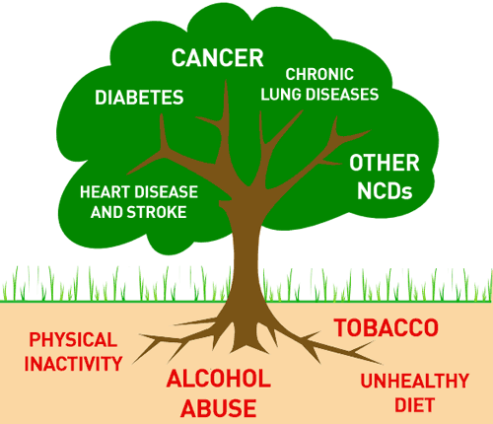
The cardiologist indicated that these factors include unhealthy diets, sedentary lifestyles, excessive alcohol consumption, and high levels of stress.
"What is known is that, the rates are higher in the urban areas and there are many reasons for that. You could have 40 to 55 percent prevalence in urban areas but in the rural areas, it might be between 28 and 32 percent. The lifestyles are very telling in these statistics," the physician said.
Fast-paced urban living often leads to increased consumption of processed foods high in sugar, salt, and unhealthy fats.
Coupled with a lack of physical activity due to sedentary jobs and the convenience of motorised transportation, these habits contribute significantly to the rising rates of hypertension and diabetes.
"There is very significant underreporting even with these statistics. In Ghana, only 25 percent of persons with hypertension have been diagnosed. So there are 75 percent of people out there who are living with hypertension are don't know. They have not checked and they are walking about," she added.
Other health professionals echo these concerns, pointing out that the lack of green spaces for exercise, limited access to affordable healthy food options, and the stressful urban environment exacerbate the risk factors for NCDs.
In contrast, rural areas of Ghana report lower incidences of NCDs. The rural populations tend to engage more in physical activities through farming and other labour-intensive jobs.
Additionally, diets in rural areas often include fresh produce from local farms, reducing the intake of processed foods.
Dr. Sunkwa-Mills, however, calls for a multi-faceted approach to address this growing health concern. This includes educating urban populations about the risks of unhealthy lifestyles and the benefits of regular physical activity and balanced diets.
Latest Stories
-
Anti-LGBTQ Bill: NDC’s arrogance is worrying – Hassan Tampuli
3 minutes -
Let’s give OSP time to mature, not to scrap it – Hassan Tampuli
7 minutes -
Nigeria convicts 386 Islamist militants in mass trials
12 minutes -
Djibouti president wins election with 97.8% of vote, state media says
17 minutes -
We don’t have mandate to deduct tax from rent allowance of security services personnel – Interior Ministry clarifies
31 minutes -
Ablakwa receives Presidential Special Envoy on Reparations to advance global agenda
49 minutes -
Christina Koch becomes first woman to travel around the moon on Artemis II
59 minutes -
Epstein survivors’ calls to meet King Charles and Queen harder to ignore as US visit approaches
1 hour -
UN Secretary-General names Ghana’s Anita Kiki Gbeho as South Sudan envoy
1 hour -
Mali withdraws recognition of Sahrawi Republic, backs Morocco’s autonomy plan
1 hour -
Gov’t distributes over 8,500 laptops to One Million Coders project
1 hour -
Julius Debrah, ‘man to beat’ as NDC’s James Agbey dismisses Musah Dankwah’s polls
1 hour -
GPRTU in Savannah Region to protest alleged eviction in Damongo
2 hours -
Re: Reinsurance does not replace process — A response to the SIGA–SIC defence
2 hours -
Gender Ministry supports Harriet Amuzu in ongoing abuse case
2 hours