

Audio By Carbonatix
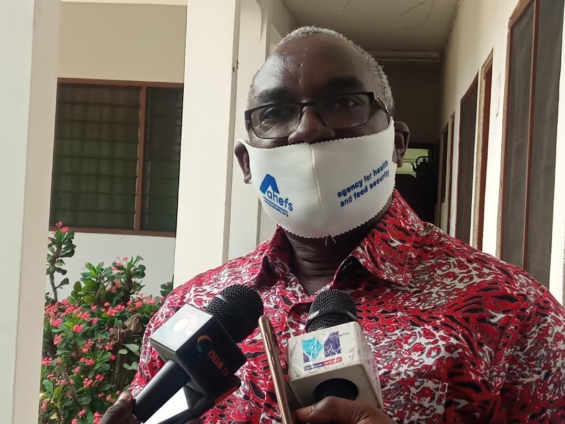
Director-General of the National Development Planning Commission (NDPC), Dr Kodjo Mensah-Abrampa has launched the Ghana Integrated Infrastructure Database (GIID) portal: giidapp.org.
The objective of the GIID was to establish a web–based platform that would facilitate data capture for socioeconomic analysis and decision making across all levels of government.
The Ghana Oil and Gas for Inclusive Growth (GOGIG) provided the funds and resources for the project while CERSGIS' technical team put together the system.
Dr Mensah-Abrampa said the GIID would eventually be expanded into comprehensive and sustainable database of all nationwide infrastructure projects.
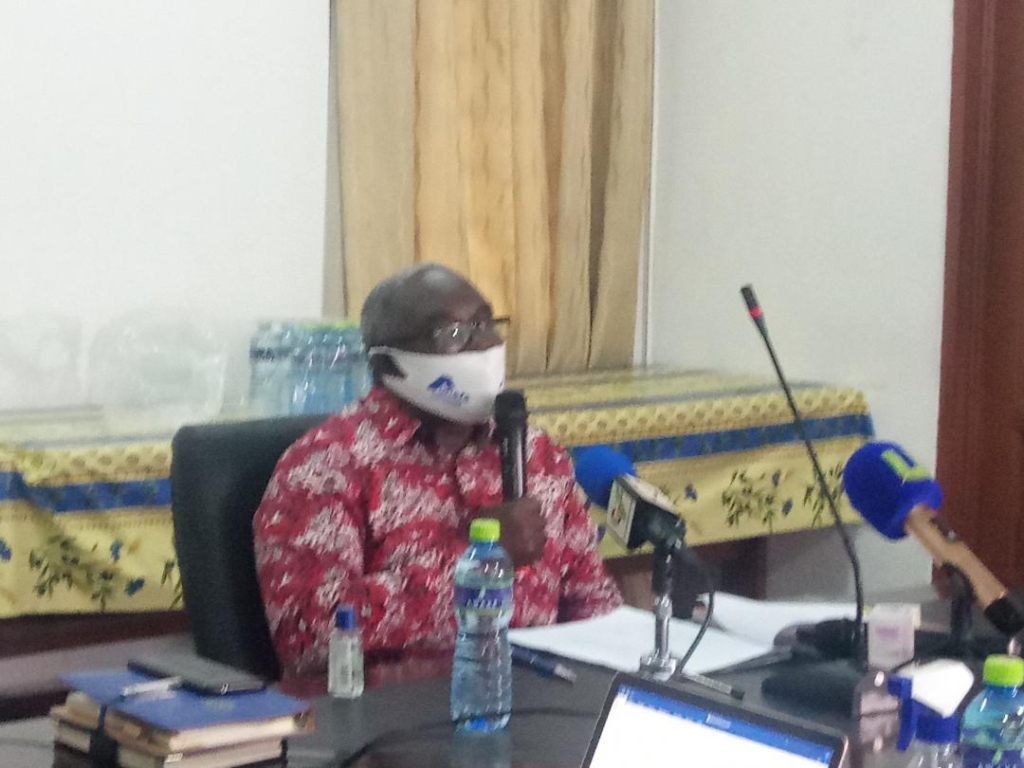
He said the system had been developed with open-source architecture with features that support offline and online data accessibility and usage; adding that it had varying levels of access and control but user-friendly.
He said besides, the system had the capacity to capture and analyse geospatial data as well as support mapping.
He noted that the importance of infrastructure development to accelerate social and economic growth in Ghana was long recognized.
He said Ghana had a history of infrastructure development, which was not matched by any African country.
"As far back as 1920 at the then Gold Coast, the first modern infrastructure development plan (1920-1929) was developed by Governor Guggisburg," he stated.
"In the first 10-year plan of 1951 -1960), infrastructure development was the topmost, though tilted more towards the social side".
He said the National Physical Development Plan 1963 - 1970 (7-year development plan) was an additional attempt to present a more structured plan in achieving infrastructure development in the country although the implementation of the plan was truncated.
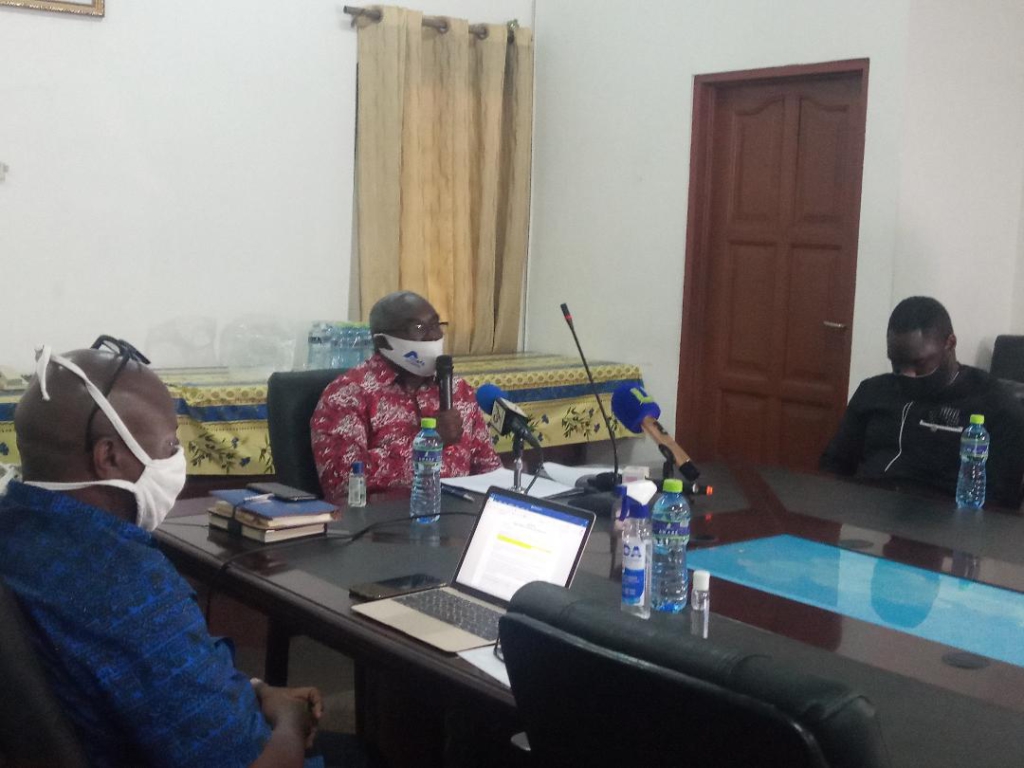
Dr Mensah-Abrampa said more recently, various national development policy frameworks identified strategies for improving infrastructure to accelerate the social and economic development in the country.
He said the current Coordinated Programme of Economic and Social Development Policies (2017-2024) “An Agenda for Jobs: Creating Prosperity and Equal Opportunity for All” identifies revamping economic and social infrastructure as a key anchor for growth and development for the country in addition to restoring the economy, transforming agriculture and industry; and strengthening social protection and inclusion.
He said a Cabinet sub-committee was appointed by the President chaired by the Minister for Planning to give impetus to the transformation in infrastructure management in this country.
Dr Mensah-Abrampa said due to the catalytic role of infrastructure for economic and social development, in more recent times, an increasing amount of oil and gas revenues were dedicated to Infrastructural Investment.
He said the Ghana Infrastructure Investment Fund (GIIF) was established to serve as permanent investment vehicle established by law to lead, promote, facilitate, fund, and backstop the development of, and investment in, infrastructure.
The main objective of the GIIF is to mobilise, manage, coordinate and provide financial resources; “To catalyse the development of critical infrastructure in Ghana.
He said these efforts of closing the financing gap for infrastructure development had resulted in numerous infrastructure projects across the various sectors of the Ghanaian economy.
For instance, over 400 infrastructure projects were identified to be funded by oil and gas revenues in 2019 in the areas of health, agriculture, education, roads and railway; stating that all these had been structured in a long term perspective of a Ghana Infrastructure Plan, which was at the final stages and would be launched before the end of the year.
"A key identified setback to on-going and planned infrastructure investments is the fragmented nature of information across Ministries, Departments and Agencies (MDAs) and the Metropolitan, Municipal and District Assemblies (MMDAs).
Dr Mensah-Abrampa said there was consequently limited harmonized data to use for monitoring, evaluation, and planning.
He reiterated that the public, CSOs, NGOs, and academia among others solicit information about Ghana’s existing, on-going and planned infrastructure investments from various state institutions.
He said the challenges of fragmented data, inconsistencies, and disparities across public sector institutions were manifested in these data collections efforts.
He noted that NDPC and GOGIG had for some years now found the need to work together to address such a challenge.
He recalled that in 2019, the two institutions spearheaded establishing a technical and institutional foundation for a National Infrastructure Database (NID) for Annual Budget Funding Amount (ABFA) funded projects dubbed the GIID.
Latest Stories
-
OnlyFans owner Leonid Radvinsky dies at 43
5 hours -
Nigerian police arrest 15 after viral videos of alleged sexual assault at festival
6 hours -
Ethnic, political exclusion, not theology alone drives Muslim sectarian violence in Ghana, KNUST study finds
6 hours -
Semenyo reports to Black Stars camp after Carabao Cup win
7 hours -
Journalism out loud: Defending truth in a divided world
11 hours -
Heath Goldfields partners local firm, receives new mining fleet to revive Bogoso-Prestea mine
11 hours -
Korle-Bu overcrowding driven by broken referral system, not just bed shortage – Doctors
11 hours -
MC Portfolio named red carpet host for 2026 Ghana Music Awards USA
12 hours -
Oda-Akyem Swedru road develops dangerous potholes
12 hours -
U.S. Embassy explains Visa process for Ghanaians ahead of World Cup
12 hours -
Viral video on emergency care at Korle-Bu Teaching Hospital is ‘authentic’ – Emergency Medicine Residents
12 hours -
Ahmad Abdul-Samad, Rachael Quarcoo dominate 1st quarter All Ghana Badminton Championship
12 hours -
ActionAid calls for strong partnerships to advance water, gender, and climate justice
13 hours -
DVLA begins nationwide clampdown on expired DV plates from March 24
13 hours -
Ghanaian Commonwealth Youth Leader meets King Charles III, pushes for youth economic empowerment
13 hours