


Audio By Carbonatix
The National President of the Network of Community Water Services (NETCOWAS), has lauded the hundreds of rural communities and small towns in Ghana who have been working hard in managing their piped water systems and providing continuous access to safe and affordable drinking water supply for their people.
Most of these communities have been managing their piped water systems since the 1990s, and have made investments in extensions, expansions, and major replacements from their own resources/water revenues.
In a solidarity message, the President, Okotwasa Nana Owusu Sarpong I, Mpobihene Otumfour Brempong, noted all these piped water services are selling water and using the water revenues to finance operation and maintenance (O&M) expenditures.
Community-managed piped water services constitute an important water service provider group representing about 80% of all water service providers in Ghana’s rural water sub-sector.
This is a significant contribution by community-managed piped water services to Ghana’s water supply coverage.
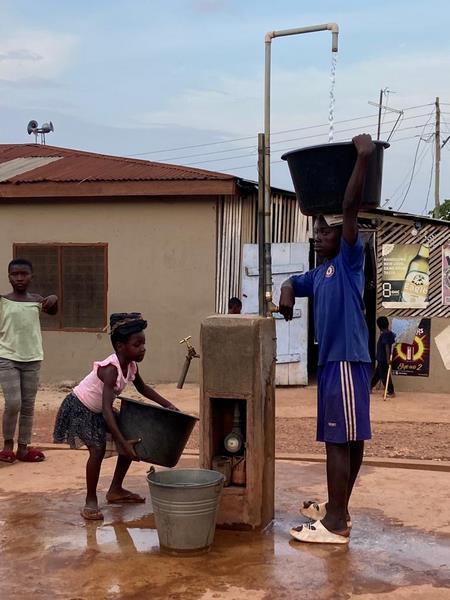
In line with the global theme for this year’s World Water Day Celebration which is to ‘accelerate change’, NETCOWAS has pledged commitment to work with its members to improve the sustainability of rural and small towns piped water services.
This will be through the adoption of business principles in the management of water services, ensuring improved efficiency in service delivery, and the promotion of learning and performance/peer review.
NETCOWAS while commending government and District Assemblies for their support to rural and small towns piped water supply in Ghana drew attention to some challenges facing community-managed piped water supply.
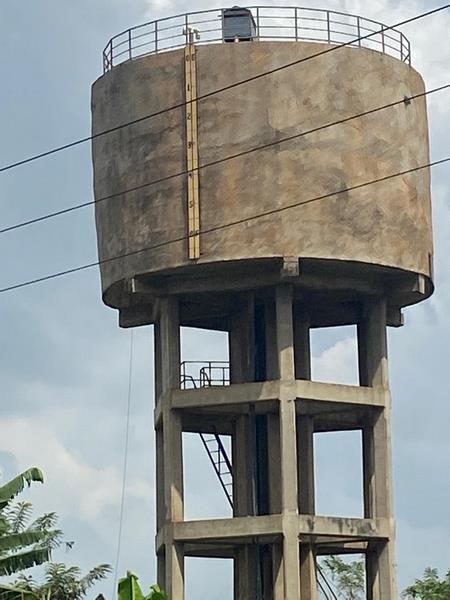
They cited Aging rural and small towns piped water supply infrastructure which needs urgent capital injection for rehabilitation and expansion.
Also, over-reliance on the national grid, and hence, the need to transition to solar power to help reduce high energy costs, and also contribute to reduction in carbon emissions for climate gains.
The network also threw light on the low access to prepaid water meters.
It has, therefore, urged the relevant stakeholders to prioritise un-served communities for water supply investments to benefit the over three million Ghanaians who still continue to drink from surface water sources at the risk of their health, especially for children under five years.
Latest Stories
-
Fuel prices: Ghana places 15th in Africa
5 minutes -
Africa must look inward: Reframing resilience in a shifting global econy
22 minutes -
7 dead, 2 missing after boat capsizes on Volta Lake
32 minutes -
Miss Diaspora Ghana 2026 launched to deepen diaspora ties and drive development
39 minutes -
US warns citizens to reconsider Nigeria travel on safety grounds
1 hour -
Ivan Toney questions refereeing in Saudi Pro League title race after Al-Ahli draw
1 hour -
Angola appoint Aliou Cissé as new head coach
1 hour -
Virtual Security Africa showcases digital security vision at Kwahu Business Forum
1 hour -
EBID strengthens regional integration role amid global economic uncertainty
2 hours -
Two assault rifles, ammunition retrieved in Police probe of Tamale gang attack
2 hours -
EBID records strong financial growth with $722m disbursements in 2025 – President, Dr George Donkor
2 hours -
EBID to mobilise $2.69bn under new 2026–2030 growth strategy – Dr George Donkor
2 hours -
An open letter to telcos, regulators and security agencies on mobile money fraud in Ghana
2 hours -
Mobile Money Merchants are driving fraud
2 hours -
Alban Bagbin declines minority’s motion to investigate sale of gold reserves at BoG
2 hours