

Audio By Carbonatix
resh data released by the Ghana Statistical Service has revealed deep district-level inequalities in access to basic services, health outcomes and social protection, with more than half of children in 53 districts lacking any form of birth registration, raising concerns about exclusion and uneven development across the country.
The findings are contained in a series of thematic briefs produced using Small Area Estimation methodology, which integrates data from the 2022 Ghana Demographic and Health Survey and the 2021 Population and Housing Census to generate reliable district-level statistics that are not ordinarily available from survey data alone.
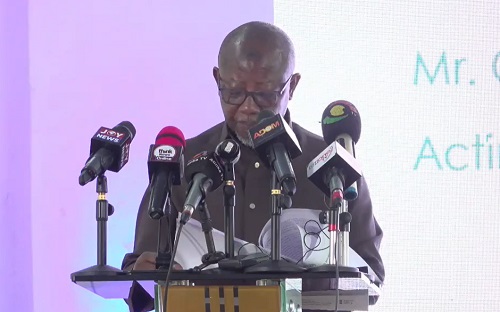
Speaking on behalf of the Government Statistician today in Accra, the Acting Deputy Government Statistician, Mr Omar Seidu emphasised the importance of the GDHS.
He said, ‘Beyond merely describing health outcomes, the Ghana Demographic and Health Survey datasets play a far more strategic role. They guide policy choices, shape the allocation of scarce resources, and enable the monitoring of progress toward both national and global development goals.’
According to the report, birth registration within the first 12 months of life remains alarmingly low in many parts of the country, with about 53 districts recording 50 per cent or more of children without any form of identity, either registered or certified.
The Ghana Statistical Service described birth registration as “the official recording of a child's birth by a government authority, providing legal recognition of the child's identity, nationality, and parentage,” noting that the absence of this basic documentation limits access to essential services later in life.
The data further exposed sharp inter and intra-regional disparities in child welfare indicators, including the safe disposal of children’s stools, where appropriate practices were found to be generally low nationwide. All districts recorded less than 50 per cent compliance, except those in the Western North Region, while districts in the Greater Accra Region recorded some of the lowest levels, with rates falling below seven per cent.
On nutrition, the report identified a pronounced north-south divide in the prevalence of the double burden of malnutrition, defined as “the coexistence of stunting among children under five and anaemia among women of reproductive age (15-49 years).” Northern regions recorded significantly higher levels of child stunting and maternal anaemia compared to southern districts, highlighting persistent inequalities in health outcomes.
Access to basic hygiene facilities also emerged as a major challenge, with the report indicating that only 43.5 per cent of households nationwide have access to basic handwashing facilities. While the Western Region recorded the highest coverage at 83.6 per cent, the North East Region lagged far behind at just 3.2 per cent, with twelve out of the sixteen regions falling below the national average.
Water safety practices were similarly weak, with household water treatment described as “generally low” across the country. The Ashanti Region recorded the highest level at 6.8 per cent, underscoring the scale of the public health risk posed by unsafe drinking water, particularly in rural and underserved communities.
The report also highlighted concerning levels of excessive alcohol consumption among men, with some regions recording rates exceeding 50 per cent, a trend that has implications for public health, productivity and social wellbeing.
In the area of reproductive health, the Ghana Statistical Service found that although more than 90 per cent of service delivery points nationally offer at least three modern contraceptive methods, almost 40 per cent of facilities in the Bono Region do not meet this minimum standard. Stock-outs remain widespread, with more than four out of ten service delivery points reporting shortages of contraceptives either on the day of the survey or within the preceding three months.
Financial and geographic barriers further limit access to reproductive health services, as clients in rural areas were found to spend 85.7 per cent more on transportation than their urban counterparts. The average waiting time for family planning services stood at 33 minutes, while 62 per cent of rural clients cited cost as a major barrier to contraceptive use, compared to 38 per cent in urban areas.
The Ghana Statistical Service said the use of Small Area Estimation is intended to move the country beyond national averages and provide evidence that supports targeted planning and accountability at the district level. The Service noted that “districts are responsible for leading health and development interventions, yet lack the granular evidence required for effective decision-making,” adding that the new data would help strengthen equitable service delivery.
The thematic briefs recommended intensified birth registration campaigns, stronger nutrition programmes, expanded access to basic hygiene facilities, improved water treatment practices, targeted interventions to address excessive alcohol consumption and more equitable distribution of family planning commodities, particularly in districts with high unmet needs.
The Ghana Statistical Service said the initiative represents a critical step toward data-driven governance and more inclusive development, ensuring that no district or community is left behind in national planning and policy implementation.
Latest Stories
-
Brandon Asante and Coventry all but promoted to Premier League despite Sheffield Wednesday draw
16 minutes -
GPL 2025/26: Late Kwartemaa strike downs Hearts in Tema
22 minutes -
Ghana Faces Sierra Leone Moment as Prosecutorial Powers come under strain
32 minutes -
Don’t consume fish or seafood from Tema Shipyard until further notice – FDA warns
36 minutes -
Why volunteering might be Africa’s most underrated career accelerator
43 minutes -
ActionAid Ghana raises concern over gender gaps in Feed Ghana Programme
45 minutes -
Windstorm wreaks havoc in Gushegu, displacing nearly 2,000 residents and damaging schools
47 minutes -
Friends of Bridget Bonnie Marks her 35th birthday with donation to Kasseh Model Health Centre
2 hours -
From Ekumfi Kokodo to the Pulpit Stage: Essi Donkor’s gospel journey takes shape
2 hours -
Landfilling waste management creates no value, it’s an economic waste
2 hours -
Photos: Speaker Bagbin Commissions MPs constituency office under parliamentary decentralisation programme
2 hours -
Black Stars technical advisor Winfried Schäfer sacked as GFA shakes up backroom staff
2 hours -
Wenchi water project almost complete, critical to gov’t agenda – GWL MD
3 hours -
Anti-LGBTQ+ bill not part of government’s legislative agenda – Inusah Fuseini
3 hours -
Anti-LGBTQ Bill: Forget the rumour mongers, I’m a man of action, and will pass the bill – Speaker
3 hours