

Audio By Carbonatix
The Institute of Statistics, Social, and Economic Research has indicated that the new restriction on mobile money (MoMo) transactions could derail the digitisation of micro, small, and medium-sized enterprises and progress in the cash-lite economy.
In a press statement, the Institute acknowledged that the proposed rate would have a minimal impact on small-value transactions.
However, ISSER noted that the move would adversely impact micro, small, and medium enterprises that rely on MoMo for their financial transactions.
“Worthy of attention is the potential impact on micro and small enterprises, especially traders and farmers within the agricultural value chains concentrated in rural areas.
"For these segments, especially traders and transporters of foodstuffs who rely on MoMo to address security concerns with carrying cash across the country, an increase in cost is likely to be transferred to consumers,” the statement said.
This move, the institute said, could be a trigger for both food and non-food inflation.
The institute raised concern that beyond the move to restrict MoMo transactions, the developing social media-driven e-commerce ecosystem, which relies on MoMo for payment, would also see the transfer of the revised charges to consumers.
“As service providers on the various e-commerce platforms will pass on the charges to consumers in the form of increased prices of goods and services,” the statement said.
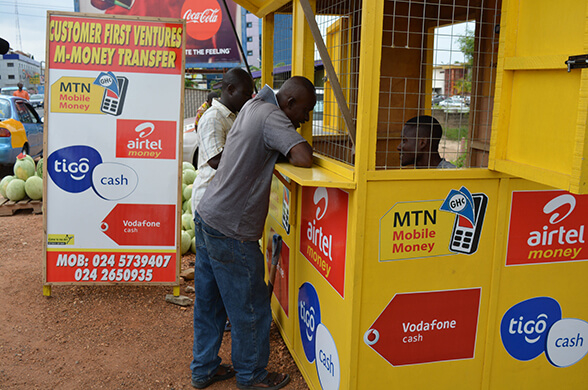
In a joint statement copied to the media, MoMo agents around Ghana said they would implement a temporary measure that limits cash withdrawals to GH¢ 1,000 per transaction from December 1.
ISSER said that the potential impact of the restrictions might be significant, particularly for neglected and last-mile populations.
“On average, 76 per cent of mobile money agents are within 30 minutes of consumers in rural areas. On the other hand, it takes two hours for over 50 per cent of rural dwellers to reach an ATM, with only about 40 per cent being able to reach a bank or microfinance in two hours,” the statement said.
This situation ISSER said that many MoMo users in rural areas, where ATMs, banks, and microfinance institutions were not an option, would be confronted with the option of either enduring the high transaction costs or resorting to cash.
Latest Stories
-
Netherlands Fire Chief in Ghana to support fire safety reforms and market fire prevention efforts
10 minutes -
Gov’t cuts fuel taxes, deploys buses to curb impact of rising fuel prices
41 minutes -
Interior Minister calls for intelligence-driven strategy as Ghana strengthens counter-terrorism efforts
41 minutes -
Adenta Circuit Court remands Pastor William Gyimah over viral threats against Vice President
1 hour -
“We’ve implemented changes to prevent a repeat of the AFCON final” – CAF President Motsepe
1 hour -
Gov’t orders deployment of Metro Mass buses to cushion commuters amid fuel price hike
2 hours -
Key Indian state polls begin in test for Modi’s party
3 hours -
Playback: Gomoa Easter Carnival in photos
3 hours -
Gov’t orders removal of fuel taxes to ease pump price hikes
3 hours -
“Whatever the decision of CAS, we will respect it” – CAF President Motsepe after AFCON final meetings in Morocco
3 hours -
Emma Ankrah: When waiting becomes part of treatment – Reflections on hospital care
3 hours -
Ghana urges travellers to prepare for new EU border system roll-out
3 hours -
Mahama enforces fuel coupon ban for ministers as cabinet moves to slash fuel taxes
3 hours -
Task force probes strange fish deaths in Tema
3 hours -
Neglected traffic lights turn Awoshie–Anyaa highway into deadly hotspot
4 hours