

Audio By Carbonatix
The National Council for Curriculum and Assessment (NaCCA) has asserted that the proposed Secondary Education Curriculum has been designed to help Ghana benefit from the fourth industrial revolution.
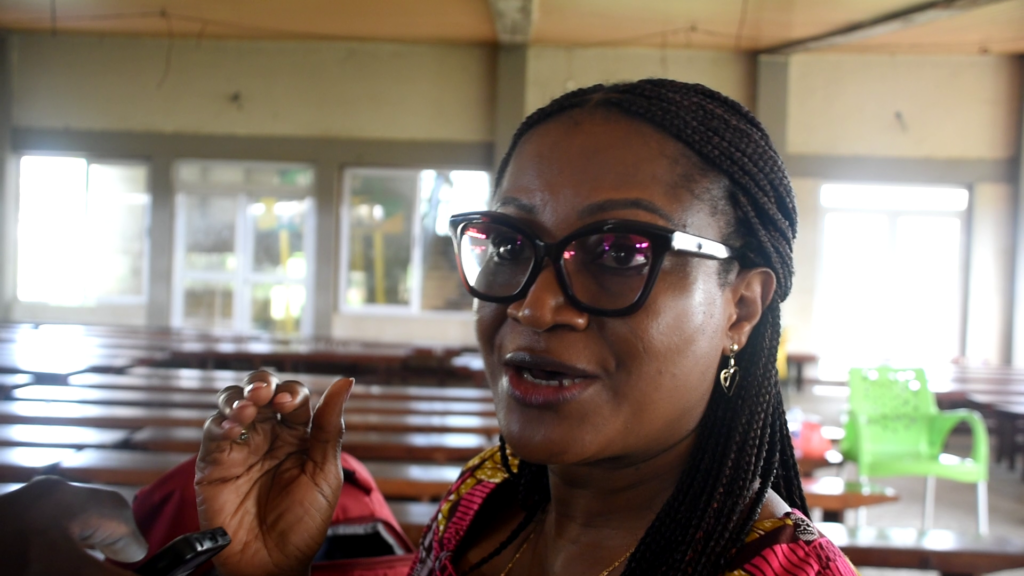
The Director of Corporate Affairs at NaCCA, Mrs. Rebecca Abu Gariba says the curriculum will help produce the requisite human resources needed to contribute to the development of the country
She was speaking at a stakeholder engagement in Ho, with leadership of unions in the education sector in the Volta Region.
“As much as we are Ghana, we live in a global village. So we have to make sure that the subjects that we give to our implementers will help us have graduates who are not only going to be local but 'global', which means local and international as well.
We are in the 21st century, why do you still want to continue with your old pack of subjects? You need to bring on board subjects that will make your learners be hands-on, to be able to use this creativity to create things”, she said.
She indicated that the Secondary Education Curriculum designed and developed by local stakeholders is currently being piloted in 43 second-cycle schools, while the council engages stakeholders for their recommendations and inputs.
“We are piloting it to see how it will work. We come back with the suggestions and implementations after we have done what we call fidelity of implementation. We will bring what we collected from these 43 schools.
And one of the schools is piloting all 37 subjects on campus, is Koase [Senior High Technical School] in Wenchi to ensure that a school can do all the various subjects as they are, or it is impossible. So, all this is to make sure that once we finish, the curriculum, it will be workable”, she said.
Mrs. Gariba further indicated that the curriculum is designed to ensure inclusive education, where no learner is left behind, adding that learning and teaching materials have been designed for easy facilitation with special needs students.
The curriculum is designed to enable learners to acquire 21st-century skills, competence, character qualities, and shared Ghanaian values to prepare them to live a responsible adult life, further their education, and enter the job market.
It gives flexibility to students to pick and learn subjects that are out of their course of study, just to broaden their horizons.
The curriculum is expected to be introduced to Senior High, Senior Technical, Science, Technology, Engineering, and Mathematics Schools nationwide at the start of the 2024/2025 academic year.
This would be after all recommendations have been effected and the curriculum handed over to the Ghana Education Service.
NaCCA has assured that all resources for the curriculum would be made available to ensure a successful implementation.
Latest Stories
-
Imprisonment should be rehabilitative, not punitive – Ghana Prisons boss at UNGA
18 minutes -
Ga Adangbe traditional priests petition Mahama over McDan aviation licence revocation
29 minutes -
Anti-LGBTQ Bill: NDC’s arrogance is worrying – Hassan Tampuli
40 minutes -
Let’s give OSP time to mature, not to scrap it – Hassan Tampuli
43 minutes -
Nigeria convicts 386 Islamist militants in mass trials
48 minutes -
Djibouti president wins election with 97.8% of vote, state media says
53 minutes -
We don’t have mandate to deduct tax from rent allowance of security services personnel – Interior Ministry clarifies
1 hour -
Ablakwa receives Presidential Special Envoy on Reparations to advance global agenda
1 hour -
Christina Koch becomes first woman to travel around the moon on Artemis II
2 hours -
Epstein survivors’ calls to meet King Charles and Queen harder to ignore as US visit approaches
2 hours -
UN Secretary-General names Ghana’s Anita Kiki Gbeho as South Sudan envoy
2 hours -
Mali withdraws recognition of Sahrawi Republic, backs Morocco’s autonomy plan
2 hours -
Gov’t distributes over 8,500 laptops to One Million Coders project
2 hours -
Julius Debrah, ‘man to beat’ as NDC’s James Agbey dismisses Musah Dankwah’s polls
2 hours -
GPRTU in Savannah Region to protest alleged eviction in Damongo
2 hours