

Audio By Carbonatix
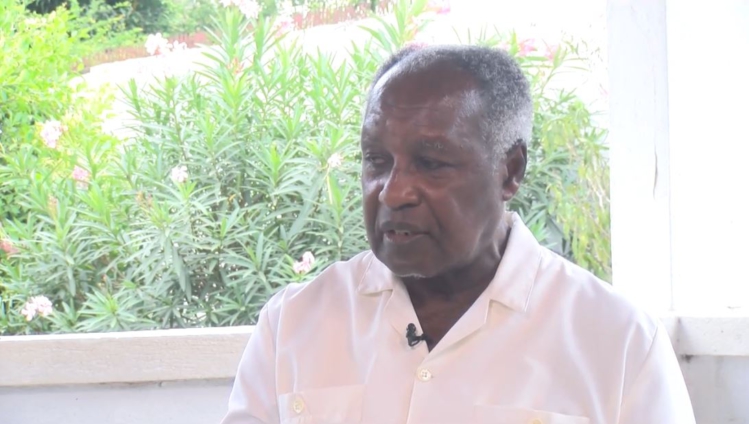
Former Vice-Chancellor of the University of Ghana, Prof Ivan Addae Mensah, is worried about the government's approach to improving education in Science, Technology, Engineering and Mathematics (STEM).
The Emeritus Professor believes that building new facilities to accelerate education in these fields is not the panacea to the country’s low percentage of non-grammar-based human resources capacity.
"This is a typical example of how we start schemes just for its novelty without thinking of the implications," he said on JoyNews' AM Show.
The Education Ministry has committed to erecting new structures across the country to encourage the training of students in STEM; this will help address the weak link that had existed since the introduction of the 1987 educational reforms that introduced the junior and senior high schools.
On the back of these, government has already announced the opening of six new STEM schools this year to improve the science to humanities ratio programme.
The schools include Abomosu STEM School, Kpasenkpe STEM School, Bosomtwe Girls STEM school, STEM Centre at Accra Senior High School and TVET School at East Legon.
Education Minister Yaw Adutwum said the government had commenced the development of 20 STEM centres and 10 model STEM Senior High Schools across the country, which were at various stages of completion.
But the former Vice-Chancellor believes though the intent may be valid, government is looking at the whole idea wrongly and not critically thought-through.
"Instead of investing in improving the quality in these schools, we are now going to start news schools from scratch without using the schools that already exist. We are going to build new structures so that we can show people that when we came, we built A, B, C, D schools called STEM schools," Prof Addae Mensah lamented.
The Professor explained that government will be doing the sector a great disservice if it continues to invest resources in additional structures rather than boosting the efficiency of the existing ones.
According to him, the nature of the equipment and consumables needed to run such institutions will make it economically inappropriate to disregard these alternatives.
"Pouring in more money when you cannot even equip those new structures. You may bring in new equipment, but with scientific equipment, a maximum of five years, they will become obsolete, and they have to be replaced. That is where the problem begins," he said.
In his view, though the policy has already been outlined on paper, if its implementation is not tweaked in the direction of quality, the desired results may not be achieved.
"You can call me a naysayer, but I think that if we concentrate on the schools we have now and make them functional and produce quality, we will be doing far better."
Latest Stories
-
Brandon Asante and Coventry all but promoted to Premier League despite Sheffield Wednesday draw
10 minutes -
GPL 2025/26: Late Kwartemaa strike downs Hearts in Tema
16 minutes -
Ghana Faces Sierra Leone Moment as Prosecutorial Powers come under strain
26 minutes -
Don’t consume fish or seafood from Tema Shipyard until further notice – FDA warns
31 minutes -
Why volunteering might be Africa’s most underrated career accelerator
37 minutes -
ActionAid Ghana raises concern over gender gaps in Feed Ghana Programme
39 minutes -
Windstorm wreaks havoc in Gushegu, displacing nearly 2,000 residents and damaging schools
42 minutes -
Friends of Bridget Bonnie Marks her 35th birthday with donation to Kasseh Model Health Centre
1 hour -
From Ekumfi Kokodo to the Pulpit Stage: Essi Donkor’s gospel journey takes shape
2 hours -
Landfilling waste management creates no value, it’s an economic waste
2 hours -
Photos: Speaker Bagbin Commissions MPs constituency office under parliamentary decentralisation programme
2 hours -
Black Stars technical advisor Winfried Schäfer sacked as GFA shakes up backroom staff
2 hours -
Wenchi water project almost complete, critical to gov’t agenda – GWL MD
3 hours -
Anti-LGBTQ+ bill not part of government’s legislative agenda – Inusah Fuseini
3 hours -
Anti-LGBTQ Bill: Forget the rumour mongers, I’m a man of action, and will pass the bill – Speaker
3 hours