

Audio By Carbonatix
The Ghana STEM Network has unveiled a set of recommendations aimed at overcoming challenges in the country’s STEM education sector, calling for a robust and inclusive approach to preparing Ghana for a data-driven, and technologically advanced future.
The recommendations come at a pivotal time as the nation seeks to improve its educational framework and boost its innovation capacity. The network's proposals focus on several key areas, including infrastructure, curriculum reforms, and greater engagement with the private sector.
One of the key proposals is the development of a National STEM Education Strategy. The Ghana STEM Network suggests that the government set clear, long-term development goals for STEM education, mapping out specific plans for the next five, 10, 15, and 20 years. A significant step in this process would involve operationalising the current STEM policy to ensure a comprehensive implementation across the education system.
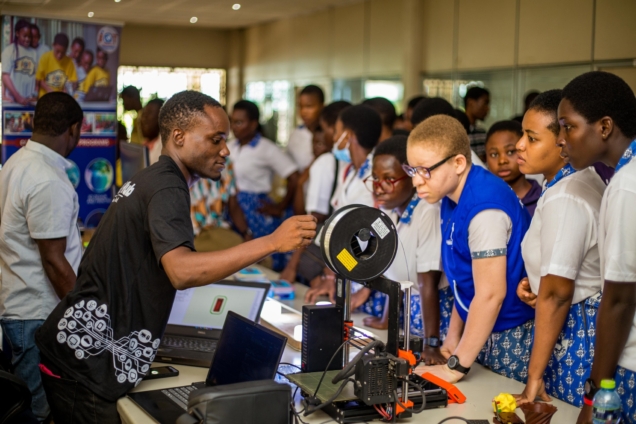
The Network stresses the need for investment in STEM infrastructure, calling for the creation of science museums, education parks, and maker spaces across all 16 regions of Ghana. These centers, developed in partnership with the private sector, would provide students with hands-on learning experiences, crucial for fostering innovation and scientific exploration.
The Network also advocates for integrating practical learning into the curriculum. They propose reforms that would include real-world problem-solving projects, educational tours, and hands-on tasks that enhance students' ability to apply STEM principles in their daily lives. The curriculum would also encourage students to engage in more exploratory activities that go beyond theoretical knowledge.
A notable recommendation from the Ghana STEM Network is the creation of a National STEM Database. This would compile information on all STEM-related private sector organizations, making it easier for schools, universities, and local communities to engage with industry players and stay informed about STEM opportunities.
The Network is also urging a focus on basic education, recommending that STEM education be prioritised from the primary school level. This early emphasis on science and technology skills would not only prepare students for future careers but also help reduce unemployment and underemployment in the country.
In an effort to ensure that STEM education benefits all citizens, the Ghana STEM Network has also called for the creation of policies that protect vulnerable groups, ensuring equitable access to quality STEM education. They also propose fostering policy dialogue on issues related to colonial legacies that have historically limited access to quality education for certain groups.
The network stresses the importance of adopting Pan-African and decolonial approaches to STEM education. This includes drawing on pre-colonial African knowledge systems and focusing on community-driven solutions to STEM challenges. The recommendations advocate for policies that highlight the role of health, environmental sustainability, and sovereignty in STEM education.
The Network also encourages the government to engage local STEM companies, urging support for Ghanaian enterprises involved in STEM research, product development, and service delivery. By partnering with local businesses, the country can ensure that its educational system is aligned with national industries, creating job opportunities and inspiring innovation among young Ghanaians.
Drawing on the works of prominent intellectuals such as Oyèrónkẹ́ Oyěwùmí, Ngũgĩ wa Thiong'o, Kwame Nkrumah, and Paulo Freire, the Network calls for a more holistic approach to STEM education—one that incorporates historical, cultural, and social contexts into the learning process.
The Network urges the government, educational institutions, and other stakeholders to adopt these recommendations and work collaboratively toward a future where all Ghanaians have access to quality STEM education.
Latest Stories
-
We must account for every cedi entrusted to us as public officials – Ato Forson
23 minutes -
Supreme Court rejects Solomon Asamoah’s bid to overturn Sky Train ruling
38 minutes -
Nungua Traditional Stool, WT Plastics partner to establish factory, create 1,400 jobs
40 minutes -
Mahama describes Ghana’s religious diversity as its greatest treasure, defends fairness to all faiths
45 minutes -
Police to arrest motorists who use pedestrian footbridges – ACP Obeng
46 minutes -
KNUST announces revised reopening dates, lectures begin October 19
60 minutes -
GoldBod, military engineers partner to reclaim galamsey-damaged Tano Nimri Forest
1 hour -
NACOC educates 450 Koforidua SHS students on dangers of drug abuse
1 hour -
First-year students stranded as Obuasi SHTS remains closed over misconduct probe
1 hour -
Court halts promotion of 40 police officers pending IGP’s appeal
1 hour -
Gender Ministry deploys teams nationwide to monitor LEAP cash grant payments
1 hour -
GNFS contains Somoco warehouse fire; bushfire near TTU in Takoradi
1 hour -
Recurring teacher-student sexual abuse cases give cause for worry – Salaga South MP
1 hour -
D-Black shocked as only 16 radio and TV stations pay music royalties
1 hour -
Former SIC Savings and Loans MD Amma Frimpomaa Dwumah honours EOCO invitation
2 hours