

Audio By Carbonatix
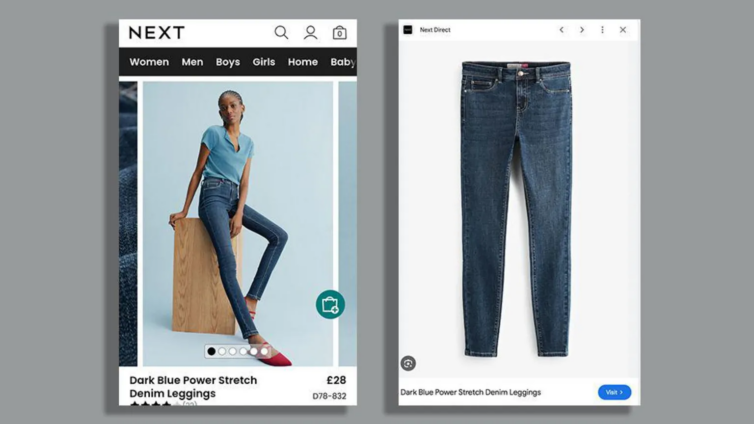
An advert by fashion brand Next has been banned because the model's pose and the camera angle gave the impression she was "unhealthily thin".
The Advertising Standards Authority (ASA) compared the advert with other photos of the same model and did not think she looked unhealthily thin in those.
But it said in the now-banned image, emphasising the thinness of the model's legs using camera angles, poses and styling was "irresponsible".
Next said it disagreed with the advertising watchdog's decision and said the model, while slim, had a "healthy and toned physique".
In response to the ASA, the retailer said the 5'9" model's pose was chosen "specifically to display the leggings' fit on both straight and bent legs", and that the image, which was shot nearly two years ago, was created with a "strong sense of responsibility".
A spokesperson added a Next stylist and product image manager met the model in person and "did not have any concerns about her health".
In its ruling, the ASA acknowledged the model's face "did not appear to be gaunt and her arms, while slim, did not display any protruding bones".
But it said: "Because the pose, camera angle and styling in the ad investigated strongly emphasised the slimness of the model's legs, we considered that the ad gave the impression that the model was unhealthily thin."
The ASA told Next that its advert breached the code for social responsibility.
It said the ad must not appear again in its current form, and that Next should ensure the images in their ads were "prepared responsibly and did not portray models as being unhealthily thin."
"You do wonder how it got through," fashion journalist Victoria Moss told BBC Breakfast.
"Next are usually very commercial, their models are very 'girl-next-door'. This model has 'the look' of a model," she said, adding however that it was "important not to stigmatise either way".
Body positivity
The ruling comes as there is increased focus on the effects of advertising unrealistic or unhealthy body images on mental health.
The "body positivity" movement which began around 2010 focused particularly on promoting a more diverse range of models.
But editorial director of British Vogue told the BBC the fashion industry "should be concerned" by a recent trend towards a return of skinnier models.
Chioma Nnadi suggested the change, a departure from recent progress in body diversity, had been partly fuelled by the rise in popularity of weightloss drugs like Ozempic.
In 2023, the ASA banned fashion retailer Warehouse from using an image of a model in an oversized biker jacket, saying the model's pronounced collar bone, hip bones and torso gave the appearance of her being "very thin", which made the ad "irresponsible".
Latest Stories
-
Afenyo-Markin demands Interior Minister brief Parliament over security recruitment expansion
1 hour -
Felicia Boadu inspires gratitude with new song ‘Aseda’
1 hour -
Conflict of interest and the President’s use of a private jet: A constitutional perspective
1 hour -
Otto Addo names Black Stars squad for Austria and Germany friendlies
2 hours -
Rev. Stephen Wengam urges leaders to embrace ‘servant leadership’ to transform national institutions
2 hours -
Ghana Development Awards spotlight need for intentional socio-economic transformation
2 hours -
The Private Jet Debate: When generosity becomes an alleged “Scandal”
2 hours -
IGP Cyber Vetting arrests 20-year-old woman for false publication on social media
2 hours -
Overall government debt in sub-Saharan Africa stabilises but at high level – IMF
2 hours -
We will file an appeal against Freddie Blay’s remand – Lawyer
3 hours -
Tema crash: Safety record of microlight aircraft ‘very poor’ – Aviation expert
3 hours -
Only 5% of CHPS compound in Ghana are well tooled – Agotime Ziope MP
3 hours -
PwC Ghana , UGBS call on women to embrace collaboration and take up leadership roles
3 hours -
‘My mother cried out one last time’: Palestinian boy, 12, describes how Israeli forces killed his family in car
3 hours -
National Seed System Reset Programme launched at University of Ghana to boost 24-hour economy
3 hours