

Audio By Carbonatix
A "total system collapse" caused widespread power cuts across Nigeria on Thursday.
Early in the morning, levels of power generated in Africa's most populous country fell to zero megawatts.
Connections were gradually restored throughout the day.
Grid power supplies are often erratic in Nigeria, located in the west of Africa, despite its role as a major oil and gas producer.
Thursday's was the most serious outage for a year - the West African country's grid collapsed at least four times in 2022, which the authorities blamed on technical problems.
A number of electricity distribution companies told customers on X, the social media platform formally known as Twitter, that the most recent blackouts were a result of a "total system collapse".
Power Minister Adebayo Adelabu said a transmission line connecting two power plants in Niger state suffered an explosion after a fire, thus tripping the grid.
"The fire has been fully arrested and over half of the connections are now up and the rest will be fully restored in no time," Mr Adelabu said in a statement in the afternoon.
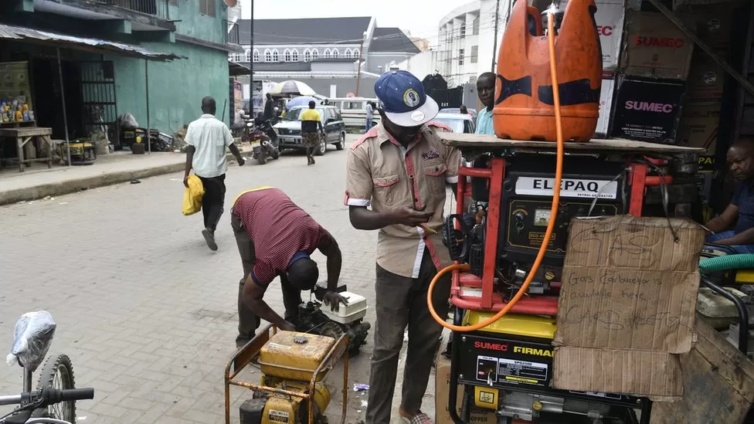
Less than 50% of Nigeria's population has access to a regular power supply. Most homes and businesses have resorted to generators, inverters and other sources of electricity so as not to be dependent on the national grid.
However, many of these now come at a higher cost following the government's removal of fuel subsidies last May.
The theoretical maximum amount of power Nigeria could produce is 12,500MW, but the country normally produces just a quarter of that, the Reuters news agency reports.
On Thursday, at around 10:30 local time (09:30 GMT), power levels had risen from zero to 273MW, which was still well below the daily average of 4,100MW, data from the Transmission Company of Nigeria showed.
President Bola Tinubu, who has been in office for just over 100 days, has promised to improve supply by allowing state governments to build their own power plants.
Latest Stories
-
Akurugu delivers first state of Constituency address, highlights development gains in Dome-Kwabenya
4 hours -
Journalism out loud: Defending truth in a divided world
4 hours -
Heath Goldfields partners local firm, receives new mining fleet to revive Bogoso-Prestea mine
4 hours -
Korle-Bu overcrowding driven by broken referral system, not just bed shortage – Doctors
4 hours -
MC Portfolio named red carpet host for 2026 Ghana Music Awards USA
5 hours -
U.S. Embassy explains Visa process for Ghanaians ahead of World Cup
5 hours -
Viral video on emergency care at Korle-Bu Teaching Hospital is ‘authentic’ – Emergency Medicine Residents
5 hours -
Ahmad Abdul-Samad, Rachael Quarcoo dominate 1st quarter All Ghana Badminton Championship
5 hours -
ActionAid calls for strong partnerships to advance water, gender, and climate justice
5 hours -
DVLA begins nationwide clampdown on expired DV plates from March 24
6 hours -
Ghanaian Commonwealth Youth Leader meets King Charles III, pushes for youth economic empowerment
6 hours -
Former President Akufo-Addo takes on new role in Anglican Church
7 hours -
MTN Ghana steps up sensitization on efficient and safe data usage
7 hours -
Mfantsipim celebrates 150 Years with historic launch of anniversary songs and commemorative cloth
7 hours -
Korle-Bu doctors accuse management of staging ‘perfect’ emergency ward for Health Minister’s visit
8 hours