

Audio By Carbonatix
"Man is born free, but everywhere he goes, he is in chains." – Jean-Jacques Rousseau.
The wars, massacres, genocides, and animosities that have plagued the world, from the earliest historical records to the present day, are underpinned by two major parallel ideologies: Communism (or Communalism/Socialism) and Capitalism.
Each of these ideologies took root in the East and West of the world, respectively, shaping global conflicts and inequalities. Africa, in its pre-colonial era, was a communal society that practiced egalitarian values such as collective ownership of resources, cooperation, interdependence, and the mutual survival of all people.
It is not surprising that in pre-colonial Africa, lands and royalties were entrusted to traditional authorities not as exclusive owners but as custodians, holding them in trust for future generations.
However, this peaceful and progressive social existence was disrupted by the economic infiltration and corruption brought on by colonialism, along with its cascading effects. Colonial powers recruited a small number of influential Africans, the elite, to join in the exploitation of their own people, thereby introducing the lavish, consumer-driven lifestyle of capitalism.
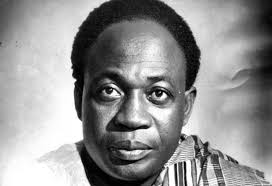
Dr. Kwame Nkrumah, having encountered capitalism during his time teaching in Roman Catholic schools, seminaries, and Achimota College under colonial rule, quickly recognised the inherent injustices in such a system. He understood that keeping both the wealthy and the poor in the same society, much like animals in a single pen, was deeply unjust.
Dr. Nkrumah's philosophical journey led him to study communism during his time in Europe and the United States, where he encountered the idea of economic, social, and political equality for all.
Inspired by the works of Marcus Garvey (Garveyism) and Karl Marx (Marxism), Nkrumah became committed to the cause of human equality, believing it could only be achieved through the mobilisation of all resources for the collective good.
Central to his philosophy was the belief in the self-preservation of mankind, which he argued could only be guaranteed through a dignified and comfortable life for all. This vision laid the foundation for the creation of the socialist republic of Ghana and Nkrumah's lifelong dream of African political unity.
His vision included a central political authority, a common defence system, a continental central bank, and more. Nkrumah’s core belief was that the world would be a better place if the resources used for military armament by capitalist institutions were instead diverted to poverty alleviation.
His greatest discovery was the inevitability of social unrest and uprisings in the face of injustice and inequality. He argued that for true peace to exist, the state must prioritise the well-being of the majority over the excessive profligacy of the few elites.
Tragically, Nkrumah’s philosophical ideals created enemies even within his own government, particularly among those who had been part of the colonial administration. These individuals, enticed by the material wealth and comforts of capitalist lifestyles, often sabotaged his efforts to combat corruption.
In his book The Dark Days in Ghana, Nkrumah laments: "These colonial-trained professional classes, with certain notable exceptions, looked on independence as a strictly national concern. In many cases, all they were concerned with was taking the place of the former colonial occupiers of their jobs and making the same money as they did in the same social and economic pattern... Insofar as they were within the party, they were a source of weakness because they sabotaged attempts to prevent corruption and, in a number of cases, actually joined in it themselves."
This provides some context for the many assassination attempts on Nkrumah’s life prior to the 1966 coup, which are believed to have been orchestrated from within his own inner circle. It’s clear that not all officials in the CPP government were true Nkrumaists.
This rationale also explains the sudden desertion of Nkrumah by his trusted ministers, including Foreign Minister Quaison A. Sackey and Minister of Trade Kwesi Armah, shortly after the coup news broke. While there are political groups that embrace Nkrumah's philosophies, they often opposed his later authoritarian tendencies.
In conclusion, not everyone who labels themselves as a socialist is a true Nkrumaist. It is, therefore, troubling to see some self-proclaimed socialists in today’s Ghanaian political landscape attempt to cloak themselves in Nkrumah’s image simply to gain public political sympathy. If you truly revere Dr. Nkrumah, put his socio-economic philosophies into practice. The hypocrisy is deeply frustrating.
Latest Stories
-
Decades of ‘lip service’ to private sector hurting job creation – Franklin Cudjoe
4 minutes -
High oil prices may benefit West African crude exporters but not consumers, Argus analyst says
7 minutes -
‘National security time bomb’ looming as youth unemployment surges – Franklin Cudjoe warns
12 minutes -
IEA agrees record 400 million barrel oil release as war drives crude volatility
28 minutes -
Embassy of Ghana in Rome celebrates 69 years of Ghana’s Independence
29 minutes -
Telecel Ghana to train 100,000 youths for free under One Million Coders programme – CEO
32 minutes -
Crude oil price to average $70 per barrel in 2026 if… – Fitch
49 minutes -
Telecel Ghana promises enhanced service following operational upgrade
53 minutes -
Who Do You Trust? The silent wounds of betrayal and the battle for the human heart
59 minutes -
Transport Minister tours ongoing Terminal 2 face-lift, targets July 2026 completion
1 hour -
Global economic growth to remain steady if oil price shock is not prolonged – Fitch
1 hour -
Parliament concludes debate on 2026 SONA, adopts motion
1 hour -
Mahama calls for a win-win partnership with South Korea
2 hours -
Ghana, South Korea affirm shared values during bilateral talks
2 hours -
Dawa Free Zone and GATAC partner to expand diaspora investment opportunities
2 hours