

Audio By Carbonatix
The Ghana Audit Service has clarified that not all irregularities highlighted in the Auditor-General’s reports amount to embezzlement, corruption, or misuse of public funds.
Many of the flagged issues are administrative lapses, including incomplete documentation, delayed financial reporting, and failure to follow laid-down procedures, rather than deliberate attempts to misappropriate state resources.
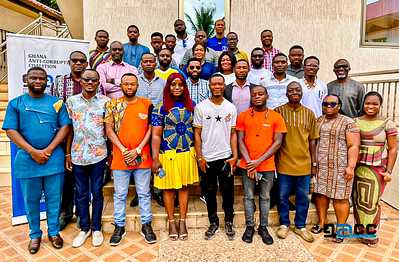
This clarification was made during a two-day media training organised by the Ghana Anti-Corruption Coalition (GACC) in partnership with the Ghana Audit Service and supported by the Hewlett Foundation.
The programme, held for journalists from selected media houses across the Ahafo, Bono, Bono East, Ashanti, and Eastern Regions, aimed to strengthen the capacity of the media to report accurately and responsibly on findings contained in the Auditor-General’s reports.
Assistant Director of Audit and Information Officer Frederick Lokko, speaking at the training, urged journalists to seek clarification from the Service before publishing stories based on audit findings.
He emphasised the need for the media to understand that not every irregularity flagged in the Auditor-General’s report meant public funds had been stolen.
He cautioned journalists against sensationalising audit figures and presenting all reported irregularities as evidence of corruption, stressing that such reporting could mislead the public and erode trust in governance processes.
Mr Lokko also encouraged journalists to make use of the Right to Information (RTI) Act to seek clarification on audit findings when needed.
He reminded participants that the Audit Service’s website was regularly updated with accurate and accessible information to support fact-based reporting.
Assistant Auditor-General responsible for the Audit Unit, Patrick Neequaye, also underscored the need for balanced and precise reporting.
He advised journalists to always verify figures from the Audit Service’s official publications before publishing and to craft headlines carefully to avoid giving the impression that government funds have been squandered when that might not be the case.
He said the Auditor-General’s reports were meant to promote accountability and improve financial management, adding that “misrepresenting the findings undermines that purpose and could misinform the public.”
Adding a practical perspective, investigative journalist Stephen Nartey , urged participants to analyse audit reports holistically.
He advised them to focus on data, context, and systemic issues, rather than drawing conclusions based on isolated figures.
Mr. Nartey encouraged journalists to report findings objectively, including cases where no irregularities are discovered, to give audiences a balanced understanding of audit outcomes.
Latest Stories
-
Uber driver loses livelihood after viral ‘killer’ post; 20-year-old arrested for false publication
3 minutes -
Kofi Arko Nokoe queries Energy Minister over gas re-bottling plant in Evalue-Ajomoro-Gwira
26 minutes -
The economy has drastically improved – Sissala East MP
26 minutes -
Hope for Man City, Chelsea & Spurs – great Champions League comebacks
38 minutes -
Black Stars reinforced as Iñaki, Partey and Djiku return
46 minutes -
Woman arrested over viral social media post accusing Uber driver of being a ‘murderer’
59 minutes -
MP for Dome-Kwabenya Faustina Elikplim supports Ga East Sports
60 minutes -
World Bank warns skills shortage could jeopardise employment for 1.2 billion young people
1 hour -
Minority urges government to pay outstanding UK scholarship fees
1 hour -
28 foreigners, landlords arrested in Amansie West over unlawful entry into Ghana
1 hour -
Today’s Front pages: Tuesday, March 17, 2026
1 hour -
Potsin: Fuel tanker explodes into massive blaze as thick smoke billows into the sky
2 hours -
Ghana’s external reserves rise to $14.5bn as macroeconomic outlook improves – BoG Governor
2 hours -
GOIL sources up to 30% of petroleum products locally – CEO
2 hours -
You can’t register your ‘side-chick’ as pension beneficiary — SSNIT GM
2 hours