

Audio By Carbonatix
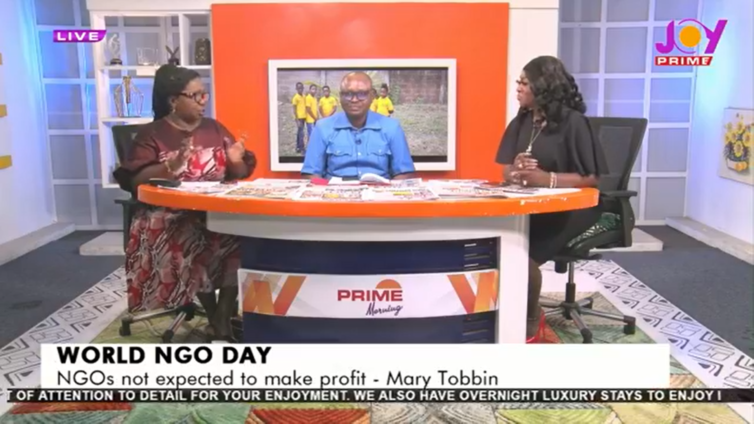
Country Director of Action Aid, John Nkaw, has dismissed the perception that people create non-governmental organisations (NGOs) to make money.
According to him, the impression that heads and employees of NGOs are rich, mostly because of their cars and outlook, is what is influencing the idea that they profit off their work.
“As I speak now, I don’t believe I’m rich, but, maybe if you go and pick someone from the community where I work, they will say I’m rich because I have a driver who comes with a Prado, but they tend to forget that we passed through rural communities," he said.
Speaking on Joy Prime’s Prime Morning, Mr Nkaw said that in as much as their salary is competitive, they are still not at the top to be perceived as extremely rich.
The country director shared that working in an NGO comes with a lot of accountability and audits.
“In terms of donor funding, in the current world that we are in, every penny of the donor must be accounted for. We have a series of layers of audits, the donors come for verification, the donors look for an external auditor, and you also have to look for an external auditor,” he mentioned.
He added that NGOs also pay taxes and are checked by the Ghana Revenue Authority (GRA).
"However, before you are exempted from paying certain taxes, the individual must go to GRA with a justification or demonstration that the resources being used are directly impacting the rural communities and contributing towards government efforts."
Speaking in the same interview, the CEO of Kanko Associates, Mary Tobbin Osei supported Mr Nkaw's position, as a donor, adding that NGO's are unbending when it comes to accountability.
She explained that this is because donors conduct quarterly monitoring of the various communities to be worked on to check if the NGOs are doing the work the grants given to them are meant for.
“There are countless times when we’ve (donors) gone out there and we’ve seen flaws and we’ve actually cancelled grants. So if anybody is sitting somewhere thinking that you can pocket an NGO's money, spend it and marry more wives, try it," she cautioned.
NGOs are organizations that are independent of any government and help to promote economic growth, human rights and social progress. They are also non-profit organizations.
NGOs might focus on activities in areas involving health or health emergencies, education, infrastructure, advocacy of minority rights, support of the poor, and the reduction of crime.
Latest Stories
-
CGI orders motorbike training at tactical school in Kyebi
31 minutes -
Sachet water producers in Berekum defy gov’t directives, increase prices
32 minutes -
Critical commodities stuck at port, CSOs warn of family planning crisis
34 minutes -
Gender Ministry mourns victims of Volta Lake boat tragedy, deploys support for affected families
36 minutes -
MPs undergo training on human trafficking and gender dimensions
37 minutes -
Don’t expect instant relief – COMAC CEO warns fuel price drops will be gradual
40 minutes -
GIS to unveil comprehensive plans to enhance officers’ welfare and infrastructure
57 minutes -
Right move, wrong timing? – COMAC CEO questions govt’s delay on fuel price relief
58 minutes -
IMF urges Central Banks to keep inflation in check
1 hour -
NRSA stands firm on Toyota Voxy ban despite transport operators’ opposition
1 hour -
H. Kwasi Prempeh raises concerns over Supreme Court’s handling of OSP constitutionality case
2 hours -
Global childhood cancer cases soar
2 hours -
Airline pilots fear retribution over refusing to fly in Middle East, aviators’ group says
2 hours -
Police intensify security in Bosomtwe communities after deadly clash
2 hours -
Corporate Income Tax contributes highest to 2025 petroleum revenue
2 hours