

Audio By Carbonatix
Minister for Government Communication, Felix Kwakye Ofosu, has attributed Ghana’s mounting energy sector debt to deliberate policy decisions and what he described as “criminal mismanagement” of the exchange rate under the previous administration.
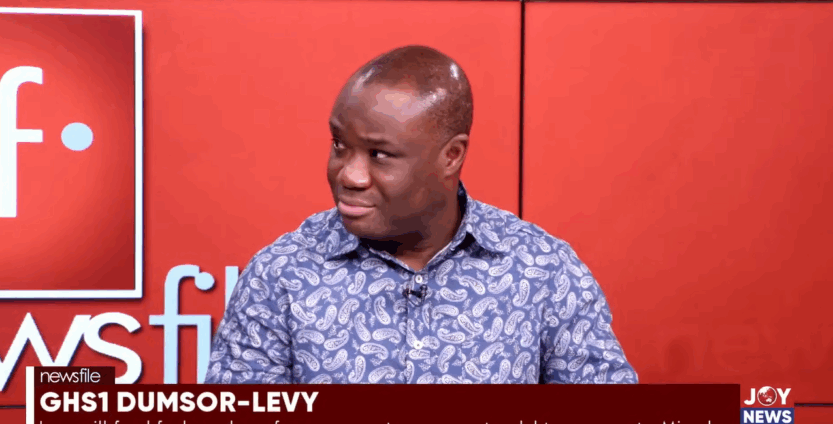
Speaking on JoyNews’s Newsfile on Wednesday about the recently introduced GH¢1 fuel levy, Mr Kwakye Ofosu stated that the current government inherited an energy debt of GH¢67 billion.
“Even before this government took over – and let me stress that this is a government that has been in power for barely six months – we had to deal with what we call energy legacy debt of 67 billion Ghana cedis. That was even before we lifted a finger as a government,” he said.
He explained that the bulk of the debt stems from chronic operational shortfalls at the Electricity Company of Ghana (ECG), largely due to a tariff system that does not fully recover the cost of power production and distribution.
“This debt has come about because … even if ECG collected all the money due them, it would still not match how much is spent to produce and distribute power. That is because of the way the tariff is structured. So under-recoveries are one of the reasons why we have the 67 billion Ghana cedis, and this has been the case for decades,” Mr Kwakye Ofosu noted.
The Minister further criticised the former government’s decision to exclude fuel costs from the electricity tariff, shifting that burden to the state.
“For many years, a critical component for producing power – which is the purchase of fuel – was not added to the tariff. The president and cabinet at the time decided that consumers should not pay for that, and government would cover the cost. Unfortunately, they did not pay for it. So all the liquid fuel they bought, a significant part of it remains unpaid for – and that is the debt we now have to shoulder.”
Kwakye Ofosu also laid blame on the former Vice-President Dr Mahamudu Bawumia for mismanaging the exchange rate, which he claimed worsened the debt situation.
“The criminal mismanagement of the exchange rate … led to a situation where, between July 2022 and November that year, it rose from 6 cedis to a dollar to 17 cedis. And you know that Independent Power Producers are paid in dollars, and some of the inputs into power generation are also bought in dollars, so once this happened, huge debts were accrued.”
Latest Stories
-
Securing children’s tomorrow today: Ghana launches revised ECCD policy
3 hours -
Protestors picket Interior Ministry, demand crackdown on galamsey networks
4 hours -
Labour Minister highlights Zoomlion’s role in gov’t’s 24-hour economy drive
4 hours -
Interior Minister receives Gbenyiri Mediation report to resolve Lobi-Gonja conflict
4 hours -
GTA, UNESCO deepen ties to leverage culture and AI for tourism growth
4 hours -
ECG completes construction of 8 high-tension towers following pylon theft in 2024
5 hours -
Newsfile to discuss 2026 SONA and present reality this Saturday
5 hours -
Dr Hilla Limann Technical University records 17% admission surge
5 hours -
Meetings Africa 2026 closes on a high, Celebrating 20 years of purposeful African connections
5 hours -
Fuel prices to increase marginally from March 1, driven by crude price surge
5 hours -
Drum artiste Aduberks holds maiden concert in Ghana
6 hours -
UCC to honour Vice President with distinguished fellow award
6 hours -
Full text: Mahama’s State of the Nation Address
6 hours -
Accra Mayor halts Makola No. 2 rent increment pending negotiations with facility managers
6 hours -
SoulGroup Spirit Sound drops Ghana medley to honour gospel legends
6 hours