

Audio By Carbonatix
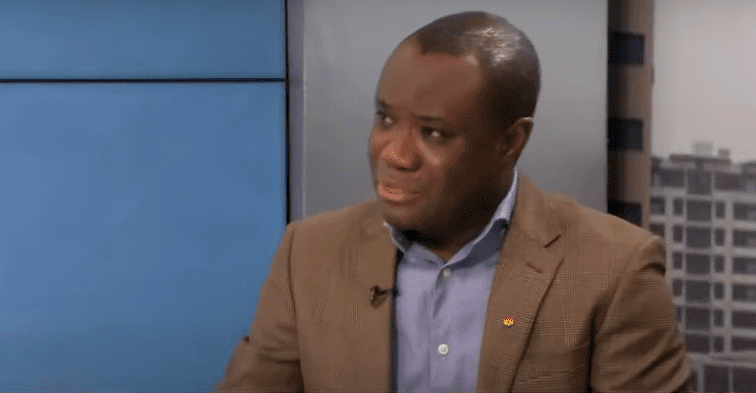
NDC Parliamentary Candidate for Abura-Asebu-Kwamankese, Felix Kwakye Ofosu, has described the NPP’s super delegates’ conference as a convoluted electoral process.
He stated that the system which has been designed to reduce the final number of NPP presidential candidates to be presented to the general delegates’ conference restricts the frontiers of democracy.
According to him, there was nothing wrong with the old system where all the candidates would be presented to the general delegates’ conference for a collective choice to be made.
Describing the super delegates’ conference as a knee-jerk response to criticism the party faced in 2007, he said the NPP should not have tampered with the process.
“To be honest with you, I am not entirely sold on this super delegates business. I think it was a knee jerk response to the criticism they faced in 2007 when 17 people showed up. I think they misapprehended the criticism at the time. The criticism had to do more with the flamboyance and opulence displayed at the time and not necessarily the numbers.
“Because really apart from creating an opportunity for an unwieldy ballot paper which may confuse less enlightened voters, I don’t see what real problem that poses. What are you going to do for instance if in the parliamentary primaries 17 people show up to contest one particular constituency? Are you going to hold a super delegates’ conference on that one too?”
Mr. Kwakye Ofosu further noted that the super delegates’ conference would inadvertently skew the electoral results towards the "establishment candidate" as electorates would want to side with power.
“What people were concerned about was the overt show of opulence that is what you ought to have dealt with, you didn’t need to tamper with the process because what it does for me is to restrict the frontiers of democracy. You see we’re talking about 900 super delegates, these are crème-de-la-crème, anybody who is everybody in the NPP.
“And indeed Boakye Agyarko has complained that the tendency is for that process to skewed towards the establishment candidate because you see the people in that bracket are people who will naturally gravitate towards the centre of power in order to benefit from whatever largesse that they think that there is, and so in terms of the fairness and the openness and transparency of the process there is a bit of a difficulty.
“I don’t think that they should have done that. They should have still allowed the broad masses of the delegates to decide who qualifies. If you have to organize two rounds of voting then I think that everybody who is eligible to vote within your party ought to have had a say in how the numbers are pruned down,” he said.
Latest Stories
-
Africa’s youth bulge a ‘defining moment’ that requires urgent action – NYA CEO Osman Ayariga
2 minutes -
No looming power crisis; Ghana’s electricity supply remains stable – Energy Ministry PRO insists
18 minutes -
Mahama should reset his stance on LGBTQ -Clinton Baffour
24 minutes -
Rising sachet water costs should spark a bigger conversation on plastic waste
27 minutes -
Two-week ceasefire takes effect as US and Iran prepare for talks in Pakistan
30 minutes -
Dr. Amoakohene debunks claims Sewua and other Agenda 111 hospitals are ready for operationalisation
38 minutes -
AMA rolls out new shift system for street sweepers to improve sanitation
42 minutes -
Focus on capacity, not connections in Damang lease decision – Paa Kwesi Schandorf
52 minutes -
Teen defender Eric Mensah undergoes trial at Malaga CF after standout ROC Cup display
54 minutes -
Journalism out loud: Why silence is no longer an option
55 minutes -
5,000 miners stranded in Ahafo-Ano North as alleged NAIMOS operatives take over site
1 hour -
GMTFcare rollout begins at Komfo Anokye Teaching Hospital to transform patient support
1 hour -
Leicester lose appeal against points deduction
1 hour -
Telecel hosts Women 100 Power Connect 2026 on reciprocity in leadership
1 hour -
Ken Ofori-Atta released from ICE detention after judicial order — Lawyer confirms
1 hour