

Audio By Carbonatix
Ghana’s ambition to industrialise through agriculture, create jobs, stabilise the cedi, and build a 24-Hour Economy depends heavily on agro-processing. Yet one policy—the 20% excise duty on natural fruit juices—is quietly undermining these national objectives.
Introduced as a revenue and health measure, the tax is producing the opposite effect: weakening local industry, discouraging healthy consumption, destroying value-chain jobs, and blocking Ghana’s path to import substitution and export growth.
Natural Fruit Juice Is Not a “Sin Product”
Excise duties are traditionally reserved for alcohol, tobacco, and highly sweetened or harmful products. Natural fruit juices—especially 100% juice, not-from-concentrate (NFC), and fibre-rich blends—do not fall into this category.
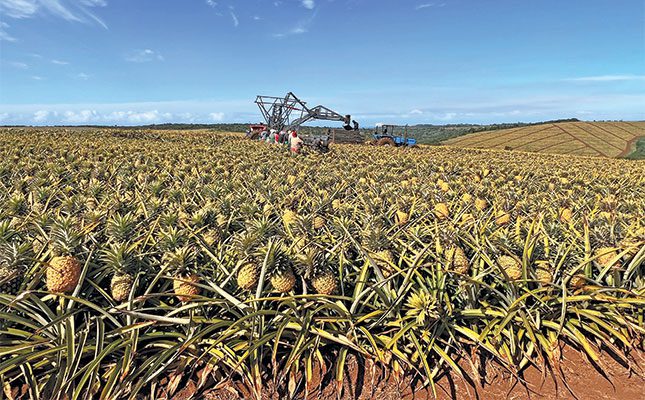
They are produced from Ghana-grown pineapples, oranges, coconuts, mangoes, passion fruits, and other crops. They contain vitamins, fibre, antioxidants, and essential nutrients. Taxing them as if they were unhealthy beverages sends a dangerous signal: that adding value to agriculture is being penalised rather than encouraged.
How the Excise Duty Weakens Agro-Industrialisation
Local juice processors already face high production costs:
Expensive energy and water
Imported packaging materials
High interest rates on industrial finance
Seasonal and perishable raw materials
Adding a 20% excise duty raises shelf prices sharply, making Ghana-made juices less competitive than imported concentrates, powdered drinks, and artificial beverages. As demand falls, factories are forced to operate at 30–45% capacity instead of an efficient 70–85%.
This under-utilisation has serious consequences: farmers lose reliable offtake, fruits rot in the fields, factories cut shifts, and bank loans become stressed.
The FX Cost: Import Substitution Lost
Ghana currently spends an estimated US$350–450 million annually importing beverage concentrates, powdered drinks, and sweetened alternatives that could be produced locally.
With a supportive tax regime, natural juice processing could realistically achieve 30–40% import substitution within 3–5 years, resulting in US$120–180 million in annual foreign-exchange retention.
Instead, the excise duty protects imports, increases forex leakage, and adds unnecessary pressure on the cedi—directly contradicting macro-economic stabilisation efforts.
A Missed Export Opportunity of Up to US$1.0 billion
Global demand for natural and functional beverages is growing at 6–8% annually, particularly in Africa, the Middle East, Europe, and North America. Ghana is well positioned to serve these markets.
With 6–8 scaled juice and functional beverage factories, Ghana could achieve the following medium-term (3–5 year) export potential:
Pineapple juice & NFC: US$250–300 million
Citrus juice & concentrates: US$200–250 million
Coconut water & blends: US$150–200 million
Functional and fibre juices: US$100–150 million
Total potential export inflows: US$700 million to US$1.0 billion annually.
However, the excise duty raises production costs, weakens price competitiveness, and discourages long-term export contracts—effectively taxing away a future export industry before it matures.
Jobs: The Greatest Casualty
Natural juice processing supports one of the widest employment ecosystems in Ghana’s agro-industry.
A single medium-scale juice factory (10–15 tons per hour) supports:
600–900 direct jobs (factory workers, engineers, quality control, logistics)
8,000–20,000 indirect jobs (farmers, aggregators, transporters, suppliers)
At national scale (6–8 factories), Ghana could sustain:
5,000–7,000 direct industrial jobs
60,000–120,000 indirect value-chain jobs
Total: 65,000–127,000 jobs, largely for youth and women
Reduced factory throughput caused by excise-driven price suppression wipes out tens of thousands of these livelihoods.
Taxing Nutrition, Increasing Health Costs
Higher juice prices discourage consumption of natural fruit nutrition and push consumers toward cheaper, highly sweetened alternatives. Over time, this contributes to rising cases of diabetes, hypertension, obesity, and micronutrient deficiencies.
Any short-term excise revenue risks being outweighed by:
Lost PAYE and corporate taxes
Higher NHIS and public health costs
Increased unemployment-related social pressure
This creates a negative fiscal multiplier.
A Direct Contradiction to the 24-Hour Economy
Agro-processing is a natural anchor of Ghana’s 24-Hour Economy. Juice factories are designed for continuous operations, multiple shifts, and year-round conversion of perishable crops into stable products.
At full capacity, a single factory can run three shifts and support thousands of livelihoods. By suppressing demand and throughput, the excise duty eliminates night shifts and kills one of the fastest “quick wins” of the 24-Hour Economy vision.
A Smarter Policy Path
Ghana does not need to choose between revenue and development. A better approach would:
Zero-rate or exempt 100% natural fruit juices
Apply excise strictly to sugary and artificial beverages
Support export-oriented agro-processors
Align tax policy with nutrition, jobs, and industrial growth
Conclusion
The 20% excise duty on natural fruit juices is not just a tax—it is a structural brake on Ghana’s development. It undermines agro-industrialisation, destroys jobs, worsens public health outcomes, blocks import substitution, and delays the success of the 24-Hour Economy.
Removing or restructuring this tax is one of the fastest, lowest-cost policy corrections Ghana can make to unlock growth, protect health, and secure up to USD 1 billion in annual export earnings.
The choice is clear:
Tax away a future industry—or unlock it for national prosperity.
Latest Stories
-
CUTS International calls for urgent competition law amid sachet water price hikes
11 minutes -
‘I never did this advert’, AI clones hijack Ghanaian identities for profit
29 minutes -
25-year-old woman battles trauma after surviving deadly Nkwanta attack
46 minutes -
Vice President honoured at Tortsogbeza as South Tongu leaders highlight development needs
55 minutes -
Kwahu Business Forum 2026: Corporate citizenship, sustaining African businesses take centre stage with KGL as the case study
2 hours -
Trump seeks $152m to reopen notorious Alcatraz prison
4 hours -
Ex-Chelsea player Oscar retires with heart issue
5 hours -
CA Foundation drives constitutional literacy in Kpone Katamanso municipality
5 hours -
GPRTU to hold talks with Transport Ministry over rising fuel costs
5 hours -
CUTS International urges gov’t to halt sachet water price hike pending cost review
5 hours -
Chief Justice: Efficient Judiciary essential to reducing business costs
5 hours -
Bayern grabs 99th-minute winner to cap superb fightback
5 hours -
Ahmed Ibrahim urges Ghanaians to reflect Easter values in nation-building
5 hours -
ECG inefficiencies undermining power supply -Mahama outlines reforms
5 hours -
Lewandowski scores as Barca fight back to defeat Atletico
5 hours