

Audio By Carbonatix
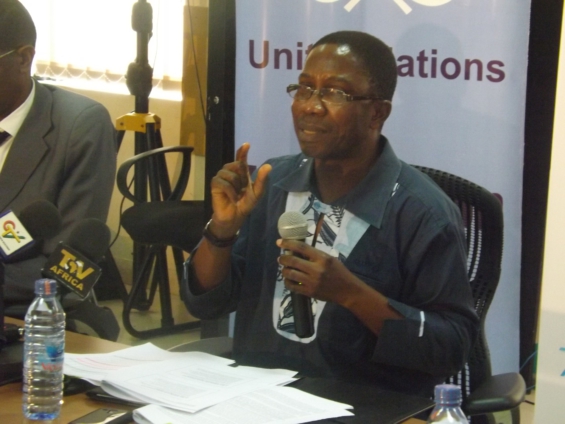
Coordinator of the Third World Network (TWN-Africa), Dr Yao Graham has stated that the deployment of military troops to safeguard water bodies is not a sustainable way of solving the country's problem with illegal small-scale mining (galamsey).
According to him, previous administrations have toed the line of using troops to guard the river bodies just as is being done currently, but that approach is yet to yield any good result.
“The PNDC used this approach once upon a time, the Rawlings government, Kufuor government, Mahama government used troops and Akufo-Addo government is using troops for the second time. We must learn something about the strengths and weaknesses of those methods,” he stated.
He described the measures deployed to stop illegal miners on the water bodies as "short term", adding that there is the need for a long or medium-term approach to be considered in order to bring sustainable outcomes.
He added, “So even the methods must be of the type that builds consensus, which deepens the consensus that we have. It must also get some of the most active people in the field who can work with the government, that is the legal small-scale miners, to be on site. So, we are in danger of fragmentation precisely because of a kind of one instrument approach to the problem.”
Dr Graham further questioned the basis on which soldiers destroy equipment belonging to legal miners and small scale miners with licences to operate.
“I ask the question, is it part of the legal mandate of the soldiers to burn equipment? Because if the complaints of the licenced small-scale miners are in order, it shows that just like capital punishment, where you can kill an innocent person, if you burn equipment belonging to somebody who has a licence, you’ve brought a suit on yourself.
"If you destroy somebody’s legal business it undermines the legitimacy of the fight and the soldiers on their own are not going to solve this problem,” he stressed.
The Lands Minister, Abu Jinapor responding to the concerns raised by Mr Graham said, "of course, we know it’s not sustainable that’s why we are not keeping them forever. It’s not even wise to keep soldiers in the bush forever.
"It’s not a wise thing that’s how come operation Vanguard we had to pull the soldiers out. We don’t want the soldiers to become civilians.
"We are saying that they are doing a surgical operation and we must judge these operations in the context of the fact that it is a surgical operation and once it is achieved we will move on,” he said at a press conference held on Wednesday, May 19.
Latest Stories
-
Health Ministry engages Ga Mantse ahead of Free Primary Healthcare launch
4 minutes -
We can tackle multiple priorities – Sam George defends Anti-LGBTQ Bill push
38 minutes -
Statement: Ghana Chamber of Mines’ Response to Claims in Joe Jackson’s “Ananse Stories about the Economy of Ghana”
40 minutes -
GES opens 2026 teacher recruitment for licensed B.Ed graduates
42 minutes -
Ghana must value skilled trades, build resilient learners — Ibn Chambas
50 minutes -
Ghana must rethink education around relevance, resilience and responsibility — Ibn Chambas
53 minutes -
Prince Harry faces defamation lawsuit from charity he co-founded
55 minutes -
South Korea deploys thermal cameras to track escaped zoo wolf
57 minutes -
Calls for royal meeting with Epstein survivors grow ahead of US visit
60 minutes -
Ibn Chambas advocates blend of technology and human values in education
1 hour -
UMA improves healthcare access in Asutifi North with GH₵700k ‘Kim Taylor Legacy’ Walkway
1 hour -
Scholarships Authority and Fanaka University offer sponsorship for procurement and supply chain studies
1 hour -
Bisa Kdei drops new single ‘Go N Look’ featuring Medikal
1 hour -
Benin facing rising terrorism in north as French military presence faces growing criticism
1 hour -
UEW Public Lecture Series 2026: Education debate ‘about the soul of Ghana’s future’ — Dr Ibn Chambas
1 hour