

Audio By Carbonatix
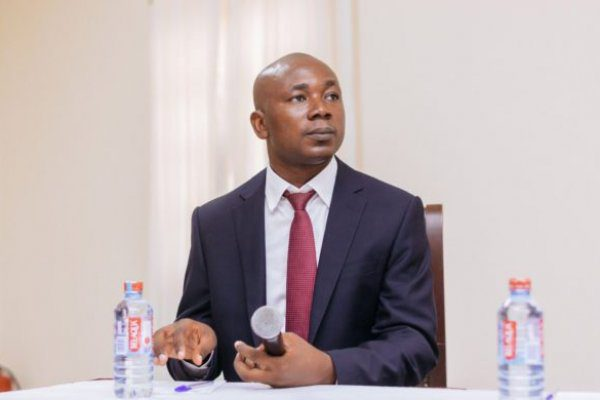
Economist and Finance Professor at the University of Ghana, Professor Godfred Bokpin, has warned that Ghana’s economic resilience has been significantly undermined by a series of crises over the past decade, leading to erratic growth and weakened foundations.
Speaking at the JoyBusiness Economic Forum on the theme “Ghana at Risk: The Economic Fallout of Distant Conflict”, Prof Bokpin traced the country’s economic turbulence back to 2012.
“If you look at our economy, just to give you some context, Ghana has been moving from one crisis to another practically since 2012,” he said. “From energy crises that intensified between 2012 and 2015, to the financial sector crisis, and as soon as we moved from that, COVID-19 arrived. Then COVID ushered in the Russia-Ukraine conflict and all the fallout that came with it.”
According to him, these overlapping shocks have eroded the structural base required for sustainable economic resilience.
“This is the new normal. We cannot run away from it,” he asserted. “The economy has gone through consistent shocks, and therefore, the base for the economy to be resilient has been eroded — whether we like it or not.”
He described Ghana’s recent growth trajectory as highly unstable: “For example, growth was about 8.1 per cent in 2017, but since then it has been very volatile. In 2024, quarterly growth fluctuated from around 6 per cent to 7.5 per cent, then down to 6.5 per cent, falling further to 3.6 per cent, before rising again to 5.3 per cent in the first quarter of 2025.”
Prof Bokpin emphasised that true resilience lies not only in absorbing shocks but also in bouncing back swiftly. However, Ghana’s post-COVID recovery, he noted, has been sluggish compared to other Sub-Saharan African countries.
“Resilience is also about our ability to bounce back from negative shocks as quickly as possible. Looking at the data post-COVID, Ghana’s recovery has been sluggish, slower, and more erratic.”
He blamed this on the absence of consistent long-term planning. “The reason our growth has been so erratic is that we have not adopted a long-term perspective on national development.
Short-term efforts to reduce the deficit quickly do not allow us to build the kind of economic fundamentals that will enable us to withstand shocks.”
Prof Bokpin concluded with a clear call to action: “We must have a long-term view of our growth pattern if we want a more resilient and stable economy.”
Latest Stories
-
Ghana must value skilled trades, build resilient learners — Ibn Chambas
2 minutes -
Ghana must rethink education around relevance, resilience and responsibility — Ibn Chambas
5 minutes -
Prince Harry faces defamation lawsuit from charity he co-founded
7 minutes -
South Korea deploys thermal cameras to track escaped zoo wolf
8 minutes -
Calls for royal meeting with Epstein survivors grow ahead of US visit
12 minutes -
Ibn Chambas advocates blend of technology and human values in education
13 minutes -
UMA improves healthcare access in Asutifi North with GH₵700k ‘Kim Taylor Legacy’ Walkway
18 minutes -
Scholarships Authority and Fanaka University offer sponsorship for procurement and supply chain studies
21 minutes -
Bisa Kdei drops new single ‘Go N Look’ featuring Medikal
27 minutes -
Benin facing rising terrorism in north as French military presence faces growing criticism
29 minutes -
UEW Public Lecture Series 2026: Education debate ‘about the soul of Ghana’s future’ — Dr Ibn Chambas
29 minutes -
EU fingerprint and photo travel rules come into force from today
56 minutes -
Anti-LGBTQ+ Bill: Ghanaians demand expedited passage, not dialogue – Ntim Fordjour to Mahama
1 hour -
EU airline industry warns of fuel shortages if Strait of Hormuz stays closed
1 hour -
White House staff told not to place bets on prediction markets
1 hour