

Audio By Carbonatix
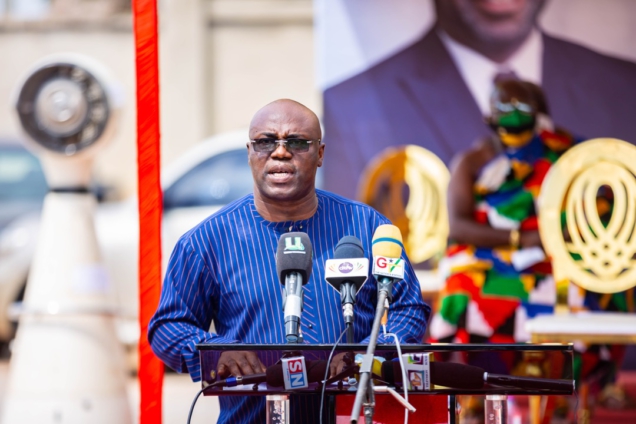
The Administrator of the Ghana Education Trust Fund (GETFund), Dr. Richard Ampofo Boadu has refuted allegations that the Fund grants scholarships based on political considerations.
According to him, the scholarships are awarded to applicants solely on merit and the process is highly transparent and open.
Dr Ampofo Boadu made these remarks in response to a comment during an open forum discussion under the theme 'Financing Higher Education in Ghana: Implications for Equity and Sustainability', organised by the Ghana Academy of Arts and Sciences (GAAS) in Accra.
This policy dialogue was part of a series of seven organised by the Academy under the project 'Motivating Higher Education Reforms in Ghana - Towards Equity and Sustainability', funded by a grant from the Carnegie Corporation of New York.
The goal of the project is to provide a platform for independent individuals and groups to address the challenges facing the higher education sector on an ongoing basis.
The GETFund Administrator urged tertiary institutions to explore innovative ways to raise funds to complement the government's support.
He emphasised that government funding alone is insufficient to sustain these institutions, necessitating the exploration of alternative sources of funding.
On his side, the Executive Director of Africa Education Watch, Kofi Asare proposed the establishment of a scholarship authority to consolidate all scholarship providers in the country.
“The reason we are not meeting our tertiary enrollment target is due to actual needy students not gaining scholarships into tertiary institutions. The scholarship system and rollouts should be reviewed.”
“We need a scholarship authority to manage all scholarships in the country and make scholarship rollouts more efficient and effective to help needy students and even prospective students enrol in tertiary institutions,” he added.
To this end, the Chairperson of GAAS' Higher Education Project Management Committee, Professor Emeritus Takyiwaa Manuh highlighted the perennial challenges faced by higher education in Ghana, including inadequate government funding, insufficient student loans, inadequate tuition fees, infrastructural deficits, and unreliable revenue streams.
She noted that these challenges have been worsened by the expansion of public institutions in the higher education sector and the conversion of polytechnics into technical universities, resulting in increased demands on resources.
Latest Stories
-
AFCON U-17: Black Starlets’ aim is to win trophy – Head Coach Prosper Ogum
4 minutes -
ENFA expands access to global capital for Ghanaian SMEs
12 minutes -
Beyond security: Why mobile payment fraud has become a customer experience crisis
13 minutes -
Former Effia MP demands full disclosure of Truedare AI deal, warns of ‘hidden risks’
38 minutes -
Joseph Cudjoe raises alarm over potential revenue loss in Truedare AI Customs deal
38 minutes -
Video: Awoshie-Anyaa Highway: Years of fatal crashes caused by faulty traffic lights
43 minutes -
No financial transactions with Ghana Card yet, says NIA
49 minutes -
Former Netherlands Fire Chief engages GNFS Tema Command on capacity building
49 minutes -
Finance Ministry defends Publican AI rollout amid stakeholder concerns
52 minutes -
Police arrest 5 in Asankrangwa robbery; cash and guns retrieved
53 minutes -
Why I joined NPP – Jeneral Ntatia
54 minutes -
Three UDS students remanded over alleged armed robbery
58 minutes -
Kudus Mohammed at risk of missing World Cup 2026 after fresh injury blow
1 hour -
Minority urges cocoa farmers to resist pressure from galamseyers
1 hour -
President Mahama applauds astronaut Christina Koch’s Ghana ties in Artemis II mission
1 hour