

Audio By Carbonatix
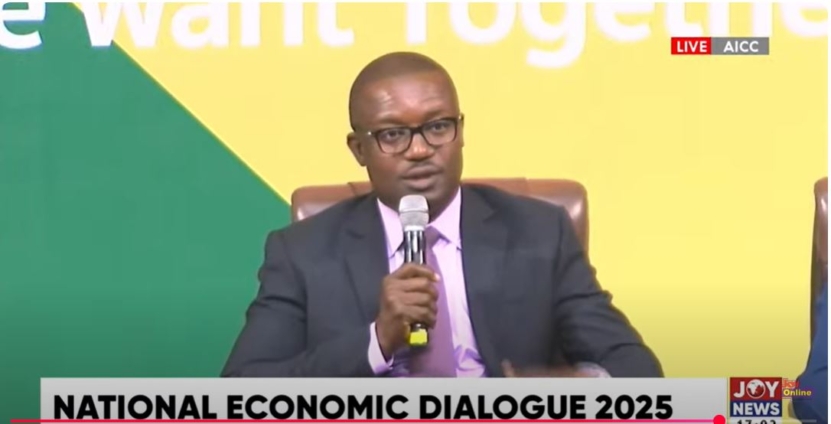
Energy Minister John Jinapor has revealed that Ghana’s energy sector is grappling with outstanding liabilities of approximately GH₵80 billion, with the debt continuing to rise.
Speaking during Day 2 of the National Economic Dialogue, the minister warned that restoring the sector to stability would require clearing this massive debt burden.
“Today, the outstanding liabilities stand at about GH₵80 billion, and it keeps increasing. If we were to fully revive the energy sector, we would need to flush out this debt. Clearly, this situation is unsustainable,” he stated on Tuesday, March 4.
Beyond the existing liabilities, Mr Jinapor highlighted an even more concerning issue—the sector's monthly financial shortfall. According to him, “Our total bill, especially in the power sector, is about $170 million per month, but collections are less than $100 million. This means we are accumulating an additional $70 million in liabilities every month."
Mr Jinapor highlighted inefficiencies within the energy sector, citing financial indiscipline as a major concern. He noted that in 2023, the Public Utilities Regulatory Commission (PURC) approved $200 million as a capital expenditure cap for the Electricity Company of Ghana (ECG), but ECG ended up incurring $700 million, exceeding the approved amount by $500 million.
This excess spending, he explained, was not factored into the tariff structure, worsening the sector’s financial crisis.
The minister further emphasised the need for private sector involvement in managing the energy sector, warning that failure to do so could lead to its collapse.
He disclosed that some power producers have already shut down their plants due to non-payment of their bills, stressing that tough decisions must be made to prevent a total breakdown.
Mr Jinapor also called for an urgent transition from liquid fuel to gas for power generation, arguing that Ghana has stranded gas that is not being utilized, while the country continues to spend heavily on liquid fuel.
He revealed that the cost of liquid fuel this year alone is projected to reach $1 billion, whereas half of that amount could build a gas processing plant that would save the country $600 million annually. He maintained that constructing the plant is non-negotiable, as it would not only cut costs but also reduce corruption and waste in the sector.
Latest Stories
-
Netherlands Fire Chief in Ghana to support fire safety reforms and market fire prevention efforts
4 hours -
Mason goes on remand for stealing
4 hours -
Gov’t cuts fuel taxes, deploys buses to curb impact of rising fuel prices
5 hours -
Interior Minister calls for intelligence-driven strategy as Ghana strengthens counter-terrorism efforts
5 hours -
Adenta Circuit Court remands Pastor William Gyimah over viral threats against Vice President
5 hours -
“We’ve implemented changes to prevent a repeat of the AFCON final” – CAF President Motsepe
6 hours -
Gov’t orders deployment of Metro Mass buses to cushion commuters amid fuel price hike
7 hours -
Key Indian state polls begin in test for Modi’s party
7 hours -
Playback: Gomoa Easter Carnival in photos
7 hours -
Gov’t orders removal of fuel taxes to ease pump price hikes
7 hours -
“Whatever the decision of CAS, we will respect it” – CAF President Motsepe after AFCON final meetings in Morocco
7 hours -
Emma Ankrah: When waiting becomes part of treatment – Reflections on hospital care
7 hours -
Ghana urges travellers to prepare for new EU border system roll-out
7 hours -
Mahama enforces fuel coupon ban for ministers as cabinet moves to slash fuel taxes
7 hours -
Task force probes strange fish deaths in Tema
7 hours