

Audio By Carbonatix
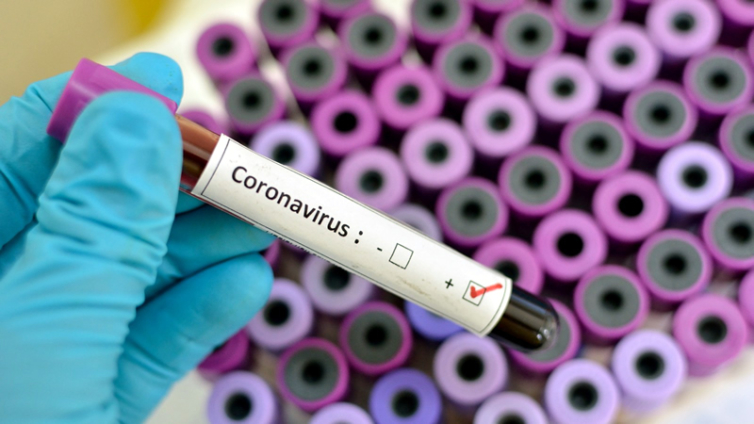
Scientists from the University of Oxford’s Engineering Science Department and the Oxford Suzhou Centre for Advanced Research (OSCAR) have developed a rapid testing technology for the novel coronavirus SARS-CoV-2 (COVID-19).
The team, led by Prof Zhanfeng Cui and Prof Wei Huang, have been working to improve test capabilities as the virus spreads internationally.
The new test is much faster and does not need a complicated instrument.
Previous viral RNA tests took 1.5 to 2 hours to give a result. The research team has developed a new test, based on a technique which is capable of giving results in just half an hour – over three times faster than the current method.
Prof Wei Huang says: "The beauty of this new test lies in the design of the viral detection that can specifically recognise SARS-CoV-2 (COVID-19) RNA and RNA fragments. The test has built-in checks to prevent false positives or negatives and the results have been highly accurate."
Additionally, the technology is very sensitive. This means that patients in early stages of infection may be identified sooner, potentially helping to reduce the spread of the coronavirus SARS-CoV-2 (COVID-19).
The technology only requires a simple heat-block which maintains a constant temperature for RNA reverse transcription and DNA amplification, and the results can be read by the naked eye. This makes it potentially useful in rural area or community healthcare centres.
The technology has been validated with real clinical samples at Shenzhen Luohou People’s Hospital in China. Shenzhen Luohu People’s Hospital has applied the rapid detection kits on 16 clinic samples, including 8 positives and 8 negatives, which have been confirmed by conventional RT-PCR methods and other clinical evidence.
The test results using the rapid detection kits were all successful.
Prof Zhanfeng Cui, the Director of OSCAR, says: "I am proud of our team that have developed a useful technology and can make a contribution in combating CoV-19, and we are very grateful to the hospital’s medical team led by Dr Xizhou Sun, Dr Xiuming Zhang and Dr Dan Xiong for their part in testing this new technology."
The Oxford scientists are now working to develop an integrated device so that the test can be used at clinics, airports, or even for home use. They are planning to run clinical validations within the UK and exploring options for production of the test kits.
The project was initiated by Oxford Suzhou Centre for Advanced Research (OSCAR), a University of Oxford centre in Suzhou Industrial Park.
The experiments to develop the technology were performed in the Department of Engineering Science at the University of Oxford.
Latest Stories
-
MTN FA Cup: Defending champions Kotoko knocked out by Aduana
4 hours -
S Korean crypto firm accidentally pays out $40bn in bitcoin
4 hours -
Washington Post chief executive steps down after mass lay-offs
4 hours -
Iranian Nobel laureate handed further prison sentence, lawyer says
4 hours -
U20 WWCQ: South Africa come from behind to draw against Black Princesses in Accra
4 hours -
Why Prince William’s Saudi Arabia visit is a diplomatic maze
4 hours -
France murder trial complicated by twin brothers with same DNA
5 hours -
PM’s chief aide McSweeney quits over Mandelson row
5 hours -
Ayawaso East primary: OSP has no mandate to probe alleged vote buying – Haruna Mohammed
5 hours -
Recall of Baba Jamal as Nigeria High Commissioner ‘unnecessary populism’ – Haruna Mohammed
5 hours -
Presidency, NDC bigwigs unhappy over Baba Jamal’s victory in Ayawaso East – Haruna Mohammed
6 hours -
Africa Editors Congress 2026 set for Nairobi with focus on media sustainability and trust
6 hours -
We are tired of waiting- Cocoa farmers protest payment delays
7 hours -
Share of microfinance sector to overall banking sector declined to 8.0% – BoG
7 hours -
Ukraine, global conflict, and emerging security uuestions in the Sahel
8 hours