

Audio By Carbonatix
In a critique of Ghana's political landscape and the culture of defending alleged wrongdoing, 2024 New Patriotic Party (NPP) presidential aspirant Kwadwo Poku has stated that "party communicators have no business defending government infringement."
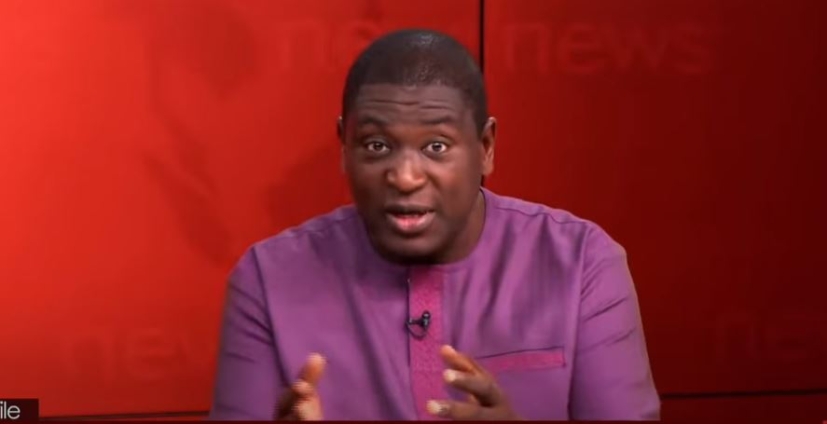
Speaking on JoyNews’ Newsfile on Saturday, July 26, in response to a recent Auditor General's report, Mr Poku called for a fundamental shift in political accountability, lamenting the erosion of national foundations and the politicisation of justice.
Mr Poku's remarks came amidst a heated discussion on the Auditor General's findings, which frequently highlight significant financial irregularities and non-compliance within state institutions.
He emphasised that by the time these issues reach the Public Accounts Committee, internal and external auditors have already raised concerns through management letters and exit meetings.
The core problem, he argued, lies in the lack of effective punitive action and the perceived politicisation of the legal process.
"Party communicators have no business defending government infringement. So if somebody in the government has done something, let the person go through the process and be acquitted," Mr Poku declared, challenging the prevalent practice where political parties often mobilise to defend appointees accused of malfeasance.
This statement directly contradicts the typical defensive posture adopted by party spokespersons when public officials from their ranks face corruption allegations.
Mr Poku passionately echoed a sentiment that the "foundations of this country are being eroded" due to a culture where "people defend wrongdoing".
He highlighted the paradox where ordinary citizens accused of petty crimes face swift prosecution, but politically exposed persons (PEPs) are often met with cries of "political witch hunt", orchestrated mass-ups at investigative offices, and even the bastardisation of judges when convictions occur.
This phenomenon, where party affiliation seemingly trumps accountability, has been a persistent concern for anti-corruption advocates in Ghana.
Transparency International's 2024 Corruption Perception Index (CPI) ranked Ghana 70 out of 180 countries, reflecting persistent challenges with corruption and the perception of impunity for high-profile cases.
Reports from the Office of the Special Prosecutor (OSP) and civil society organisations consistently point to difficulties in prosecuting corruption cases involving politically influential individuals, often citing procedural delays, legal challenges, and the strong political backing they receive.
Mr Poku's comments also delved into the weaknesses within Ghana's audit and accountability framework. He advocated for a system where internal auditors report directly to the board of State-Owned Enterprises (SOEs), bypassing management, to prevent situations where managing directors might be complicit in infractions.
"The internal auditor reports directly to the board. The reason being that there could be infractions which the managing director himself is probably part of," he explained, pointing to a standard corporate governance practice in the private sector.
He further critiqued the lack of "bite" in the current system, both at the Public Accounts Committee level and for internal audit processes.
While acknowledging that some constitutional amendments might be needed for the Auditor General's powers, he stressed that many reforms to strengthen accountability could be achieved through amending existing laws, rather than complex constitutional reviews.
Mr Poku also touched on the issue of stringent bail conditions set for politically exposed persons, which he perceives as a form of "political interference".
Citing a hypothetical instance of a prominent individual (seemingly referencing a recent high-profile case), he argued that inquiry bail should not be overly stringent.
"The political inference which goes into those things also becomes a problem because if you think, and almost at times, this is what happens. Political appointees who are giving to this Yoko and all these, they just want the front pages of the arrest, not the prosecution."
He suggested that the difficulty in meeting bail conditions often creates the perception of a "political witch hunt", rather than a fair trial process.
Latest Stories
-
Imprisonment should be rehabilitative, not punitive – Ghana Prisons boss at UNGA
19 minutes -
Ga Adangbe traditional priests petition Mahama over McDan aviation licence revocation
30 minutes -
Anti-LGBTQ Bill: NDC’s arrogance is worrying – Hassan Tampuli
41 minutes -
Let’s give OSP time to mature, not to scrap it – Hassan Tampuli
45 minutes -
Nigeria convicts 386 Islamist militants in mass trials
50 minutes -
Djibouti president wins election with 97.8% of vote, state media says
54 minutes -
We don’t have mandate to deduct tax from rent allowance of security services personnel – Interior Ministry clarifies
1 hour -
Ablakwa receives Presidential Special Envoy on Reparations to advance global agenda
1 hour -
Christina Koch becomes first woman to travel around the moon on Artemis II
2 hours -
Epstein survivors’ calls to meet King Charles and Queen harder to ignore as US visit approaches
2 hours -
UN Secretary-General names Ghana’s Anita Kiki Gbeho as South Sudan envoy
2 hours -
Mali withdraws recognition of Sahrawi Republic, backs Morocco’s autonomy plan
2 hours -
Gov’t distributes over 8,500 laptops to One Million Coders project
2 hours -
Julius Debrah, ‘man to beat’ as NDC’s James Agbey dismisses Musah Dankwah’s polls
2 hours -
GPRTU in Savannah Region to protest alleged eviction in Damongo
2 hours