

Audio By Carbonatix
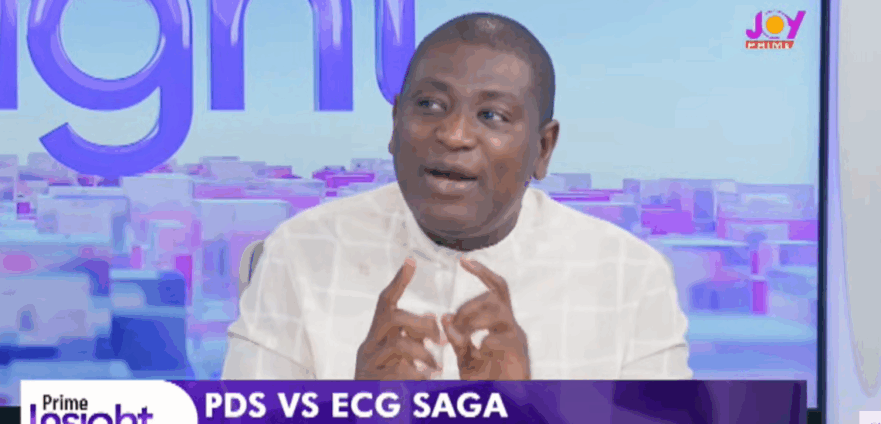
The Executive Director of the Institute for Energy Policies and Research (INSTEPR), Kwadwo Poku, has attributed the failure of the Power Distribution Services (PDS) concession to the government’s decision to introduce a 51% Ghanaian ownership requirement.
Speaking on Prime Insight on Saturday, November 8, Mr Poku argued that while the intention to ensure local participation in key national projects was commendable, the move backfired because the local partners lacked the financial and technical capacity to meet the demands of the deal.
“The reason PDS failed is the 51% Ghanaian ownership that was introduced. That’s the only reason, we keep trying to say that Ghanaians should participate in things that are Ghanaian, but the problem we fail to realise is capacity.”
Mr Poku explained that before the ownership requirement was introduced, the concession process had attracted several internationally reputable companies with strong experience and financial backing.
“When we went into the bidding rounds, the companies shortlisted were internationally reputed ones like EDF, a French company, and Morocco’s Manila Electric Company (Meralco). Meralco serves about 117 million people in the Philippines, while Ghana’s population is only around 35 million. You can’t say a company that serves 117 million customers doesn’t have the experience to manage ECG,” he said.
He disagreed with suggestions that Meralco lacked experience because it had never operated in West Africa.
“You don’t need to have experience in the region to be able to bring your expertise to Ghana. The real issue was not their competence; it was the ownership structure,” he added.
According to Mr Poku, the 51% local ownership requirement meant Ghanaian shareholders were expected to contribute over $200 million out of the $580 million total investment, a financial commitment none of them could meet.
“If you’re a 51% shareholder of a $580 million project, it means you have to bring 51% of that money over $200 million. None of the local companies had the capacity to do that,” he stated.
He said that this lack of capital was exposed when the issue of financial guarantees arose, leading to the eventual collapse of the concession.
“When the whole guarantee issue came up and there was an FIT investigation, it turned out that when they were supposed to pay $12 million for the guarantee, they only paid $1 million in cash. They used cash flow from PDS operations to pay for the rest of the guarantee,” he explained.
Mr Poku cautioned the government to learn from the PDS experience as it considers another private sector participation (PSP) arrangement in the power sector.
Latest Stories
-
Ghanaian farmer can’t grow tomatoes because of lack of irrigation – Tomato Importers Association president
52 minutes -
Social media firms must better enforce Australia under-16 ban, watchdog says
1 hour -
King Charles should meet Epstein victims, US lawmaker says
1 hour -
Belgian ex-diplomat appeals order to stand trial in Congo’s Lumumba murder
2 hours -
Cholera aid for African countries stalled by Iran conflict
2 hours -
The Oscars are leaving Hollywood
2 hours -
Too watery, too risky – Why Ghanaian traders prefer Burkina tomatoes
2 hours -
We buy from Burkina because ours rot fast – Tomato traders defend import dependence
2 hours -
Nigeria’s giant oil refinery fails to prevent record gasoline prices
3 hours -
CAF to make changes to regulations after Afcon final fiasco
3 hours -
Council of State member demands EOCO boss apologise or face lawsuit, petitions Mahama for his dismissal
3 hours -
Otto Addo sacked!
4 hours -
‘We are tomato sufficient – Agribusiness chief pushes back on Burkina Faso export shock
5 hours -
AfDB says Africa’s growth risks were tilted to downside even before Iran conflict
5 hours -
Egypt’s Sisi says only Trump can stop war, warns oil could top $200
5 hours