


Audio By Carbonatix
A French computer forensic expert called Wednesday in Rabat, for “the greatest caution” vis-à-vis the report by Amnesty International (AI) accusing Morocco of having used the “Pegasus” spyware, specifying that the technical elements provided by AI do not allow, in any case, to identify or locate the user of this software.
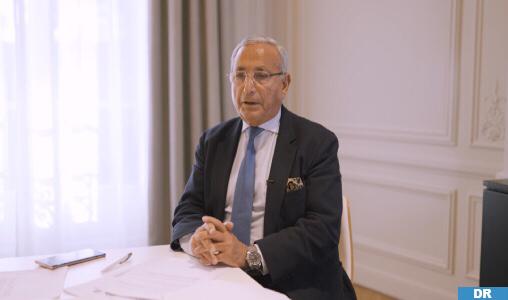
"We must be extremely careful" vis-à-vis the accusations made by this international NGO and relayed by a certain number of media, underlined David Zenaty, the expert since 1985 with the Court of Cassation and the International Criminal Court, during a conference debate and information held in Parliament and devoted to the hostile, flagrant and repeated attacks against the Kingdom within the European Parliament (EP).
“The technical elements published by AI, which are difficult to cross-check, do not allow, in any case, to identify or technically locate the user of Pegasus and this, whatever the issuer”, ruled Mr. Zenaty, citing the conclusions of a report he drew up in August 2021 in collaboration with three other experts with the Paris Court of Appeal and the Court of Cassation.
At the request of the lawyers of the Kingdom of Morocco, this college of experts had the mission of “characterizing the elements appearing in the AI report and to what extent they were conclusive, technically speaking”, specified Mr. Zenaty in a projected video on the occasion of this conference attended by MPs, representatives of civil society, experts and lawyers.
He added that to carry out this "forensic analysis" (a process for investigating an information system after a cyberattack), the four experts scrutinized the documents on which the AI report was based, including the Pegasus user manual and the “transparency and responsibility report 2020-2021” from NSO Group, the company marketing this software.
After having lingered at length on the mode of operation of this malware, Mr Zenaty affirmed that in the case of an act of espionage using Pegasus, “it is very hard to find the issuer” since the software “uses a special technique to hide the origin of the server, as for the Darknet”.
“So if you want to know if this or that country has hacked this or that phone, the only place you can get that information is where the NSO server exists,” he explained.
Instead of providing hard evidence to back up what it said, “AI simply handed over a list of e-mail addresses and domain names whose provenance is difficult to establish, in addition to a list of 600 names that no one knows how they were associated with this case”, reported the lawyer.
Morocco denounces an "unfair campaign
Morocco on Wednesday denounced an "unfair campaign" in the European Parliament on the eve of a parliamentary hearing in Brussels on the use of Pegasus spy software, of which the Moroccan authorities are suspected. "Our country has been subjected to hostile actions and attacks in the European Parliament which have forced us to re-evaluate our relationship with it," denounced the president of the House of Representatives Rachid Talbi El-Alami.
"This campaign continues with the announced debate on former allegations of spying on leaders of a European country (editor's note: France)," deplored El-Alami, during a debate in the Moroccan parliament in Rabat devoted to "repeated hostile attacks against the kingdom. On the agenda of the European Parliament on Thursday afternoon is a meeting of experts, human rights defenders and journalists on the Pegasus spying case.
According to a consortium of international media, some 50,000 people around the world (politicians, journalists, human rights activists, etc.) may have been spied on by some governments, including Morocco's, using Pegasus spyware, designed by the Israeli company NSO Group. A committee of enquiry was launched last April in the European Parliament to ensure that abuses of the spyware "do not occur again".
Among the politicians spied on is French President Emmanuel Macron, whose mobile phone number was allegedly targeted by Morocco, the consortium claims.
Rabat has sued French NGOs and media for defamation for revealing or denouncing Morocco's use of the Pegasus software, but these complaints were ruled inadmissible by the Paris court.
"Morocco has long been the victim of an international destabilisation attempt. It has never ceased to denounce these unjust and fanciful accusations," said Olivier Baratelli, Rabat's lawyer in this case, speaking by video conference to Moroccan MPs.
Latest Stories
-
Hawa Koomson pledges experienced and mature leadership of NPP women’s wing
12 minutes -
Young woman found dead at Kasoa Peace Town
44 minutes -
Playback: The Law examined lawful arrest in Ghana
1 hour -
Mahama urges African governments to treat healthcare as an investment, not budget cost
2 hours -
Bawumia congratulates John Boadu and new NPP executives, pledges support ahead of 2028
2 hours -
‘No talent should be left out’ – Bawumia pledges inclusive NPP campaign for 2028
2 hours -
Prof. Mike Oquaye recounts how he blocked Special Prosecutor’s attempt to arrest Bawku Central MP
2 hours -
Make health sovereignty a priority for Africa – Mahama
2 hours -
Dorimon Naa, Wa West DCE lead massive clean-up exercise; threaten sanctions against recalcitrant residents
3 hours -
Photos from Adom FM Y2K Jam
3 hours -
Praye Tiatia steals the show at Adom FM Y2K Jam [Watch]
3 hours -
Boakye Agyarko congratulates John Boadu, pledges support for NPP leadership
3 hours -
Antwi HiMight thrills fans with Antwi ne Antwi hits at Adom FM’s Y2K Jam [Video]
3 hours -
Amb. Edward Boateng congratulates Boadu, Kodua on election wins
4 hours -
John Boadu pledges to rebuild NPP from grassroots and restore ‘winning machinery’
4 hours