

Audio By Carbonatix
The government has been advised to adopt private sector-led measures to revitalise the Planting for Food and Jobs (PFJ) and One District-One Factory (1D1F) initiatives.
Doing so would be a strategic step towards tackling inflation and reducing reliance on imported food commodities while supporting agro-processing businesses, two Economists have said.
Dr Benjamin Amoah, a Senior Lecturer with the Department of Finance at the University of Ghana Business School (UGBS), and Dr Daniel Anim-Prempeh, a Chief Economist with the Policy Initiative for Economic Development (PIED) made the recommendation.
They said this in exclusive interviews with the Ghana News Agency on their expectations of the John Dramani Mahama-led government, highlighting the importance of the PFJ and 1D1F initiatives.
The two initiatives were introduced in 2017 under the erstwhile government to promote food security, economic growth, and support Ghana’s industrialisation drive, but have not yielded the expected results.
It targeted increased production of rice, tomato, pepper, onion, soybean, sorghum, plantain, yam, cassava, and poultry, most of which are imported from Ghana’s neighbouring countries and overseas, by eliminating bottlenecks in the agricultural value chain.
Dr Amoah called for enhanced collaboration between the State’s implementing agencies and the private sector to ensure the effective implementation of initiatives to propel sustainable economic growth and development.
He noted that such a partnership would bring about the provision of the needed resources and expertise for a turnaround of the PFJ, 1D1F, and other related initiatives by the new government while creating jobs in the agricultural value chain.
According to the Ghana Statistical Service (GSS), 13 out of the 15 top-ranked items that drove the country’s inflation for six years (from 2018 to 2024) were food items.
Dr Amoah questioned the effectiveness of the implementation of government-led initiatives, like the PFJ and 1D1F, which were often “political.”
“You cannot go through about seven years of planting for food and jobs, especially on the food side, and then you have food inflation always increasing and food becoming expensive on the market,” he said.
“So, we can have something similar to that [PFJ], but we should try to bring in the private sector so that we can easily measure output and performance,” the Economist advocated.
“There should be a huge investment and coordination of agric sector initiatives like PFJ and 1D1F because we need food security and then at a competitive price,” said, Dr Anim-Prempeh.
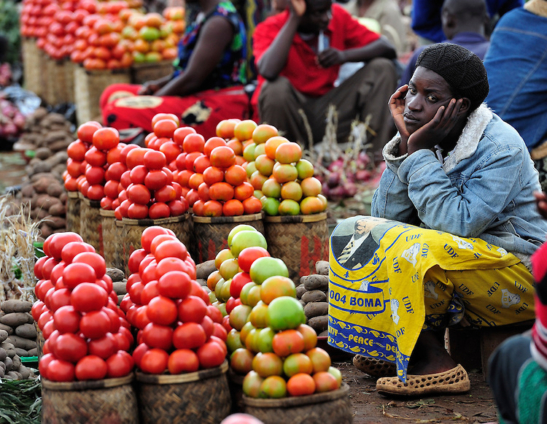
He raised concern about the country spending about US$2 million to import tomatoes, as well as other foodstuff from Burkina Faso and neighbouring countries, and called for support for farmers and food processing companies.
“Until we support the private sector, including the manufacturing companies in our food basket regions, produce energy at affordable prices and solve the cost of capital issue, there will be challenges, with our food systems,” he noted.
“We have competitive urge by the topography of our land. We have the competitive urge to produce so many things on our own. So, let us provide the needed assistance to the private sector to lead government initiatives.” Dr Anim-Prempeh.
Latest Stories
-
Photos: Mahama commissions 85-bed Police Hospital ward, donates two ambulances
4 minutes -
GTEC directs Ghana’s public universities to reopen by October 16 and begin lectures on October 19
6 minutes -
Star Oil donates GH¢1million towards construction of new CID facility
10 minutes -
Court hands Adjetey Sowah, two others lifetime bans after Amputee Football legal dispute
19 minutes -
NDC appoints Julius Kwame Anthony as a Deputy Communications Director
19 minutes -
Ghana repatriates 120 Nigerians rescued from suspected cybercrime centres
24 minutes -
NPP rejects Emelia Agbenyo’s appointment as Deputy EC Chair, demands withdrawal
29 minutes -
EOCO grants Suame MP John Darko enquiry bail in GH¢27m SIC investigation
32 minutes -
NPP cannot question EC appointment after appointing own people to Commission – Kwakye Ofosu
37 minutes -
BoG deepens public trust with regional stakeholder forum in Techiman
47 minutes -
‘We have turned the tide’ – Ato Forson says Ghana is ready to take off
52 minutes -
Police arrest man captured in viral video assaulting wife in Agona Nkwanta
54 minutes -
KATH Mother and Baby Unit construction stalled for 14 months over unpaid contractor arrears
1 hour -
Government wanted to ‘tilt the balance’ with new EC appointments – Kwakye Ofosu
1 hour -
Angry Tema Community 25 residents threaten to sleep at GWL over water shortage
1 hour