


Audio By Carbonatix
US inflation jumped last month as President Donald Trump's tariffs took hold, pushing up prices for items from clothing to coffee.
Consumer prices rose 2.7% in the year to June, up from 2.4% the previous month, with prices rising at the fastest pace since February, the Labour Department said.
Higher energy and housing costs, such as rents, were the major drivers of the increase.
But the data also suggested that consumers are starting to feel the impact of tariffs, as some firms begin to pass along the costs of Trump's new taxes on imports.
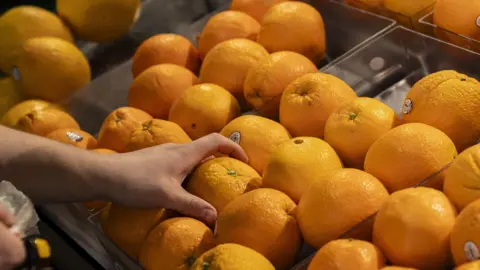
Coffee prices jumped 2.2% from May to June, while prices for citrus fruits climbed 2.3%. Toy prices rose 1.8%, appliance prices increased 1.9%, while clothing prices gained 0.4% - the first increase to hit the sector in months.
But the overall increase remained contained and came in largely within expectations, offset by declines in prices for new and used cars, airfare and hotel bookings.
"There is a trickle of what is likely tariff-induced inflation in some categories, particularly household appliances and furnishings," said Olu Sonola, head of US economic research at Fitch Ratings.
"This trickle is likely to gain momentum in the coming months."
The average effective tariff rate in the US has surged this year, as Trump imposed a 10% tax on most goods entering the country, hitting key items, such as steel and cars, with even higher levies.
Though he suspended some more aggressive plans, in recent weeks, he has revived tariff threats, warning of plans to raise duties on goods from most countries from 1 August. Ongoing talks have raised hopes that deals will avert punishing duties.
Trump said on Tuesday he had struck a "great deal" with Indonesia, without offering details. So far, his tariff talks with other countries have concluded with tariff levels for goods from those countries far higher than the US had at the start of the year.
The president says the taxes will protect American businesses from foreign competition, boost domestic manufacturing and jobs, and bring in revenue for the government.
The White House has dismissed forecasts that the measures will lead to higher prices for Americans, arguing that companies and foreign exporters will absorb the costs.
That view is at odds with most economic forecasters, who have argued the US economy has been shielded so far because firms stocked up on many goods in advance.
Despite pressure from Trump to cut interest rates, the US central bank has resisted making any changes, saying it wants more time to understand the effect of the tariffs.
Analysts on Tuesday said they were not expecting any cuts at the Fed's meeting this month and were divided about September, given the new inflation figures.
Latest Stories
-
Pentecost University to host international sustainability conference
4 minutes -
Ampofo Ankrah did not collect World Cup visa money – Lawyer
14 minutes -
Baffour Awuah to spend night in EOCO custody – Atta Akyea
16 minutes -
Torgbiga Wenya III opposes proposed elevation of 36 Anlo chiefs to Paramount status
24 minutes -
The strengthening El Niño and what it could mean for Ghana
27 minutes -
Baffour Awuah formally charged with money laundering, loss of public funds – Lawyer
28 minutes -
Drone flight over EOCO building could attract 30-year jail term – Security consultant
36 minutes -
Flying drone over EOCO premises is strictly prohibited – Security consultant
36 minutes -
SIC file was surrendered to client, EOCO has no reason to search Manhyia South MP’s firm – Atta Akyea
37 minutes -
EOCO search of Baffour Awuah’s law firm raises confidentiality concerns – Atta Akyea
38 minutes -
“I will never ignore an invitation from EOCO if I had received one” — Manhyia MP
40 minutes -
Baffour Awuah ready to cooperate fully with EOCO investigation – Bosome Freho MP
1 hour -
How a Ghanaian technology is helping fish farmers detect hidden threats before fish die
1 hour -
AI tool helps Ghanaian farmers identify crop threats from field observations
1 hour -
NEIP: Designing a Ghana Startup Agency that builds enterprises, not programmes
1 hour