

Audio By Carbonatix
The Philippines has become the first country in the world to declare a state of national energy emergency in response to the war in Iran.
President Ferdinand Marcos Jr said he had signed an executive order to safeguard energy security, citing the "imminent danger posed upon the availability and stability" of the country's energy supply.
The US-Israel war with Iran and the effective closure of the Strait of Hormuz - a key shipping route - have sent shock waves through global energy markets, causing shortages and price rises.
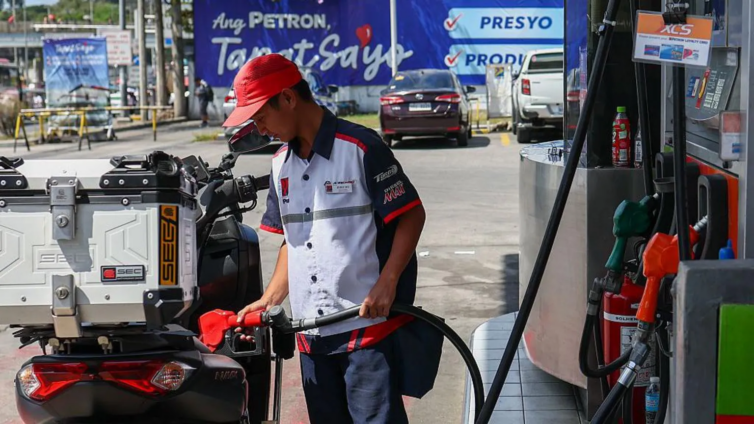
The Philippines imports 98% of its oil from the Gulf, and the price of diesel and petrol has more than doubled in the country since the war broke out on 28 February.
On Tuesday, Marcos said the move would give the government the legal authority to impose measures to ensure energy stability and protect the broader economy.
Under the order, a committee has been formed to oversee the orderly distribution of fuel, food, medicines, and other essential goods.
The government has also been empowered to directly purchase fuel and petroleum products to shore up supplies.
The declaration will remain in place for one year, unless it is extended or lifted by the president.
It follows calls from several senators, who urged Marcos to acknowledge the "emergency-level" hardship faced by Philippine families due to soaring oil prices.
The price of petrol and diesel spiked again on Tuesday, rising to more than double its pre-war level in February.
One of the country's main labour coalitions, the Kilusang Mayo Uno (KMU) strongly criticised the emergency declaration, calling it an "admission" that the government failed to address the oil crisis. It also accused the administration of downplaying the situation earlier, saying previous claims that "everything is normal" were misleading.
The KMU also raised concerns about what it describes as "anti-worker provisions" in the executive order - particularly clauses that could restrict activities seen as disrupting economic activity, including strikes. They warn this could effectively limit workers' ability to protest at a time when fuel prices are already hitting incomes.
Transport workers and other groups including ride hailing services are planning a two-day strike on Thursday and Friday, reflecting wider anger over rising fuel costs and what they see as a slow or inadequate response from the government.
Since hostilities in the Middle East began, the government has offered subsidies to transport drivers, reduced ferry services, and implemented a four-day work week for civil servants to save fuel.
Earlier on Tuesday, Energy Secretary Sharon Garin said the country had about 45 days of fuel supply left.
Garin told reporters the country would "temporarily" rely more heavily on coal-fired power plants to meet its energy needs amid surging liquefied natural gas (LNG) costs.
Asia is particularly exposed to the blockade of the Strait of Hormuz. Last year, nearly 90% of all the oil and gas that passed through the waterway was bound for the region.
Latest Stories
-
Facebook offering TikTok and YouTube creators $3,000 to post content
40 seconds -
Oil traders bet millions minutes before Trump’s Iran talks post
2 hours -
Fortnite-maker Epic Games lays off 1,000 more staff
2 hours -
Philippines declares energy emergency over Iran conflict
2 hours -
China dials back on fuel price hikes to ‘reduce burden’ on drivers
2 hours -
Elon Musk’s Starlink blocked from operating in Namibia
2 hours -
Kwame Dadzie: Did Stonebwoy’s ‘Jejereje’ really give NDC “significant” electoral impact?
3 hours -
Meta told to pay $375m for misleading users over child safety
4 hours -
‘I’m no longer interested in Grammy, Western validations’ – Davido
4 hours -
Six politicians I prayed for in 2023 all won their elections – Pete Edochie
4 hours -
Two granted bail for illegally interfering with ECG’s network
4 hours -
Court exonerates Gabriel Tanko Kwamigah-Atokple and rebukes EOCO for abuse of power
4 hours -
Customer sues bank over alleged breach of confidentiality
4 hours -
Lands and Mines Watch Ghana commends Armah-Kofi Buah for transparent Damang Mine Lease Transition
5 hours -
GTVETS announces resumption of work as PSWU strike is called off
5 hours