

Audio By Carbonatix
A new report published by the Danish Embassy has shown that the value of food losses and waste in Ghana is estimated at $1.9 billion per annum.
According to the report, post-harvest losses of tomato, yam, mango, citrus and chilies accounted for the loss.
Speaking on the sidelines of a seminar organised by the embassy on food loss, Lead Researcher of the study, Dan Acquaye revealed that yam topped the chart with $560 million per annum.
“After the research, we realised that if you take tomato, yam, mango, citrus, and chilies with the areas that we performed the analysis, the food losses was about $1.9 billion per annum”.
He pointed out that the commonest or highest is yam.
“We were surprised that the food loss of yam was over $560 million per annum”.
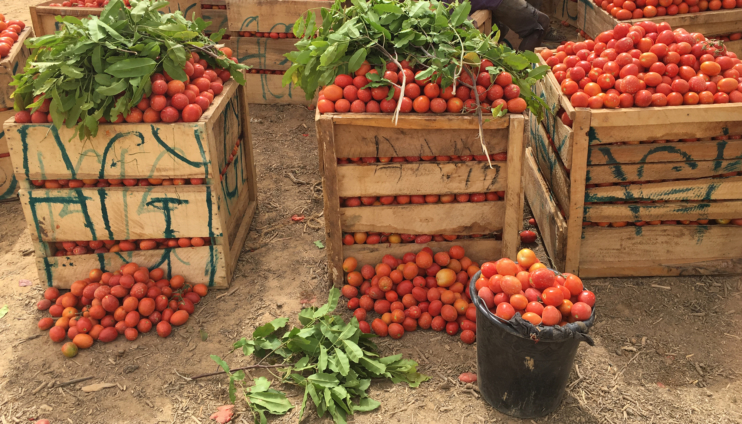
He added that the post-harvest loss of mango was about $300 million with tomatoes alone accounting for over $60 million per annum.
March 12 marks the day of Sustainable Development Goal 12.3, which aims to reduce food losses along production and supply chains.
Ahead of the day, the Embassy of Denmark organised a seminar to seek solutions from Danish and Ghanaian stakeholders, following the launch of a feasibility study for cold chain business and investment in Ghana by the Embassy.
Danish Ambassador to Ghana, Tom Norring emphasised the need to form partnerships in finding solutions to challenges facing the agric sector in Ghana.
“Denmark is actually traditionally a farming country, hence we’ve developed a lot of solutions of which some will be applicable here and others need to be adopted to be applicable in Ghana”.
"We have companies that developed solutions for food losses such as providing cold storage, cold chain among others. We want to bring in some Danish companies to match with some Ghanaian companies to form partnerships. We believe that these kinds of partnerships create real ownership on both sides,” he stated.
The report commissioned by the Danish Embassy on food loss and waste in Ghana is titled, “Feasibility Study for Cold Chain Business” which involves the transportation and distribution of temperature-sensitive products.
Latest Stories
-
At least 30 feared dead in crush at Haitian tourist site
3 hours -
Four arrested over murder of Scottish businessman in Kenya
3 hours -
New Mainoo deal closer, says Man Utd boss Carrick
3 hours -
Sinner beats Alcaraz to return to world top spot
3 hours -
An inappropriate joke nearly ended his career. Now he’s back with more humour
4 hours -
GPL 2025/26: Dreams FC stage stunning comeback to hammer Eleven Wonders
5 hours -
Livestream: The Probe examines Kumasi’s looming water crisis
5 hours -
MTN Ghana gears up to lead Africa’s AI revolution
5 hours -
Philanthropist Alhaji FuZak donates Da’wah bus to Ambariya Sunni community
5 hours -
GUTA calls for suspension of Publican AI system over trade disruptions
5 hours -
TTAG raises alarm over proposed recruitment of 7,000 teachers, demands national posting roadmap
6 hours -
Civilians feared killed after reports of air strike on Nigerian market
6 hours -
Bishop Simon Kofi Appiah installed as new Jasikan Diocese Bishop
6 hours -
Trump’s Strait of Hormuz blockade threat raises risks and leaves predicaments unchanged
6 hours -
US Court backs extradition of former MASLOC CEO Sedina Tamakloe-Attionu to Ghana
6 hours