

Audio By Carbonatix
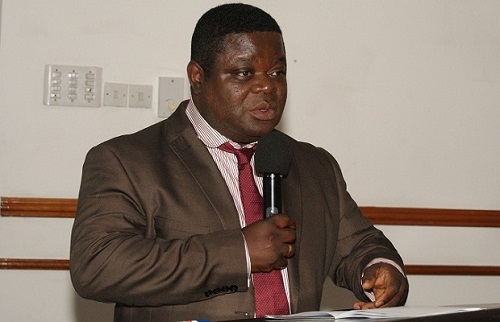
The Director of the Institute of Statistical, Social and Economic Research (ISSER) says traders cannot be blamed for increasing the price of goods since the outbreak of COVID-19, a disease caused by coronavirus.
In Peter Quartey’s view, the decision is a rational one to a development they do not understand and are uncertain of.
Speaking on Joy FM’s Super Morning Show, he said “For lack of information or understanding people behave rationally.
"If you think you’re going to be lockdown and they say there is going to be a shortage, as rational human beings you try to stock as much as you can.
“It is a demand and supply issue and so although the goods are there, the sudden increase in demand is what the traders are taking advantage of…So it is a rational decision in my view and I don’t think anyone should be blamed,” he added.
Prices of goods such as hand sanitizers, food items like gari and bread have shot up by more than 100 percent in some parts of the country since the outbreak of the novel coronavirus.
Fears of an impending lockdown – which is now in force partially - added fuel to the fire with traders increasing prices for staple foods and other everyday items.
Enraged by the development, consumers have called on government to regulate prices.
While Prof Quartey believes this can be done, he said the National Commission of Civic Education (NCCE) should intensify education in local languages for people to appreciate what is being done.
Citing Ghana’s coup history, he said the curfew and shortages that characterized those periods are still fresh on the minds of those who experienced it and are simply trying to avoid similar developments, a reason there has been a rush to stock up on food and other essential items.
He also believes “people are avoiding confrontation with the law enforcement agencies and so would rather stock and observe what will go on in the coming days.
“If our law enforcement agencies are professionals, people will realize that this is not a total lockdown and that food and other things will be available, gradually things will ease off and go back to normal.”
He called on the Ghana National Buffer Stock Company to release some of the goods if supply cannot meet demand.
“If we allow goods to flow freely, we will solve the supply problem,” he stressed.
Latest Stories
-
US warns citizens to reconsider Nigeria travel on safety grounds
13 minutes -
Ivan Toney questions refereeing in Saudi Pro League title race after Al-Ahli draw
14 minutes -
Angola appoint Aliou Cissé as new head coach
26 minutes -
Virtual Security Africa showcases digital security vision at Kwahu Business Forum
31 minutes -
EBID strengthens regional integration role amid global economic uncertainty
57 minutes -
Two assault rifles, ammunition retrieved in Police probe of Tamale gang attack
1 hour -
EBID records strong financial growth with $722m disbursements in 2025 – President, Dr George Donkor
1 hour -
EBID to mobilise $2.69bn under new 2026–2030 growth strategy – Dr George Donkor
1 hour -
An open letter to telcos, regulators and security agencies on mobile money fraud in Ghana
1 hour -
Mobile Money Merchants are driving fraud
1 hour -
Alban Bagbin declines minority’s motion to investigate sale of gold reserves at BoG
1 hour -
NACOC leadership tours drug testing centres in Accra
1 hour -
OSP’s power to prosecute without AG’s authorisation unconstitutional – AG files at Supreme Court
1 hour -
Seven African referees selected for World Cup 2026 as Ndala, Issa Sy miss out
2 hours -
Why diaspora investors are using Accra real estate to hedge against global uncertainty in 2026
2 hours