

Audio By Carbonatix
The prices of gari and sachet water in the Bolgatanga market in the Upper East Region have reduced, following a decline in demand due to the increase in prices earlier in November.
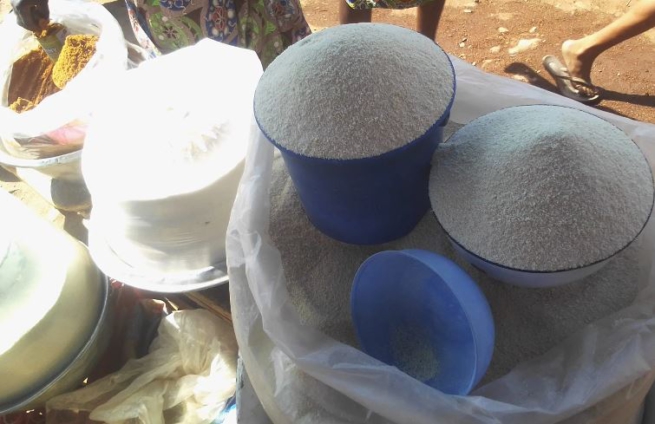
A bag of gari, which was sold between GH₵800.00 and GH₵850.00 depending on the size has reduced to GH₵750.00 and GH₵800.00 respectively, with a bowl of gari being sold at GH₵20.00 from GH₵25.00 previously.
Also, a pack of sachet water, which was sold between GH¢8.00 and GH₵9.00 depending on the brand, presently sells at GH¢6.00 and GH₵7.00, while a sachet goes for 30 Pesewas from 50 pesewas.
According to some of the sachet water sellers, in an interview with the Ghana News Agency (GNA), demand declined as a result of the increment, which paved way for the former ‘ice water,’ unfiltered water tied in small rubber bags, sold at 20 pesewas, to re-enter into the market.
“Ice water’ used to be dominant in rural communities including those without electricity where sellers refrigerate it or put big chunks of ice on it to get it chilled. It used to be sold at an affordable price to consumers but was kicked out of the market as it could not match sachet water in terms of hygiene.
Though its purity is still in question, it is about affordability in this time of economic hardship, according to the consumers interviewed.
Mrs Eunice Ayamba, a sachet water producer, in an interview with the Ghana news Agency (GNA), said they were left with no option than to reduce prices to stay in business.
"I usually supply my water to Pelungu, Kongo and Yorigo among other communities in the region but overtime, I realized demand was coming down, my distributors would take water to these communities and return with almost same, because sellers still had water packed and could not take more since demand was low.
‘’Even in Bolga here, the demand for sachet water is high at Lorry stations, mechanic shops among others, but that is where ‘’ice water ‘’ is dominating now and so we are left with no option than to reduce prices even though we are only breaking even,’’ she added.
Ms Victoria Ayinbisah, alias Ama Gari, told the GNA that apart from students who said they were compelled to buy at the increased price because there was no option, most customers walked away when the increased prices were mentioned to them.
“In fact, we just don’t have any option than to reduce prices because customers just walk away when you mention the price with some telling you it is better, they use their money for other foods instead of gari which should be affordable," she stated.
Latest Stories
-
GES opens 2026 teacher recruitment for licensed B.Ed graduates
2 minutes -
Ghana must value skilled trades, build resilient learners — Ibn Chambas
10 minutes -
Ghana must rethink education around relevance, resilience and responsibility — Ibn Chambas
13 minutes -
Prince Harry faces defamation lawsuit from charity he co-founded
15 minutes -
South Korea deploys thermal cameras to track escaped zoo wolf
17 minutes -
Calls for royal meeting with Epstein survivors grow ahead of US visit
20 minutes -
Ibn Chambas advocates blend of technology and human values in education
21 minutes -
UMA improves healthcare access in Asutifi North with GH₵700k ‘Kim Taylor Legacy’ Walkway
26 minutes -
Scholarships Authority and Fanaka University offer sponsorship for procurement and supply chain studies
30 minutes -
Bisa Kdei drops new single ‘Go N Look’ featuring Medikal
36 minutes -
Benin facing rising terrorism in north as French military presence faces growing criticism
37 minutes -
UEW Public Lecture Series 2026: Education debate ‘about the soul of Ghana’s future’ — Dr Ibn Chambas
38 minutes -
EU fingerprint and photo travel rules come into force from today
1 hour -
Anti-LGBTQ+ Bill: Ghanaians demand expedited passage, not dialogue – Ntim Fordjour to Mahama
1 hour -
EU airline industry warns of fuel shortages if Strait of Hormuz stays closed
1 hour