

Audio By Carbonatix
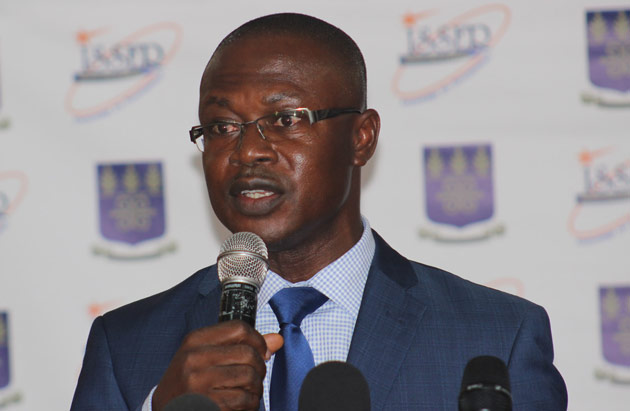
The 2025 Mid-Year Budget Review offers no real excitement for jobs or the fight against poverty, according to Professor of Finance and Economics at the University of Ghana, Charles Godfred Ackah.
He believes that while the economic managers can claim credit for some positive indicators, the deeper issues facing Ghanaians remain untouched.
“The statistics are showing some good performance,” Prof. Ackah said.
“If you measure them in the context of normal, orthodox economics, you will see a reduction or some form of consolidation.”
He pointed to the primary surplus, inflation trending down, and exchange rate stability as evidence of fiscal consolidation.
“So I think that is good to some extent,” he noted. “But you have to ask yourself, at what cost? What is our vision as a nation? What do we want to achieve?”
For him, the metrics may look impressive on paper, but they fall short of addressing the real economic needs of the people.
“If it’s just to appear to be achieving some good statistics, then I think we should give congratulations to the managers of the economy,” he said.
“But if the bottom line, or the vision, is to create jobs, to build a competitive, resilient economy, to improve the welfare of the Ghanaian, to reduce poverty and inequality, then I don’t think this mid-year budget review gives any excitement.”
Prof. Ackah argued that the gains being highlighted by the Finance Ministry are largely the result of favourable global conditions rather than sound domestic policy.
“Because if you look at what has actually happened, I think it’s mainly resulting from the external sector. The external sector, because of the increase in gold production and export of gold, we are getting a lot of external advantage from there in terms of foreign exchange revenue,” he said.
“Also, the cocoa is doing well in terms of the price, and the oil price has stabilised, and, therefore, all of these are giving us some windfall.”
He warned against presenting such outcomes as achievements rooted in domestic competence.
“To which the managers of the economy could claim advantage and say it’s purely as a result of their own doing, as we normally do. But I think most of the results are externally driven, and if things change, we have seen this before.”
Citing historical examples, he said Ghana’s vulnerability to global commodity shocks remains unchanged.
“If you look at the 2013 budget, 2014 budget, 2015 budget, when President Mahama was still there, we recorded some 2.8% budget surplus,” he said.
“But if we don’t prefer to build a resilient economy, [it] is susceptible to shocks, and if the gold prices fall all of a sudden, crude oil price goes through the roof all of a sudden, then we will be back to square one.”
Latest Stories
-
Otto Addo sacked!
10 minutes -
Why set up an anti-corruption agency while shielding GoldBod at the same time? – IERPP queries the government
2 hours -
Big Push for Infrastructure, Small Push for People
3 hours -
KsTU marks 70th anniversary, rallies partners for AI-driven future as gov’t pledges support
3 hours -
Ghana missing out on billion-dollar Carnival Industry — WCC CEO urges urgent investment
3 hours -
MP Akurugu cuts sod for 8.2 km Ashongman road project
4 hours -
No certificate, no entry – IFMA Ghana demands strict enforcement of occupancy permits to halt building collapses
4 hours -
Schools under trees: Gov’t targets 400 new schools, 1m desks this year – Mahama
4 hours -
Mövenpick Accra Business Forum 2026: A platform for shaping Ghana’s economic future
4 hours -
‘Not our jurisdiction’ — Mahama breaks silence on Ofori-Atta case
4 hours -
Mahama pushes for return of civic education to tackle indiscipline, sanitation challenges
5 hours -
Ghana’s Black Stars fall again as Germany snatch late victory
5 hours -
Mahama praises Volta Region’s cleanliness, urges national replicati
5 hours -
Ghana Medical Trust Fund set for launch as Board finalises key systems
5 hours -
Ghana restores investor confidence through economic reform – Deputy Finance Minister
5 hours