

Audio By Carbonatix
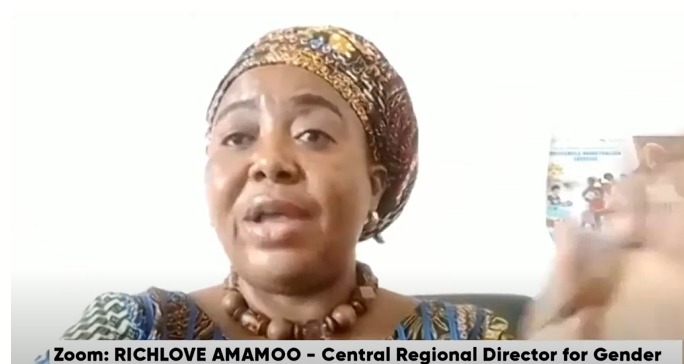
The Central Regional Director of Gender under the Ministry of Gender, Children and Social Protection (MoGCSP), Mrs Richlove Amamoo, says some programmes have been implemented aimed at ending the practice of young girls having to trade sex for money to purchase sanitary pads.
According to her, there are various initiatives, including parental education clubs and sensitisation sessions for adolescent girls.
Speaking on JoyNews’ AM Show on May 27, she said, “So sometimes we meet both the parents and the girls. The girls are girls that we have trained, so they speak up and they told us the challenges they are having with their parents, parents not providing them with their needs."
“So we have realised that when it is for their period, it is difficult for them to get sanitary pads to use and that is the problem. Some children came out to say it is because of that, they have to enter into a relationship, so that at least at the end of the month, they can get something to buy sanitary pads.”
According to the director, non-governmental organisations (NGOs) collect data without sharing it with the government machinery operating in the region.
“We don’t even know what they come here to do. So you have this data, you should have worked through the department of gender so that RCC will know what you are doing in the region.”
Mrs Amamoo revealed that a meeting was held on May 15, with all NGOs operating in the region to strengthen collaboration and coordination efforts.
She pointed out the need for parents to understand their legal obligations regarding parental responsibility, highlighting that neglecting children's needs is a criminal offence.
“That is why we said, we can’t do it alone. On the 15th May, we brought all the NGO’s operating in the region together. We met them and we want to strengthen collaboration with them so that we can join hands together and try to control the situation.”
“So when you come to the region to do that, we must be aware of what you are doing so that we can support. The only way this thing can work is to let us parents know the position of the law. When it comes to parental responsibility that is a criminal offence if you don’t take care of your children. And if parents become responsible, we can control the situation.”
Latest Stories
-
A source of excellence across generations – Vice President Opoku-Agyemang lauds Mfantsipim
1 hour -
(Photos) Mfantsipim School launches historic 150th anniversary
2 hours -
Knights and Ladies of Marshall group backs Catholic Bishops’ stance on anti-LGBTQ+
2 hours -
Bright Simons writes: All the Filla in the Ibrahim Mahama/E&P – Gold Fields Saga
3 hours -
Monetise Idiocy In Ghana
3 hours -
The Ghanaian prophet and the mysterious death of his scottish wife Charmain Speirs
4 hours -
Nearly 400 sentenced in Nigeria for links to militant Islamists
4 hours -
Ghana’s recovery supported by gold strength despite global oil price pressures – Standard Bank Research
4 hours -
Methodist Church hails Mfantsipim@150; calls for “fresh consecration” to excellence
5 hours -
‘Excellence is our inheritance’ – Nana Sam Brew-Butler hails Mfantsipim’s 150-year reign in leadership
5 hours -
Kwaku Azar writes: A-G vs OSP
5 hours -
Mfantsipim–Adisadel rivalry built excellence, not division – Sam Jonah
5 hours -
Vice President launches Mfantsipim’s 150 years of shaping Ghana’s greatest mind
5 hours -
I assure Otumfuo, Mahama will join him to commission KNUST Teaching Hospital by end of this year – Haruna Iddrisu
6 hours -
Barcelona dominate derby to extend La Liga lead
6 hours