

Audio By Carbonatix
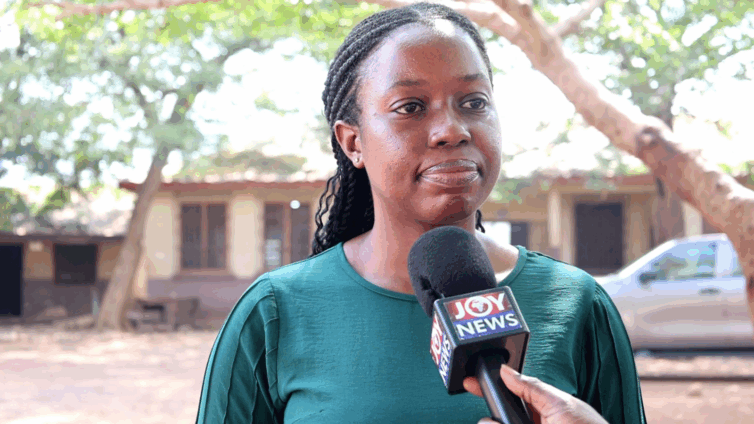
In a bid to promote menstrual hygiene and educate young girls on reproductive and mental health, a final-year medical student of the Kwame Nkrumah University of Science and Technology (KNUST), Achiaa Acheampong, has donated over 100 sanitary pads to girls at Oforikrom M/A Junior High School.
The gesture forms part of her initiative, “The Care 360 Project”, a mind and body campaign aimed at empowering young girls with knowledge about their menstrual health and hygiene.
Speaking during the donation, Ms. Acheampong emphasised the importance of understanding the menstrual cycle and how to manage it responsibly.
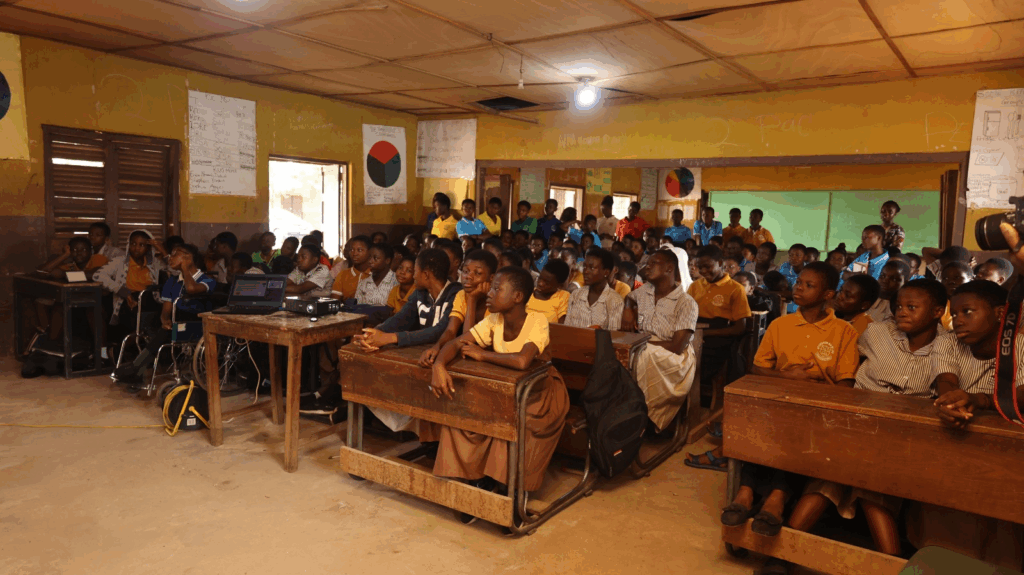
She noted that, “most of these girls have a lot of perceptions, a lot of stereotypes about menstruation, about their menstrual cycles. So we need to change that and tell them the right thing and teach them what to do.”
She noted that menstrual health is a natural part of every girl’s life and must be discussed openly. She encouraged the girls to maintain proper hygiene during their periods and to see menstruation as a normal and healthy process.
Calling for broader support, Ms. Acheampong urged individuals, organizations, and government agencies to extend similar initiatives to schools across the country.
“I think it’s high time many organizations, the government, anybody and even students who feel like they can impact society in any small way, take up these schools and these JHS students. They can take up these projects and teach them how to do these things on their own,” she asserted.
The Care 360 Project plans to expand its focus beyond menstrual health.
“In subsequent years, I want ‘The Care 360 Project’ to be more than a menstrual health initiative. In the coming years, I hope to also focus on the mental health aspect of it and add more aspects of health not only focusing on the girls, we can also focus on the boys as well,” Ms. Acheampong added.
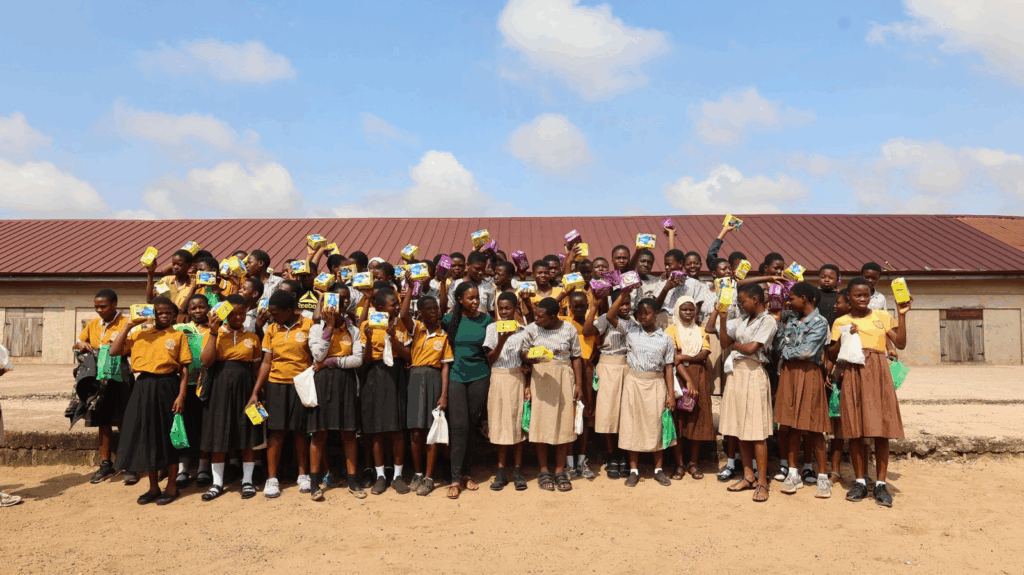
She advised young girls to abstain from activities that could lead to early pregnancy, stressing the need for self-discipline and focus on education.
The initiative was carried out under the Millennium Fellowship and the United Nations, which equip tertiary students globally with leadership and social impact skills to drive positive change within their communities.
Ms. Acheampong’s effort stands as an inspiring example of how youth-led initiatives can promote health awareness and empower the next generation through education and care.
Latest Stories
-
Affi Agbenyo’s EC appointment is constitutionally appropriate, but politically, people have the right to remind us – Haruna Iddrisu
3 minutes -
Education is critical to Ghana’s future and development – Haruna Iddrisu
22 minutes -
Who’s Emelia Affi Agbenyo, the 43-year-old newly sworn-in Deputy EC Chair?
55 minutes -
Haruna Iddrisu calls for limits on annual university accommodation fee increases
2 hours -
Today’s front pages: Tuesday, October 13, 2026
2 hours -
Wealth Over Water: How Galamsey Is Threatening Ghana’s Water Security
3 hours -
LA 2028: Black Queens pumped up for second leg of Mauritius tie
3 hours -
LA 2028: Black Queens hold final training session ahead of second leg against Mauritius
4 hours -
Standards are not Seasonal: What the EC appointments teach both sides
4 hours -
King Mohammed VI urges private sector to create youth jobs and spread benefits of growth
4 hours -
KGL U17 Colts 2026: Greater Accra win title after penalties win over Western Region
4 hours -
UK Investment Roadshow opens in London to advance UK-Ghana growth partnership
4 hours -
Assemblies of God requires pastors to resign before entering partisan politics – Rev. Wengam
4 hours -
Ghana targets 20% annual reduction in maternal deaths – Health Minister
4 hours -
Cyber attacks in Africa grow faster than global rate, report finds
4 hours