

Audio By Carbonatix
The Government of Ghana has reaffirmed its commitment to deepening decentralisation reforms through the implementation of the National Decentralisation Policy and Strategic Framework (NDPS) 2026–2030.
This was disclosed by the Chief of Staff, Hon Julius Debrah, during a high-level engagement with Development Partners held on Tuesday, 10 June 2026, at Jubilee House in Accra.
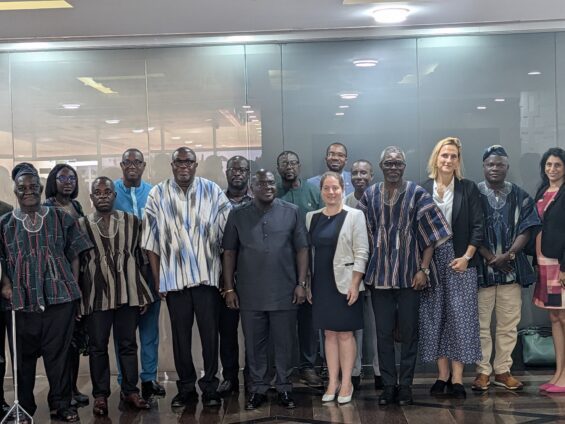
The meeting, convened by the Inter-Ministerial Coordinating Committee on Decentralisation (IMCC) Secretariat under the Office of the President, brought together Development Partners, representatives of Ministries, and key stakeholders to discuss implementation priorities under the NDPS (2026-2030) and explore opportunities for strengthened collaboration.
Delivering the keynote address, the Chief of Staff, Hon. Julius Debrah, underscored Government's unwavering commitment to decentralisation as a key pillar for strengthening local governance, improving public service delivery, promoting accountability, and fostering inclusive development across the country.
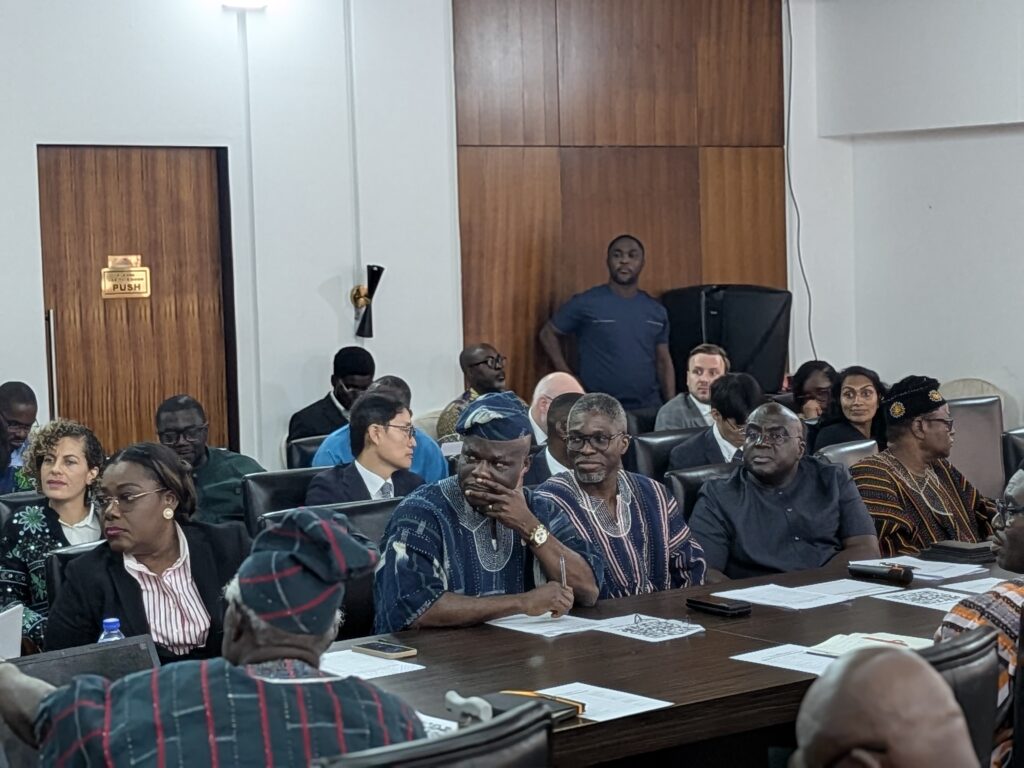
He acknowledged the longstanding support of Development Partners in advancing Ghana's decentralisation agenda through policy engagement, institutional strengthening, technical assistance, and financing support.
The Chief of Staff noted that the National Decentralisation Policy and Strategic Framework (2026–2030) demonstrates Government's determination to build stronger local governance institutions, improve inter-governmental coordination, advance fiscal decentralisation, and enhance service delivery at both national and sub-national levels.
He further highlighted the government's commitment to deepening fiscal decentralisation, including the transfer of over 80 per cent of the District Assemblies Common Fund directly to Metropolitan, Municipal and District Assemblies (MMDAs), to strengthen local autonomy and accelerate development at the grassroots.
Welcoming participants to the engagement, the Executive Secretary of the IMCCoDS, Dr. Gameli Kewuribe Hoedoafia, expressed appreciation to Development Partners for their continuous support to Ghana's decentralisation reforms over the years.
He acknowledged the significant contributions of Development Partners during the formulation of the National Decentralisation Policy and Strategic Framework, describing their technical inputs, policy reviews, and consultations as instrumental in shaping a practical and implementable policy framework.
Dr. Hoedoafia emphasised that while Government approval of the policy marks a major milestone, the real task lies in translating policy commitments into measurable improvements in governance performance and tangible benefits for citizens.
He called for sustained collaboration among stakeholders, noting that the successful implementation of the policy would require coordinated action through the Sector Wide Approach (SWAp) to Decentralisation.
Addressing the meeting, the Minister for Local Government, Chieftaincy and Religious Affairs, Hon. Ahmed Ibrahim, described the new policy as a transformative phase in Ghana’s decentralisation journey, repositioning decentralisation as a key driver of accountable governance, efficient service delivery, and accelerated local economic development.
He noted that a central pillar of the reform agenda is political decentralisation, which seeks to transition the selection of Metropolitan, Municipal and District Chief Executives (MMDCEs) from the current system to a more democratic process. According to the Minister, the reform is intended to deepen local democracy by giving citizens a greater role in determining their local leadership.
A key feature of the engagement was a presentation on the approved National Decentralisation Policy and Strategic Framework (2026–2030) by Dr. Esther Ofei-Aboagye, a member of the IMCC Technical Committee who outlined the policy's strategic objectives, implementation arrangements, and expected outcomes.
Participants were also taken through the Sector-Wide Approach (SWAp) to decentralisation by Professor Kwamena Ahwoi, Chairman of the IMCC Technical Committee, who highlighted the importance of coordinated stakeholder action in achieving the policy's objectives.
Speaking on behalf of Development Partners, H.E. Janine Walz, Deputy Ambassador of Switzerland to Ghana and Chargé d'Affaires, commended the Government for convening the engagement and congratulated the Government on the successful approval of the policy.
She paid special tribute to the IMCC Secretariat for its leadership throughout the policy development process and underscored the importance of sustaining the IMCC's role in coordinating decentralisation reforms.
She acknowledged Ghana's progress in advancing decentralisation and improving resource transfers to sub-national entities, while calling for greater efforts to strengthen accountability, citizen participation and the financial autonomy of Metropolitan, Municipal and District Assemblies.
She further expressed Development Partners' commitment to supporting the implementation of the policy through enhanced coordination and collaboration.
The engagement concluded with a renewed commitment by Government and Development Partners to work together to ensure the successful implementation of the National Decentralisation Policy and Strategic Framework (2026–2030), with the shared goal of building responsive local governance systems and improving the quality of life of citizens across Ghana.
Latest Stories
-
Ballon d’Or Power Rankings: Lamine Yamal leads race for Golden Ball ahead of Rodri and Kane
2 hours -
‘Nothing worked for us’ – Gideon Mensah takes responsibility for Gambia defeat
2 hours -
2026 Women’s Super Cup: FC Savannah beat Epiphany Warriors to win trophy for first time
4 hours -
Fifa accuses Uefa of ‘misinformation campaign’
4 hours -
Kane and Gordon give England victory over Czech Republic in Nations League
4 hours -
AFCON 2027Q: ‘The last time Ghana won was eight games ago’ – Carlos Queiroz
4 hours -
AFCON 2027Q: Gambia defeat doesn’t make me a loser – Carlos Queiroz
4 hours -
Yamal inspres Spain to homecoming victory over Croatia
4 hours -
2027 AFCONQ: Late goals seal 2-0 for Côte d’Ivoire against Somalia
4 hours -
I’d stick my Man City medals in bin – Keane
4 hours -
AFCON 2027Q: My resignation won’t solve Ghana football issues – Queiroz
4 hours -
Morocco call off Ghana friendly after Black Stars’ AFCON setback
4 hours -
It is time for Tuchel to offer Alexander-Arnold some trust
5 hours -
‘We have to say sorry’ – Queiroz apologises after Ghana’s humiliating defeat to Gambia
5 hours -
New Yorker identified as Yaw Boahene, 57, killed after bag was caught in subway train doors
5 hours