

Audio By Carbonatix
The Kwame Nkrumah University of Science and Technology (KNUST) has deepened its push for inclusive education with the launch of a new partnership involving Gallaudet University in the United States and the Responsible AI Lab (RAIL).
The collaboration was unveiled during the inaugural KNUST–Gallaudet University seminar held in Kumasi, where stakeholders emphasised the need to build learning systems that accommodate all students, including persons with disabilities.
Vice-Chancellor of KNUST, Professor Rita Akosua Dickson, reaffirmed the university’s commitment to inclusivity, describing it as a core institutional value.
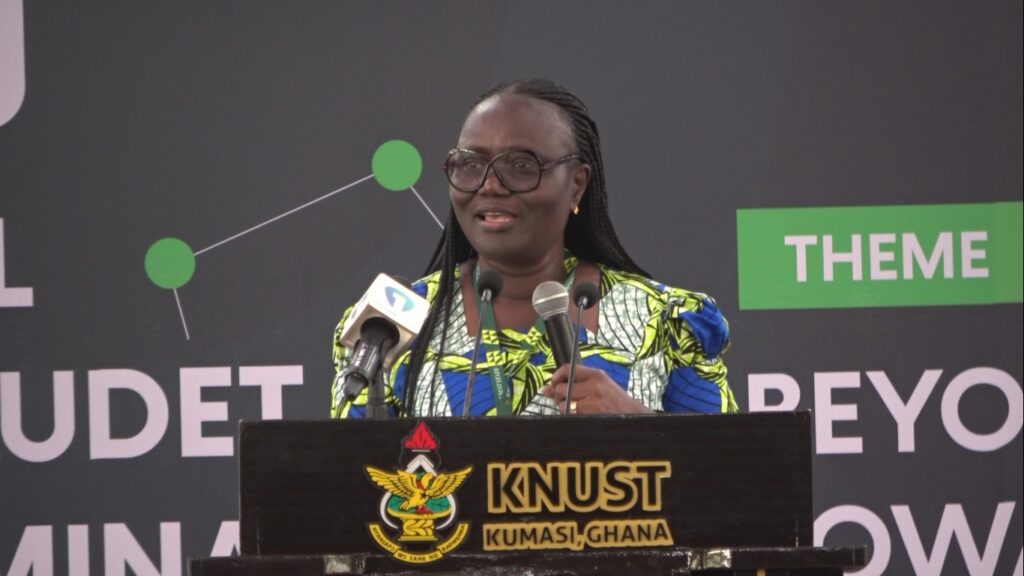
“At no time, under no circumstance, should anybody be left behind,” she said, adding that the principle forms part of KNUST’s broader inclusivity agenda.
She noted that partnerships with institutions such as Gallaudet University are critical to achieving the university’s vision for accessible education.
“This is your first institution in Africa, and we are happy you are joining us at this important moment in our history,” she said.
Prof. Dickson disclosed that KNUST currently has more than 80,000 students, including about 200 students with disabilities who receive various forms of academic and welfare support.
She highlighted existing interventions such as accessible accommodation, assistive technologies, transport services, trained support staff, and student volunteer programmes.
The Vice-Chancellor also pointed to the establishment of a Gender Inclusion and Vulnerability Office aimed at coordinating disability and inclusion services across the university.
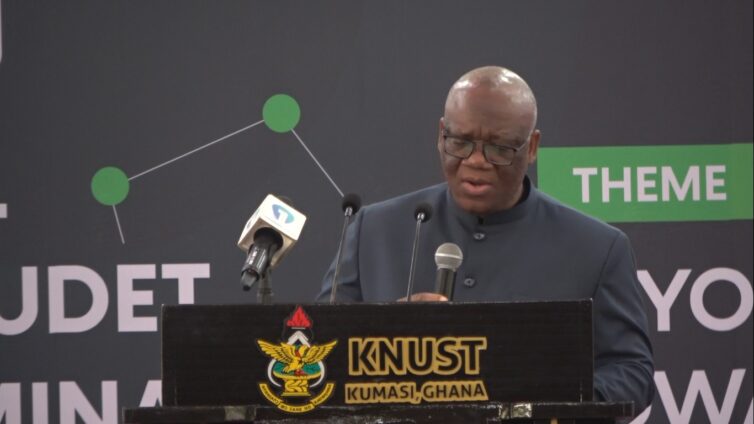
Principal Investigator and Scientific Director of RAIL, Professor Jerry John Kponyo, said inclusivity at KNUST extends beyond policy into daily practice and innovation.
“Inclusivity is not just a word. It is our character. It is our everyday practice,” he said.
He explained that ongoing research and development efforts are focused on assistive technologies designed to improve learning outcomes and the overall experience of students with disabilities.
Prof. Kponyo also praised staff, researchers, and student volunteers supporting inclusion efforts, noting that the partnership with Gallaudet University would help strengthen innovation and accessibility.
“Beyond words towards connection means tangible action and innovation that will help us break barriers and unlock human potential,” he stated.
The seminar brought together university officials, researchers, students, and development partners to explore ways of advancing inclusive education, assistive technology, and future collaboration between the institutions.
Latest Stories
-
Amazon eyes Ghana for broadband expansion after talks with Mahama
3 minutes -
National Investment Quiz 2026: Six schools qualify for quarter-finals
30 minutes -
‘Do not let Russia pay for its madness with lives of your people’ – Zelensky to Ghana, 46 other countries
37 minutes -
6,079 promotion cases fully processed and paid – CAGD says amid nationwide teachers’ strike
57 minutes -
Teacher unions to meet government Monday over nationwide strike
1 hour -
Photo story: Republic Bank-JoyNews Habitat Fair clinic wraps up after three days of housing solutions, expert engagement
1 hour -
National Peace Council urges investment in youth to sustain Ghana’s peace
2 hours -
Afenyo-Markin urges youth to speak up against injustice
2 hours -
CAF annuls Edo Queens victory, orders WAFU B final to resume from extra time
2 hours -
Interior Minister urges traditional authorities to enforce anti-bushfire bye-laws
2 hours -
3rd Republic Bank-JoyNews Habitat Fair Clinic ends on a high note after three days of strong patronage
2 hours -
Ten climbers missing after avalanche hits Himalayan base camp
3 hours -
NPP had more permanent fuel relief measures than current GH¢2 diesel cut – Amin Adam
3 hours -
Photos from the 3rd Republic Bank-JoyNews Habitat Fair Clinic
3 hours -
Ethiopia’s army promises restraint amid fears of new civil war
3 hours